
Blog

  • How to Bypass Conventional Property Limits as an Investor

    How to Bypass Conventional Property Limits as an Investor

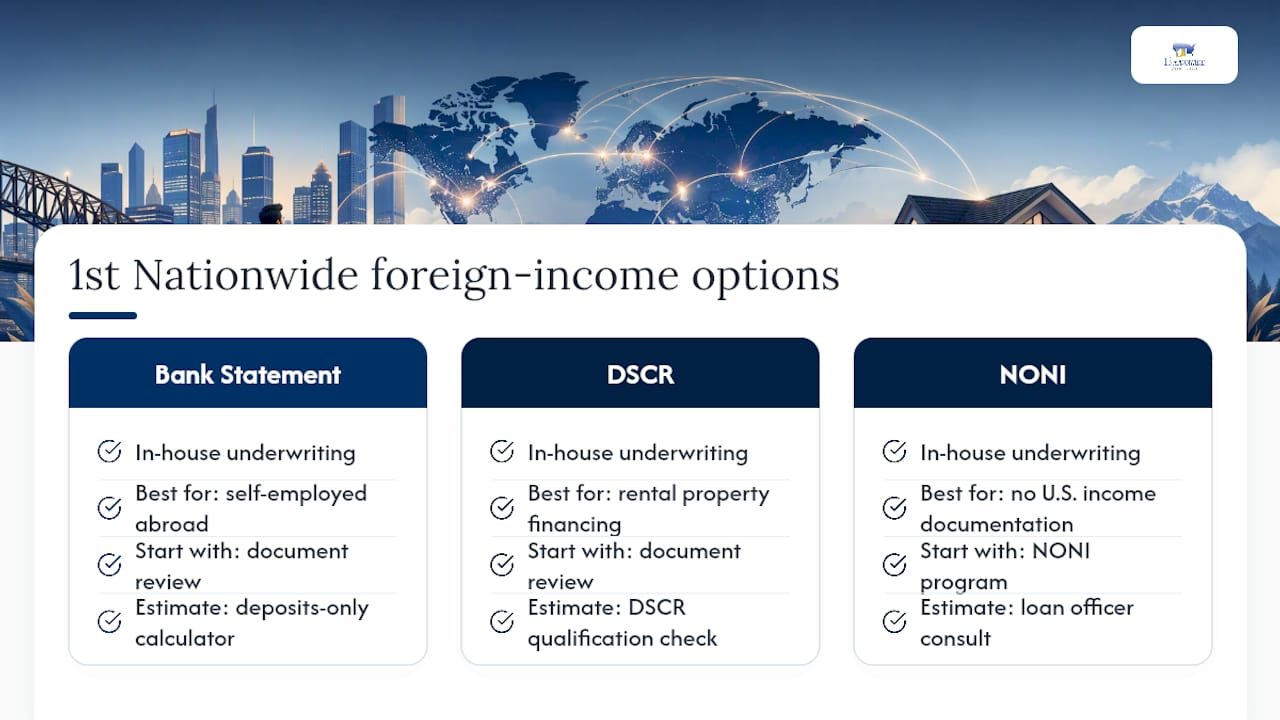
    Four financing paths let you bypass conventional property limits today: DSCR loans, portfolio loans, bank-statement loans, and NONI (No Income/No Asset) loans. Each one sidesteps the Fannie Mae and Freddie Mac rules that cap most investors at 10 financed properties, because none of them are sold to the GSEs. Your immediate next step: verify your property’s monthly rent covers its debt service, or pull 12–24 months of bank statements, then contact a direct lender who holds these programs in-house.

    • DSCR loans qualify on rental income, not your tax returns or W-2. No GSE cap applies.
    • Portfolio loans stay on the lender’s books, so the lender sets its own rules.
    • Bank-statement loans use deposit history to derive qualifying income, bypassing tax-return limits.
    • NONI loans require no income or asset documentation — built for foreign nationals and certain non-traditional borrowers.

    Key Takeaways

    Alternative financing paths remove the GSE 10-property cap by qualifying on property income, deposit history, or asset evidence rather than tax returns or borrower DTI.

    Point Details
    DSCR removes the property cap No federal limit on DSCR loans; qualifies on rent vs. debt service, not personal income.
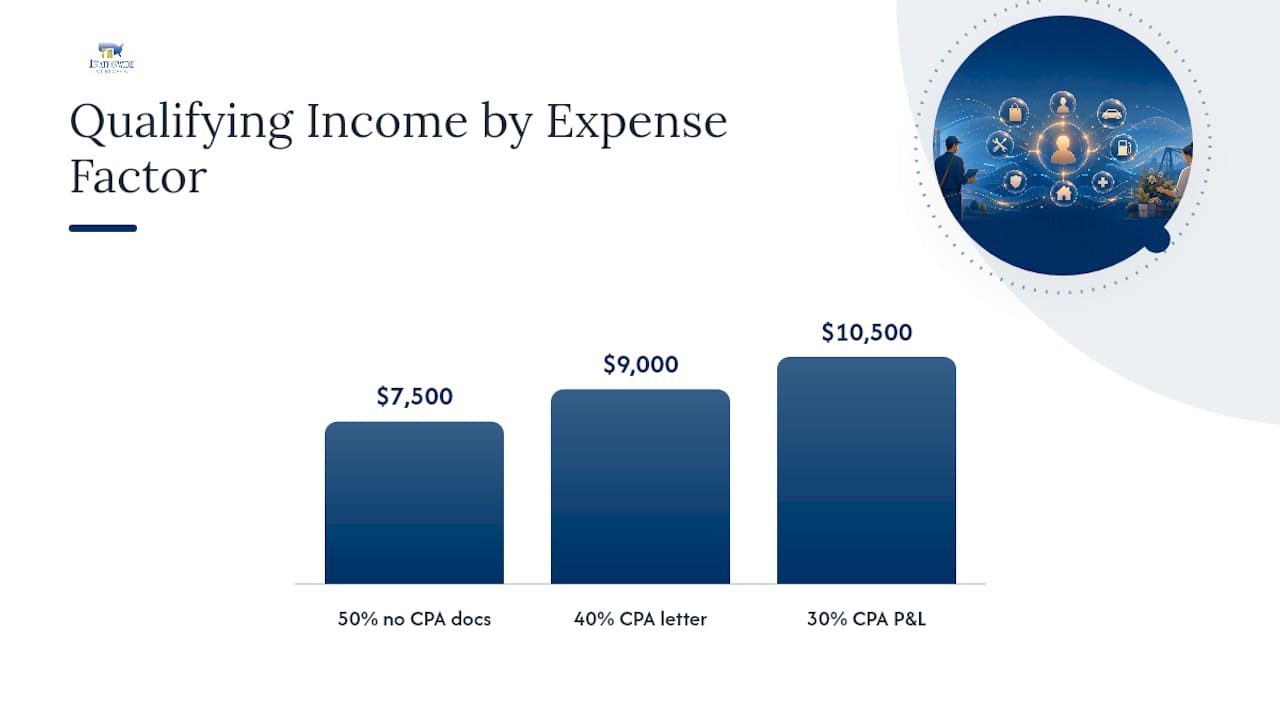
    Bank-statement unlocks self-employed buyers 12–24 months of deposits replace tax returns; expense factor of 50% standard, 35–40% with CPA P&L.
    NONI serves foreign nationals No income or asset documentation required; down payment and source-of-funds evidence are key.
    Reserves scale with portfolio size Lenders commonly require 3–6 months of PITIA per property as holdings grow.
    1st Nationwide Mortgage Direct lender offering DSCR, bank-statement, and NONI programs; BBB A+, founded by Christopher Arco, NMLS #1281.

    Table of Contents

    Why conventional underwriting creates hard property limits for investors

    Most conventional mortgages are sold to Fannie Mae or Freddie Mac after closing. That sale is what funds the next loan — but it also means every loan must conform to GSE guidelines. Those guidelines cap investors at 10 financed investment properties, and the practical ceiling is often lower once debt-to-income (DTI) constraints kick in.

    Here is how each layer of conventional underwriting creates a wall:

    • DTI limits: Fannie/Freddie require lenders to count all mortgage payments against your taxable income. Real estate investors who hold multiple properties quickly push DTI past the 45% threshold.
    • Tax-return income rules: Self-employed borrowers and investors with aggressive depreciation schedules often show low net income on their returns, even when cash flow is strong. Conventional lenders use that reported figure, not actual deposits.
    • Occupancy rules: Conventional investment-property programs carry stricter loan-to-value and reserve requirements than owner-occupied loans, compressing how much leverage you can deploy.
    • GSE resale requirement: Because the loan must be sellable to Fannie or Freddie, the lender cannot make exceptions. Unique properties, LLC vesting, or complex income structures are often declined outright.

    The core constraint: Conventional underwriting path → GSE resale requirement → agency property-count cap → investor ceiling.

    Alternatives exist because some loans never touch the GSE system. Portfolio loans stay on the lender’s balance sheet, and DSCR loans qualify on property performance rather than borrower income — neither path is subject to agency caps.

    Quick comparison: which alternative financing options remove property-count caps

    DSCR and portfolio lending are the primary scale tools for investors who want to hold multiple properties without hitting a federal ceiling. The other options serve specific situations.

    Option Best for Documentation Property limit Typical speed
    DSCR loan Portfolio investors, LLCs Lease/rent schedule, appraisal No federal cap 2–4 weeks
    Portfolio loan Unique properties, complex borrowers Varies by lender No GSE cap 3–5 weeks
    Bank-statement loan Self-employed buyers 12–24 months of statements Lender-set 3–5 weeks
    NONI loan Foreign nationals, non-documentable income Passport/ID, down payment proof Lender-set 3–5 weeks
    Bridge/hard money Fix-and-flip, time-sensitive acquisitions Asset-based, minimal Lender-set Days to 2 weeks
    Cash-out refinance Equity recycling from existing holdings Varies by program Program-dependent 3–4 weeks

    How DSCR loans work and why they remove per-borrower property caps

    DSCR loans qualify on the property’s income versus its debt service — your W-2, tax returns, and personal DTI are not part of the equation. That single underwriting shift is what removes the GSE 10-property ceiling.

    The DSCR calculation:

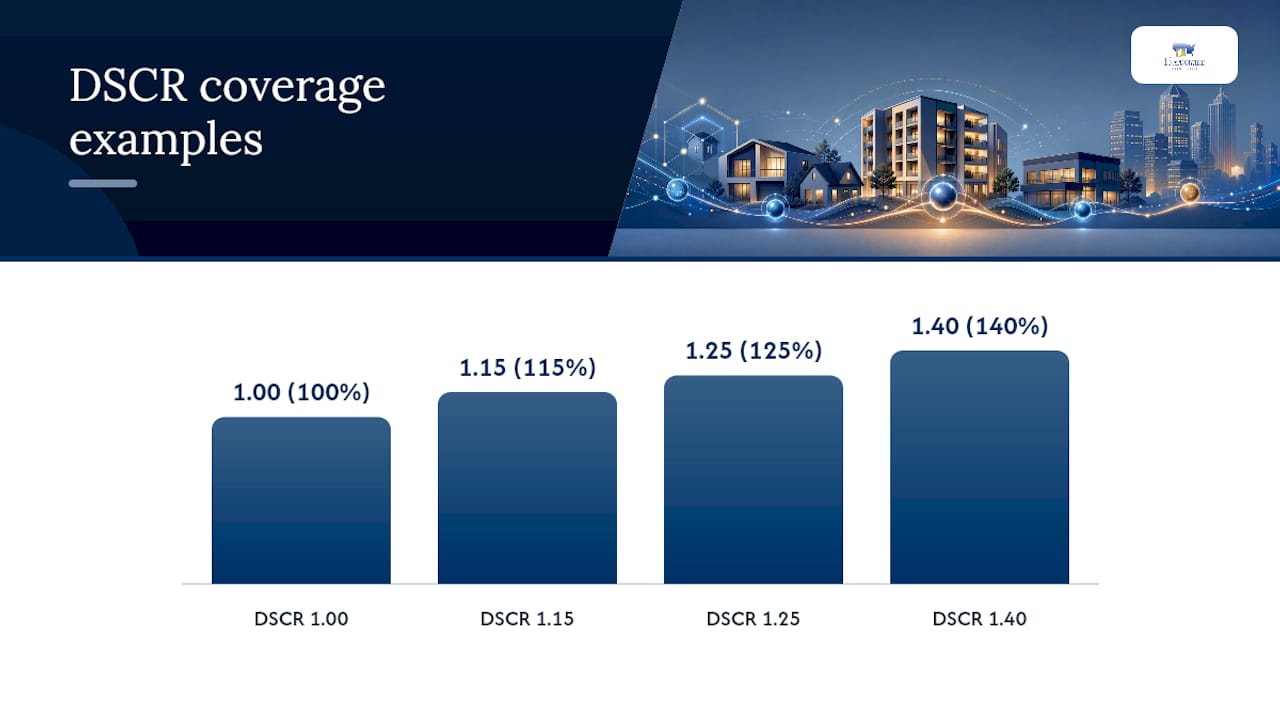
    Divide the property’s gross monthly rent by its total monthly debt service (principal, interest, taxes, insurance, and HOA if applicable). A result of 1.0 means rent exactly covers debt. Most lenders want to see 1.0–1.25 or higher, though some programs accept a DSCR below 1.0 with compensating factors like a larger down payment.

    Illustrative example (not a commitment to lend):

    • Monthly rent: $2,500
    • Monthly PITIA: $2,000
    • DSCR: 2,500 ÷ 2,000 = 1.25 — meets a typical minimum threshold

    What lenders typically require:

    • Executed lease or current rent schedule (or appraiser’s market rent estimate for vacant properties)
    • Full appraisal with rent schedule
    • Credit score — directionally, 620 or higher is a common floor
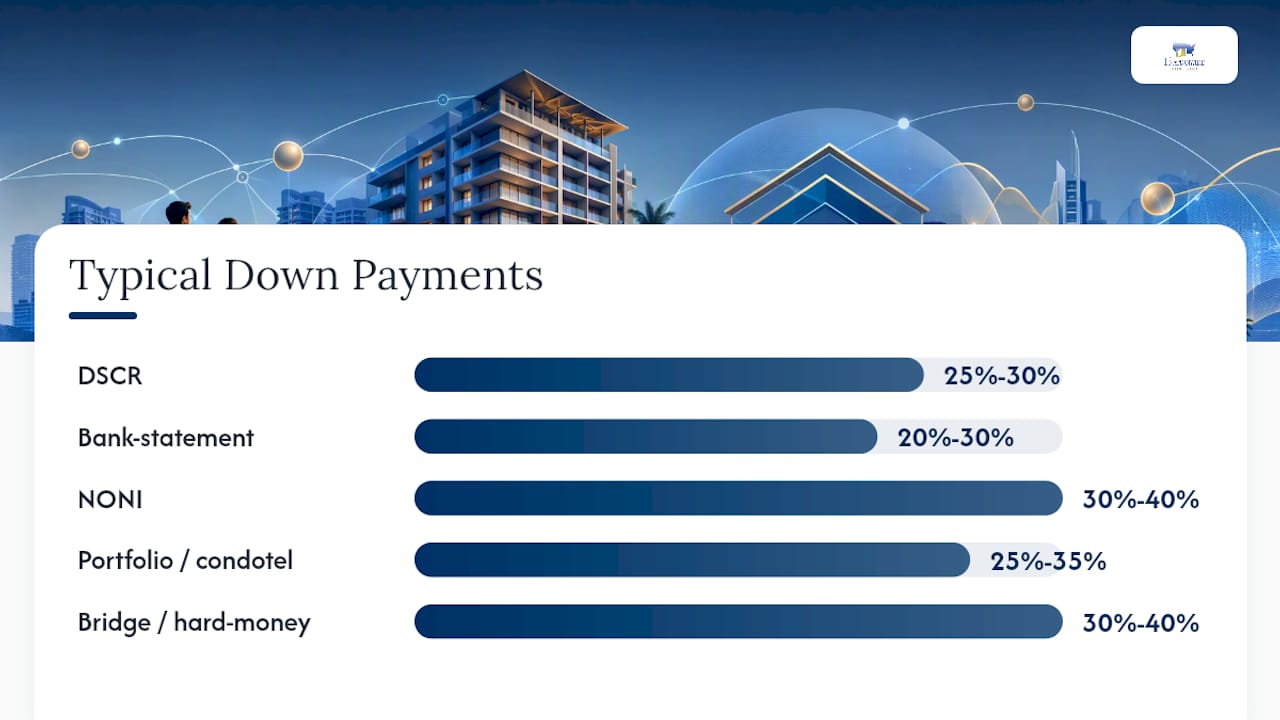
    • Down payment — typically 20–25% for investment properties
    • Proof of reserves (more on this below)

    Key program notes:

    • DSCR loans are for investment and non-owner-occupied properties only. They are never used for a primary residence.
    • LLC vesting is permitted, which matters for investors who hold properties in entities.
    • There is no federal cap on how many DSCR loans you can hold, because these loans are not sold to Fannie Mae or Freddie Mac.

    Pro Tip: As your portfolio grows, lenders commonly require 3–6 months of PITIA in liquid reserves per property. Budget for this before you close on your next acquisition — reserve shortfalls are the most common reason DSCR approvals stall at scale.

    Pros: no income documentation, LLC-friendly, no GSE property cap, faster underwriting. Cons: rates run directionally higher than conventional, down payments are larger, and individual lenders may impose their own concentration limits as your portfolio grows.

    How bank-statement loans qualify self-employed borrowers

    Bank-statement loans use 12–24 months of verified deposits to derive qualifying income rather than tax returns. For self-employed borrowers whose write-offs reduce reported income well below actual cash flow, this program is often the only path to owner-occupied or business-purpose financing.

    How lenders convert deposits to qualifying income:

    Lenders apply an expense factor to your gross deposits. The standard factor on business accounts is 50%, meaning $20,000 in monthly deposits yields $10,000 in qualifying income. With a CPA-certified profit and loss statement, that factor can drop to 35–40%, increasing your qualifying income without changing your actual deposits.

    What you need to prepare:

    1. 12–24 months of business or personal bank statements (business accounts are most common)
    2. Business verification (business license, CPA letter, or similar)
    3. Minimum 620 credit score (directional)
    4. Down payment of 10–20% depending on program and occupancy type
    5. Reserves per lender requirements

    State availability note: Owner-occupied bank-statement programs are available in California, Colorado, Oregon, Washington, Texas, and Idaho. For all other states, bank-statement financing is available as a business-purpose, non-owner-occupied program.

    Pro Tip: Personal bank statements can be used when business and personal finances are not separated, but lenders scrutinize large irregular deposits. Keep accounts clean for at least 12 months before applying.

    Compared to DSCR, bank-statement loans work better when you want owner-occupied or mixed-use financing and your income is deposit-verifiable but not tax-return-verifiable. Rates run directionally higher than conventional, and down payments are larger — but the trade-off is qualification based on real cash flow.

    How bank-statement loans qualify self-employed borrowers — overview diagram

    NONI loans: financing for foreign nationals and borrowers without documentable income

    NONI (No Income, No Asset) loans enable financing for borrowers who cannot document traditional income at all. The most common use cases are foreign nationals purchasing U.S. investment property and certain self-employed borrowers in non-documentable situations.

    Typical documentation lenders request:

    • Valid passport or government-issued ID
    • Source-of-funds documentation (wire records, bank statements showing down payment origin)
    • Larger down payment — directionally higher than standard investment-property programs
    • Property-level cash flow evidence or asset evidence where available

    How NONI fits the broader strategy:

    1. NONI loans are typically held in portfolio or funded through private capital — not GSE-eligible.
    2. Loan amounts can reach meaningful levels; 1st Nationwide Mortgage’s NONI program goes up to $3.5 million.
    3. For higher-risk scenarios, NONI often pairs with portfolio lending or private capital to close gaps.

    Pro Tip: Foreign nationals should prepare a clear source-of-funds paper trail before approaching any lender. U.S. lenders are required to verify the origin of down payment funds, and incomplete documentation is the most common delay in NONI closings.

    Pros: access to U.S. financing without U.S. income documentation, works for LLCs and foreign entities. Cons: higher cost of capital, limited program availability compared to DSCR or bank-statement, and lender options are narrower.

    Other practical routes: portfolio lenders, bridge loans, HELOCs, and cash-out strategies

    When DSCR, bank-statement, or NONI is not the right fit, these four alternatives cover most remaining scenarios.

    • Portfolio loans: Lenders retain these on their balance sheets, which means they can underwrite unique property types, mixed-use assets, and complex borrower situations that agencies would reject. No GSE property cap. Rates and terms vary widely by lender.
    • Bridge and hard-money loans: Asset-based, fast, and expensive. Best for fix-and-flip acquisitions or time-sensitive purchases where a permanent loan follows. Closing can happen in days. Cost is the trade-off — origination fees and rates run significantly higher than term financing.
    • HELOC on existing equity: Useful as temporary liquidity to fund a down payment on a new acquisition. Available as an owner-occupied product in California, Colorado, Oregon, Washington, Texas, and Idaho.
    • Cash-out refinance: Recycles equity from a stabilized property into a new down payment. Works with DSCR or conventional programs depending on the property type and state.

    Combining strategies: A bridge-to-DSCR refinance is one of the most common investor sequences — close fast with bridge financing, stabilize the property and establish rent, then refinance into a permanent DSCR loan. The key risk is refinancing uncertainty: if rates move or the property underperforms, the exit may cost more than projected.

    Pro Tip: Never use bridge or hard-money financing without a clearly defined exit. The cost of carrying a bridge loan for an extra 6 months can erase months of rental income.

    How to choose the right financing path

    The right program depends on five factors, in this order:

    1. Purpose: Investment or non-owner-occupied? DSCR is your primary tool. Owner-occupied? Bank-statement or conventional (in eligible states).
    2. Documentation ability: Can you show tax returns? Conventional or jumbo. Deposits only? Bank-statement. Nothing documentable? NONI.
    3. Speed requirement: Closing in under two weeks? Bridge or hard money. Standard timeline? DSCR or portfolio.
    4. Portfolio size and reserves: Fewer than 10 properties with clean income? Conventional may still work. Beyond that, DSCR or portfolio.
    5. Exit strategy: Long-term hold favors DSCR. Short-term flip favors bridge. Equity recycling favors cash-out refinance.

    Questions to ask any lender before committing:

    • What documentation do you require for this specific program?
    • Do you impose internal portfolio concentration limits?
    • How many months of reserves do you require per property at my portfolio size?
    • What is the expected time to close?
    • What are the prepayment penalty terms? (Availability and structure vary by state, and penalties are prohibited or restricted in several. Terms are confirmed at application.)
    • What is the typical down payment range for this program?

    Red flags: A lender who cannot clearly answer the reserve question, gives vague prepayment language, or cannot confirm whether they are a direct lender or a broker is worth pausing on.

    Pro Tip: Splitting volume across two or three DSCR or portfolio lenders reduces concentration risk and keeps you from hitting any single lender’s internal cap as your portfolio scales.

    Typical timeline, costs, and risks to expect

    Timeline by program type:

    • Bridge/hard money: days to 2 weeks
    • DSCR: 2–4 weeks is achievable with complete documentation
    • Bank-statement and portfolio: 3–5 weeks typically
    • Conventional: 30–45 days is standard

    Cost categories to plan for:

    • Origination points and lender fees (directionally higher on non-QM programs)
    • Appraisal with rent schedule (required for DSCR)
    • Legal and closing costs
    • Reserves: lenders commonly require 3–6 months of PITIA per property as your portfolio grows
    • Prepayment penalties: availability and structure vary by state, and penalties are prohibited or restricted in several. Terms are confirmed at application.

    Material risks:

    • Higher cost of capital on non-QM programs compared to conventional
    • Refinancing risk if a bridge loan exit does not close on schedule
    • Lender-level concentration limits that may surprise you at property 5 or 6
    • Tax implications of LLC vesting and depreciation recapture on sale — consult a CPA before structuring

    Pro Tip: Use the DSCR loan calculator to model rent versus debt service before you make an offer. A property that barely clears 1.0 DSCR leaves no margin for vacancy or rate movement.

    How 1st Nationwide Mortgage supports borrowers who need to scale past conventional limits

    1st Nationwide Mortgage Corporation is a direct lender offering DSCR, bank-statement, and NONI programs specifically designed for investors and self-employed borrowers who have hit conventional financing ceilings. As a mortgage banker — not a broker — 1st Nationwide Mortgage underwrites and funds loans in-house, which means faster decisions and no middleman.

    Program summary:

    • DSCR loans: For portfolio investors. Qualifies on rental income, LLC-friendly, no GSE property cap. Investment and non-owner-occupied only.
    • Bank-statement loans: For self-employed borrowers. Uses 12–24 months of deposits. Owner-occupied programs available in California, Colorado, Oregon, Washington, Texas, and Idaho; business-purpose programs available across a multi-state footprint.
    • NONI loans: For foreign nationals and borrowers with no documentable income. Programs available in eligible states.

    Trust signals:

    • BBB A+ rated
    • Direct lender and mortgage banker (owner-operated)
    • Founded by Christopher Arco, NMLS #1281

    To get started, gather:

    • Lease agreements or current rent schedule (DSCR)
    • 12–24 months of bank statements (bank-statement program)
    • Passport or government-issued ID (NONI/foreign national)
    • Proof of down payment funds
    • Most recent two months of asset statements for reserves

    Visit the investment property mortgage page to review available programs or start a pre-qualification conversation.

    A note on scaling with the right financing

    The investors who scale most reliably are not the ones chasing the lowest rate. They are the ones who match the financing structure to the property’s cash flow, plan reserves before they need them, and build relationships with lenders who understand portfolio growth. DSCR and portfolio lending give you the structural freedom to grow — but that freedom only holds if each property genuinely covers its debt service. Plan the exit before you close, and treat reserves as a non-negotiable line item, not an afterthought.

    Ready to apply? Here is what to prepare

    1st Nationwide Mortgage offers DSCR, bank-statement, and NONI programs for investors and self-employed borrowers ready to move past conventional limits. A pre-qualification conversation takes minutes and requires no commitment.

    1st Nationwide Mortgage

    What to gather before you call:

    • Leases or rent schedule for each investment property
    • 12–24 months of bank statements (business or personal)
    • Government-issued ID or passport
    • Proof of down payment and reserves
    • Entity documents if vesting in an LLC

    What to expect: After an initial conversation, you will receive a loan estimate outlining program terms, documentation requirements, and a projected timeline. Most DSCR files move to conditional approval within one to two weeks of a complete submission.

    Connect with 1st Nationwide Mortgage through the DSCR loan page or use the mortgage calculators to run an illustrative cash-flow check before you apply.

    For illustration only. Not a commitment to lend. Rates and terms subject to change and qualification. 1st Nationwide Mortgage Corporation, NMLS #1281. Equal Housing Lender.

    Sources

    Program-specific rules change. Confirm current requirements directly with your lender before making financing decisions.

    This article is general information, not a substitute for advice from a qualified financial advisor. Consult a qualified financial professional about your own circumstances before acting on anything here.

  • Investment Property in Las Vegas: Neighborhoods, Deal Math & Financing

    Investment Property in Las Vegas: Neighborhoods, Deal Math & Financing

    Las Vegas is a legitimate investment market right now — but the strategy you choose determines whether you’re buying cash flow or buying appreciation, and those are two different cities. Workforce submarkets like North Las Vegas offer cap rates in the 4%–6% range with predictable tenant demand. Premium submarkets like Summerlin and Henderson skew toward long-term appreciation with thinner current yields. Knowing which game you’re playing before you write an offer is the single most important underwriting decision you’ll make.

    Three numbers to anchor your analysis:

    • Median list price: approximately $474,950 (June 2026, per Realtor)
    • Metro median asking rent: $1,456/month (June 2026, down 1.8% year-over-year)
    • Typical single-family cap rate: 4%–6% across the metro

    Your immediate next steps: run rent comps on Zillow or Redfin for the specific zip code, confirm HOA rental restrictions, and decide whether you’re financing with a DSCR loan (rental income qualifies, no personal income docs) or a conventional investor mortgage. Cash-flow deals reward conservative underwriting. Appreciation plays require patience and a longer hold horizon.


    Key Takeaways

    Las Vegas investment property works best when you match your submarket to your strategy, underwrite conservatively, and line up financing before you make an offer.

    Point Details
    Metro rent and price baseline Median asking rent is $1,456/month (June 2026, down 1.8% YoY); median list price is approximately $474,950.
    Cap rate range Single-family rentals across the metro typically yield 4%–6%; cash-flow deals concentrate in North Las Vegas.
    Submarket strategy North Las Vegas for cash flow; Henderson and Summerlin for appreciation; STR zones require parcel-level permit verification.
    Evaluation priorities Model 8% vacancy and 5% CapEx reserve; inspect HVAC and roof; confirm HOA rental caps before closing.
    Financing with 1st Nationwide Mortgage DSCR loans qualify on rental income (no personal income docs); bank-statement and NONI programs available for self-employed and nontraditional borrowers.

    Table of Contents

    Where to find current Las Vegas investment listings

    Zillow’s investment-condo search is a high-volume starting point for condo and small-multifamily inventory across the metro. Redfin layers in days-on-market data and price-cut history, which matters in a market where active listings have climbed to roughly 8,100, giving buyers real negotiating room. For single-family rentals and off-market pockets, local broker portals and the Nevada MLS (accessed through a licensed agent) surface inventory that national sites miss by days.

    Rice Real Estate & Property Management is a locally rooted firm that combines brokerage and property management — useful if you want a single point of contact for acquisition and ongoing operations, particularly for out-of-state investors who need boots on the ground.

    Search filters to set on every platform:

    • Property type: single-family, condo/townhome, or 2–4 unit
    • HOA: filter for low or no HOA first, then evaluate high-HOA properties separately
    • Days on market: 30+ days often signals price negotiation room
    • Rent estimate (Zillow’s “Rent Zestimate”): cross-check against Rentometer or local PM quotes
    • STR/rental zoning: confirm at the parcel level, not just the neighborhood level

    Pro Tip: Set saved searches with email alerts on both Zillow and Redfin for your target zip codes. Price reductions trigger a new alert, so you capture motivated sellers before they hit the broader investor radar.


    What does the Las Vegas market look like for investors right now?

    The headline numbers tell a nuanced story. The metro median asking rent was $1,456 in June 2026 and had eased slightly year-over-year, driven partly by new multifamily deliveries coming online across the valley. That softness is not uniform — some submarkets are holding steadier than others — but it means your rent assumptions should lean conservative, not optimistic.

    On the supply side, inventory sits near 8,100 active listings with roughly 3.3 months of supply. That’s a meaningful shift from the 2021–2022 seller market and translates directly into offer leverage. Expect sellers to negotiate on price, closing cost credits, and repair allowances in a way that simply wasn’t possible two years ago.

    Key market signals for investors:

    • Median list price ~$474,950; active listings up ~3.4% YoY
    • Asking rents down 1.8% YoY metro-wide; Henderson specifically saw sharper YoY declines driven by new supply
    • Days on market trending longer, with a rising share of listings taking price cuts
    • Multifamily permit activity rebounded in 2025, adding near-term supply pressure in some corridors

    UNLV’s Center for Business and Economic Research publishes permit activity and employment forecasts for Southern Nevada — bookmark it for longer-term demand validation before committing to a submarket.

    The practical read: softer rents give tenants more negotiating power at lease renewal, but elevated financing costs are also driving renter retention and lease renewals, which stabilizes occupancy for existing landlords. Vacancy risk is real but manageable if you price competitively from day one.


    Which Las Vegas submarkets match your investment strategy?

    The metro breaks into distinct investor profiles. Choosing the wrong submarket for your strategy is more costly than choosing the wrong paint color.

    • North Las Vegas: Strongest cash-flow profile in the metro. Lower price points, higher gross yields, workforce tenant base. Best fit for buy-and-hold investors prioritizing monthly income over appreciation. Expect more active management needs.
    • Henderson / Green Valley: Appreciation-oriented with stable, higher-income tenants. Cap rates run thinner, but vacancy is lower and tenant quality tends to be stronger. Green Valley Ranch and Anthem are particularly sought after.
    • Summerlin: Premium appreciation play on the west side. Master-planned community with strict HOA rules — verify rental allowances carefully before buying. Nevada’s no-state-income-tax advantage compounds returns here for out-of-state investors fleeing high-tax states.
    • Paradise / Strip-adjacent: STR-eligible zones exist here, but parcel-level licensing is required and Clark County’s STR regulations have tightened. Higher purchase prices demand strong nightly rates to pencil out.
    • Spring Valley: Mid-tier pricing with solid long-term rental demand. Good balance of price point and tenant stability. Less appreciation upside than Henderson but better cash flow than Summerlin.
    • Enterprise corridor: Emerging growth area in the southwest. New construction, younger tenant demographic, and improving infrastructure. Appreciation potential is real but unproven over a full cycle.

    Before targeting any neighborhood for a short-term rental, run a parcel-level check with Clark County or the City of Las Vegas. Neighborhood-level STR guidance is directional only. A single HOA or zoning restriction can eliminate the STR premium entirely — and you won’t find that on a listing sheet.

    Pro Tip: For out-of-state investors, pairing a cash-flow asset in North Las Vegas with an appreciation hold in Henderson creates a portfolio that generates current income while building long-term equity — two different risk profiles working together.


    Sample Las Vegas investment property analyses with real deal math

    These three examples use illustrative assumptions you can adapt to actual listings. Run your own numbers with a cap rate calculator or the DSCR loan calculator to stress-test any deal before making an offer.

    Formulas used:

    • NOI = Gross Rent – Operating Expenses (taxes + insurance + HOA + vacancy + CapEx)
    • Cap Rate = NOI ÷ Purchase Price
    • Cash-on-Cash Return = Annual Pre-Tax Cash Flow ÷ Total Cash Invested

    Example A’s cap rate of 4.0% sits at the low end of the 4%–6% metro range IRES documents, reflecting current rate levels. Example B is a pure appreciation play — negative cash flow is the cost of holding a premium asset. Example C’s STR math only works with consistent occupancy and a valid STR license; model it at 65% occupancy, not 85%.

    Pro Tip: IRES flags that investors most commonly undermine their own returns by excluding closing costs, vacancy, and CapEx from their models. Build all three in from the first calculation, not as an afterthought.

    Use the cash-on-cash return calculator to model different down payment scenarios and see how leverage changes your return profile.


    How to evaluate any Las Vegas investment property before you buy

    A disciplined evaluation process protects you from deals that look good on a listing sheet but break down under scrutiny. Work through these steps in order.

    1. Run rent comps first. Pull active rental listings and recently leased comps within 0.5 miles on Zillow, Redfin, and a local PM’s rental feed. The metro median of $1,456/month (June 2026) is a reference point, not your target rent — actual achievable rent depends on beds, baths, condition, and zip code.
    2. Estimate realistic operating expenses. Property tax (Clark County assessor), insurance quote, HOA fees (request the full HOA financials, not just the monthly dues), and any owner-paid utilities.
    3. Model vacancy and CapEx conservatively. Use 8% vacancy and 5% CapEx reserve as a floor, not a ceiling. Las Vegas summers are brutal on HVAC systems — budget for a full unit replacement ($4,000–$7,000) within your hold period.
    4. Calculate NOI and cap rate. Use the formulas above. If the cap rate doesn’t clear your minimum threshold, the deal doesn’t work at that price — negotiate down or walk.
    5. Inspect HVAC, roof, and AC capacity. These are the three most common deal-breakers in Las Vegas. A 15-year-old HVAC system in a desert climate is a near-term capital expense, not a deferred one.
    6. Confirm HOA rental rules. Some HOAs cap the percentage of units that can be rented at any time. If the cap is already near its limit, you may not be able to rent immediately after closing.
    7. Verify STR zoning at the parcel level. If you’re targeting a short-term rental, confirm the specific parcel is eligible under Clark County or City of Las Vegas ordinances before you’re under contract.

    Additional checks:

    • Pull title for liens, easements, or CC&R restrictions
    • Request 12 months of utility bills from the seller
    • Compare your rent estimate against a local PM’s opinion of value, not just an algorithm

    Pro Tip: The most common inspection red flags in Las Vegas deals are deferred HVAC maintenance, flat-roof drainage issues, and pool equipment in poor condition. Any of these can add $10,000–$25,000 to your rehab budget. Get a specialist inspection for each, not just a general home inspection.


    How to evaluate any Las Vegas investment property before you buy — overview diagram

    How do investors typically finance Las Vegas investment purchases?

    Nevada investment-property financing runs through several distinct loan structures, and the right one depends on your income documentation, entity structure, and deal type. Because Nevada is not among the states where owner-occupied consumer products apply, Las Vegas investment-property financing runs through business-purpose lending programs.

    • DSCR loans: The property’s rental income qualifies the loan — your personal income is not in the equation. Works for LLCs, no limit on financed properties. Minimum credit score and down payment requirements apply. DSCR loans are investment/non-owner-occupied only.
    • Bank-statement investor programs: For self-employed investors whose tax returns understate income due to write-offs. 12–24 months of bank deposits replace tax returns as the qualifying income source. Bank-statement programs are available in qualifying states — confirm availability at application.
    • NONI (No Income, No Asset): Designed for foreign nationals and borrowers with no documentable income. Loan amounts up to $3.5M. Qualification is based on the asset and deal structure rather than personal income.
    • Conventional investor mortgages: Available for qualifying borrowers with documented W-2 or self-employment income, typically requiring 20–25% down on investment properties. Debt-to-income ratio limits apply and can constrain investors with multiple financed properties.
    • Cash and bridge/rehab financing: All-cash offers close faster and carry no financing contingency risk. Bridge loans cover short-term acquisition and rehab before a refinance or sale.

    Matching your financing type to your strategy matters as much as the rate. A cash-flow deal in North Las Vegas often pairs cleanly with a DSCR loan — the rent covers the debt service and qualification is straightforward. A premium appreciation hold in Summerlin may require a bank-statement or conventional program if the rent-to-price ratio doesn’t support DSCR coverage. For STR deals, lenders typically require a valid STR license before closing — don’t assume the license transfers with the property.

    Pro Tip: If you’re buying through an LLC, DSCR is often the cleanest path — it keeps the loan in the entity, protects personal assets, and doesn’t count against your personal DTI. Confirm your entity structure with your attorney before application.

    Product availability varies by state. Rates are illustrative only and not a commitment to lend. Terms are confirmed at application.


    What does it cost to close on a Las Vegas investment property?

    Closing costs on a Closing costs on Las Vegas investment purchases typically run 2%–3%.% of the purchase price, but your total cash-to-close is higher once you account for reserves and initial setup costs.

    Budget line items:

    • Earnest money deposit (typically 1%–2% of purchase price, credited at close)
    • Down payment (20%–25% for investment properties on most loan programs)
    • Lender origination and processing fees
    • Appraisal ($500–$800 for single-family; higher for multifamily)
    • Title insurance and escrow fees
    • Home inspection ($350–$600) plus specialist inspections (HVAC, roof, pool)
    • HOA transfer fee and working capital deposit (varies by HOA)
    • 30–90 day vacancy reserve (one to two months of projected operating expenses)
    • Initial repair and make-ready budget

    Typical timeline from accepted offer to close:

    1. Accepted offer and executed purchase agreement: Day 1
    2. Earnest money deposited: Day 1–3
    3. Inspection period: Days 5–15 (negotiate repairs or credits)
    4. Loan application submitted and appraisal ordered: Days 5–10
    5. Appraisal completed: Days 15–25
    6. Loan processing and underwriting: Days 15–30
    7. Clear to close issued: Days 28–35
    8. Final walkthrough and closing: Days 30–40

    Common delay causes: title issues (liens, HOA delinquencies), appraisal gaps, HOA document delays, and incomplete borrower documentation.

    Pre-clear items to speed closing:

    • Order a preliminary title report early and resolve any clouds immediately
    • Request HOA financials, meeting minutes, and rental cap status upfront
    • Have proof of funds or loan pre-approval ready before submitting an offer

    Pro Tip: For investment purchases, having your financing pre-structured — not just pre-approved — before you make an offer gives you a credible closing timeline to present to sellers. A 30-day close beats a 45-day close in a negotiation, even at the same price.


    Property management options and exit strategies for Las Vegas investors

    Self-manage vs. hire a local property manager. Local property management firms in Local property management firms typically charge 8%–10% of collected rent for single-family homes, plus a leasing fee of 50%–100% of one month’s rent for tenant placement.% of one month’s rent for tenant placement. For out-of-state investors, that fee is almost always worth it — local PMs handle maintenance calls, tenant screening, and legal compliance in real time. Self-managing from another state is possible but creates meaningful operational risk, particularly around Nevada’s specific notice and eviction procedures.

    Property manager inspecting roof shingles

    STR management adds another layer. Licensed short-term rental operators need dynamic pricing tools, linen and cleaning logistics, and guest communication systems. Many short-term rental owners use a co-host or specialized management firm that charges 20%–30% of gross revenue.% of gross revenue. Before committing to an STR strategy, verify the parcel-level permit status and confirm the HOA (if any) permits short-term rentals. Review the rental property owner protection checklist to understand insurance, screening, and liability considerations before your first tenant moves in.

    Nevada landlord-tenant environment. Nevada has no statewide rent control, which gives landlords flexibility to adjust rents at lease renewal. The eviction process, while not instant, is more landlord-friendly than many coastal states. Investment properties in Nevada are subject to an 8% property-tax cap on assessed value increases per year, which limits tax-bill volatility on a hold.

    Nevada’s zero state income tax is a genuine after-tax advantage for rental investors, particularly those relocating from California or other high-tax states. The savings compound over a multi-year hold and improve effective cash-on-cash returns without changing a single line of your deal model.

    Exit strategies. Three paths dominate:

    • Refinance to pull equity: Use a cash-out refinance calculator to model how much equity you can access after appreciation without triggering a sale.
    • Hold for appreciation and sell: Standard exit for premium submarket plays. Time the sale to a strong market and price competitively.
    • 1031 exchange: Defer capital gains by exchanging into a like-kind investment property. The IRS guidance on like-kind exchanges explains the 45-day identification and 180-day closing windows. Work with a qualified intermediary — the rules are strict and errors are costly.

    A calm expert’s perspective on Las Vegas investing

    Las Vegas rewards investors who pick a lane and underwrite it honestly. The market’s appeal is real: no state income tax, a growing population, a diversified economy that has moved well beyond gaming, and a rental base that is increasingly sticky due to elevated homeownership costs. But the investors who struggle here are the ones who buy in a premium submarket expecting cash flow that the numbers never supported, or who model STR income at peak occupancy without accounting for licensing risk, seasonality, or HOA restrictions.

    The most durable portfolio strategy I’ve seen in this market combines a cash-flow asset in a workforce submarket with a longer appreciation hold in Henderson or Summerlin. The cash-flow property covers carrying costs and generates current income; the appreciation hold builds equity over a 5–10 year horizon. Neither position requires the other to perform perfectly, and the combination reduces the risk of a single submarket bet.

    Conservative underwriting is not pessimism. It’s the discipline that separates investors who build portfolios from those who sell after one bad year. Model vacancy at 8%, CapEx at 5%, and rent at the current market rate — not the rate you hope to achieve in 18 months. If the deal works at those numbers, it’s a real deal.


    How 1st Nationwide Mortgage helps Las Vegas investment buyers close

    For investors who need financing that matches how they actually earn income, 1st Nationwide Mortgage is a direct mortgage banker — not a broker — with a BBB A+ rating and programs built specifically for real estate investors.

    1st Nationwide Mortgage

    The DSCR loan program qualifies on the property’s rental income, not your personal tax returns. It works for LLCs, accommodates investors with multiple financed properties, and is available for Nevada investment-property purchases through business-purpose lending programs. Self-employed investors who can’t show qualifying income on tax returns can use the bank-statement program — 12–24 months of deposits replace W-2s or returns entirely. Foreign nationals and borrowers with no documentable income have a path through the NONI program, with loan amounts up to $3.5M.

    Use the DSCR loan calculator to run your target property’s rental income against estimated debt service before you make an offer. When you’re ready to structure financing, contact 1st Nationwide Mortgage directly at 1stnwm.

    Product availability varies by state. Rates are illustrative only. Prepayment penalty availability and structure vary by state, and penalties are prohibited or restricted in several — terms are confirmed at application.


    Sources

    Keep these resources open when you’re underwriting a Las Vegas property:

    For STR legality, rely on parcel-level checks through Clark County’s online permit portal or the City of Las Vegas planning department — neighborhood reputation is not a substitute for a verified permit status.


    For illustration only. Not a commitment to lend. Rates and terms subject to change and qualification. 1st Nationwide Mortgage Corporation, NMLS #1281. Equal Housing Lender.

  • 12 Month Bank Statement Income Calculation for Self-Employed

    12 Month Bank Statement Income Calculation for Self-Employed

    Your qualifying monthly income from a bank-statement loan equals your average eligible monthly deposits multiplied by one minus the lender’s expense factor. In plain math: Qualifying Monthly Income = (Total eligible deposits ÷ 12) × (1 − expense factor). With a standard 50% expense factor on a business account, $120,000 in annual deposits produces $5,000 in qualifying monthly income. Swap in a CPA-documented 35% expense factor, and that same deposit base yields $6,500 per month — a $1,500 monthly difference that can meaningfully shift your borrowing capacity. (For comparison, reducing the expense ratio from 50% to 35% on a $50,000 monthly deposit base increases qualifying income from $25,000 to $32,500 per month.)

    Before you do anything else, take three steps: collect 12 consecutive months of bank statements (every page), separate business deposits from personal transfers, and request a CPA-prepared profit and loss statement if your actual overhead runs below 50%. According to Bankrate, bank-statement loans are specifically designed for self-employed borrowers whose tax deductions reduce reported income below what conventional lenders will accept. The 1st Nationwide Mortgage bank-statement program accepts 12 or 24 months of statements, with a minimum credit score around 620 and a down payment typically in the 10–20% range.

    Table of Contents

    What does a lender actually look for in 12 months of bank statements?

    Underwriters are not simply adding up every deposit. They are screening each line item to determine which deposits represent genuine, recurring business income.

    Deposits that typically qualify:

    • Recurring business revenue deposited to a business or personal account
    • Rental receipts for real estate investors, supported by signed leases
    • 1099 or contract payments deposited consistently across the statement period
    • Payments from clients or customers that match the nature of your business

    Deposits that get excluded or require sourcing:

    • Transfers between accounts you own (same-owner transfers are not income)
    • Tax refunds, credit-line draws, and loan proceeds
    • One-off asset sales, gifts, and cash-back transactions
    • Large irregular deposits from unrelated third parties

    LoanWise notes that underwriters strip all non-income deposits before averaging, and any large irregular deposit must be sourced and explained in writing.

    Red flags that slow or reduce approval include missing statement pages, frequent non-sufficient-fund (NSF) items, unexplained large deposits, and deposits from unrelated third parties. Most programs require 12 consecutive months ending within a defined window before the application date, and all pages of every statement are required — a single missing page can pause underwriting.

    How to run the calculation step by step

    Step-by-step bank statement income calculation

    The math is straightforward once you know which deposits to count. Here is a 12-month example using a business account with a standard 50% expense factor, followed by an alternate scenario using a CPA-prepared P&L.

    Month-by-month deposit table

    Month Eligible Deposits
    Total $120,000

    Scenario A: Standard 50% expense factor

    1. Sum all eligible deposits: $120,000
    2. Divide by 12 months: $10,000 gross monthly average
    3. Apply 50% expense factor: $10,000 × (1 − 0.50) = $5,000 qualifying monthly income

    Scenario B: CPA-documented 35% expense factor

    1. Same deposit total: $120,000 ÷ 12 = $10,000 gross monthly average
    2. Apply 35% documented expense ratio: $10,000 × (1 − 0.35) = $6,500 qualifying monthly income

    That $1,500 monthly difference is not trivial at the loan level. According to Ahlendt TPO, reducing the expense ratio from 50% to 35% on a $50,000 monthly deposit base shifts qualifying income from $25,000 to $32,500 per month. The downstream effect on maximum loan size is substantial.

    LendSure’s variable expense factor model illustrates an even wider range: a low-overhead business with a 10% variable factor on $20,000 in monthly deposits qualifies on $18,000 versus $10,000 under a flat 50% default. Program rules differ, so lender program structures vary materially on this point.

    Pro Tip: Use the bank-statement income calculator to test both scenarios before you apply. Entering your actual deposit totals under two expense-factor assumptions takes about two minutes and shows you exactly how much a CPA P&L is worth in qualifying income.

    Which documents reliably increase your qualifying income?

    The right documentation does more than satisfy a checklist. It gives underwriters the evidence to apply a lower expense factor, which directly raises your qualifying monthly income.

    Core document checklist:

    • 12 consecutive months of bank statements, all pages (business and/or personal depending on program)
    • CPA-prepared profit and loss statement covering the same 12-month period
    • Business formation documents (LLC operating agreement, articles of incorporation, or business license)
    • For investors: signed leases, 12 months of rent deposit history, and property management statements
    • Asset statements for down payment sourcing (60 days minimum, all pages)
    • Government-issued ID

    What a strong CPA letter includes: According to Ahlendt TPO, a CPA P&L should be on firm letterhead, include the CPA’s license number and contact information, identify the borrower and legal entity, state the exact period analyzed, and present the calculated expense ratio with methodology. A letter that simply says “expenses are low” will not move the needle. One that states “operating expenses represent 32% of gross revenue for the period January through December 2025” gives an underwriter something to act on.

    For rental income, lenders typically want signed leases, 12 months of rent deposits visible in the statements, and property management statements where a manager collects rent. Good cash flow management practices — keeping business revenue in a dedicated account and reconciling deposits to invoices — make this documentation far easier to produce.

    Pro Tip: Prepare your CPA P&L within the program’s timing window (usually within 60 days of application). A P&L dated six months before your application may not be accepted.

    Which documents reliably increase your qualifying income? — overview diagram

    Bank-statement loan vs. DSCR vs. conventional: which fits your situation?

    Each program solves a different qualification problem.

    • DSCR loan: Designed for real estate investors. The property’s rental income is the qualifying metric — your personal income is not part of the equation. Works for LLCs and portfolios with no limit on financed properties. DSCR loans are for investment and non-owner-occupied properties only; they are never used for a primary residence.
    • Conventional loan: Qualifies on tax returns and W-2s. Typically carries lower costs and broader eligibility. As Bankrate notes, bank-statement programs are a deliberate alternative when tax-strategy deductions block conventional qualification — not a replacement for it.

    State availability note: Owner-occupied consumer bank-statement products are available in California, Colorado, Oregon, Washington, Texas, and Idaho. For all other states, programs are for business-purpose or non-owner-occupied use only.

    1st Nationwide Mortgage makes bank-statement qualification straightforward

    Self-employed borrowers and real estate investors who have been turned away by traditional lenders often find that the issue is not their income — it is how their income is reported. 1st Nationwide Mortgage is a direct mortgage banker (not a broker), BBB A+ rated, and built specifically for cases like yours.

    1st Nationwide Mortgage

    The 12-month bank-statement program accepts 12 or 24 months of deposits, applies the standard 50% expense factor as a baseline (dropping to 35% with a CPA P&L), and works with a minimum credit score around 620. Real estate investors can qualify through the DSCR loan program using rental income alone, with no personal income documentation required. For foreign nationals or borrowers without documentable income, the NONI program offers up to $3.5M with no income or asset verification. Investment property financing is available across a multi-state footprint.

    Use the bank-statement income calculator to run your numbers now, then reach out to schedule a consultation with a mortgage banker who can confirm program fit and next steps.

    For illustration only. Not a commitment to lend. Rates and terms subject to change and qualification. 1st Nationwide Mortgage Corporation, NMLS #1281. Equal Housing Lender.

    Key Takeaways

    The core formula for bank-statement income qualification is: total eligible deposits divided by 12, multiplied by one minus the expense factor — and a CPA P&L is the single most effective tool to improve that result.

    Point Details
    Core formula Qualifying Monthly Income = (Total eligible deposits ÷ 12) × (1 − expense factor).
    Expense factor matters Dropping from 50% to 35% with a CPA P&L can raise qualifying income by $1,500/month on a $120,000 annual deposit base.
    Document priorities All statement pages, CPA P&L on letterhead with expense ratio stated, business verification, and asset statements are the critical items.
    12 vs. 24 months Use 12 months when recent income growth is strongest; use 24 months to demonstrate longer-term stability.
    1st Nationwide Mortgage Accepts 12 or 24 months of statements, minimum credit ~620, 10–20% down; use the bank-statement calculator to estimate your qualifying income before applying.

    When bank-statement qualification is the right call

    Most borrowers who ask about bank-statement loans are not in financial trouble. They are profitable business owners whose tax strategy — perfectly legal, often advised by their CPA — has reduced their reported income to a level that conventional lenders will not touch. That is a documentation problem, not an income problem, and it is exactly what bank-statement programs are designed to solve.

    That said, bank-statement loans are not the default choice. Conventional and government-backed programs carry lower costs and broader eligibility for a reason, and if your tax returns accurately reflect your income, a conventional loan is almost always the better path. The bank-statement route makes sense when the gap between your actual cash flow and your tax-reported income is wide enough that the alternative program’s higher cost is still worth it — and when you have the deposit history and documentation to support a strong expense-factor argument.

    The borrowers who get the most out of this program are the ones who prepare. They have clean, consolidated accounts, a CPA who understands mortgage documentation, and 12 months of consistent deposits that tell a clear story. If that describes your situation, the calculation is worth running.

    Useful sources and further reading

    The following resources support the methodology, program details, and documentation guidance covered in this article:

  • How Do I Qualify for a VA Home Loan in 2026

    How Do I Qualify for a VA Home Loan in 2026

    To qualify for a VA home loan, you need three things: confirmed service eligibility under U.S. Department of Veterans Affairs rules, a Certificate of Eligibility (COE), and the ability to meet a lender’s underwriting standards for credit, income, and residual income. Most veterans, active-duty service members, and eligible surviving spouses will meet the first two requirements without difficulty. The third is where preparation pays off.

    Here is where to start right now:

    • Check your service eligibility using the VA’s eligibility page — era, duty status, and character of discharge all matter.
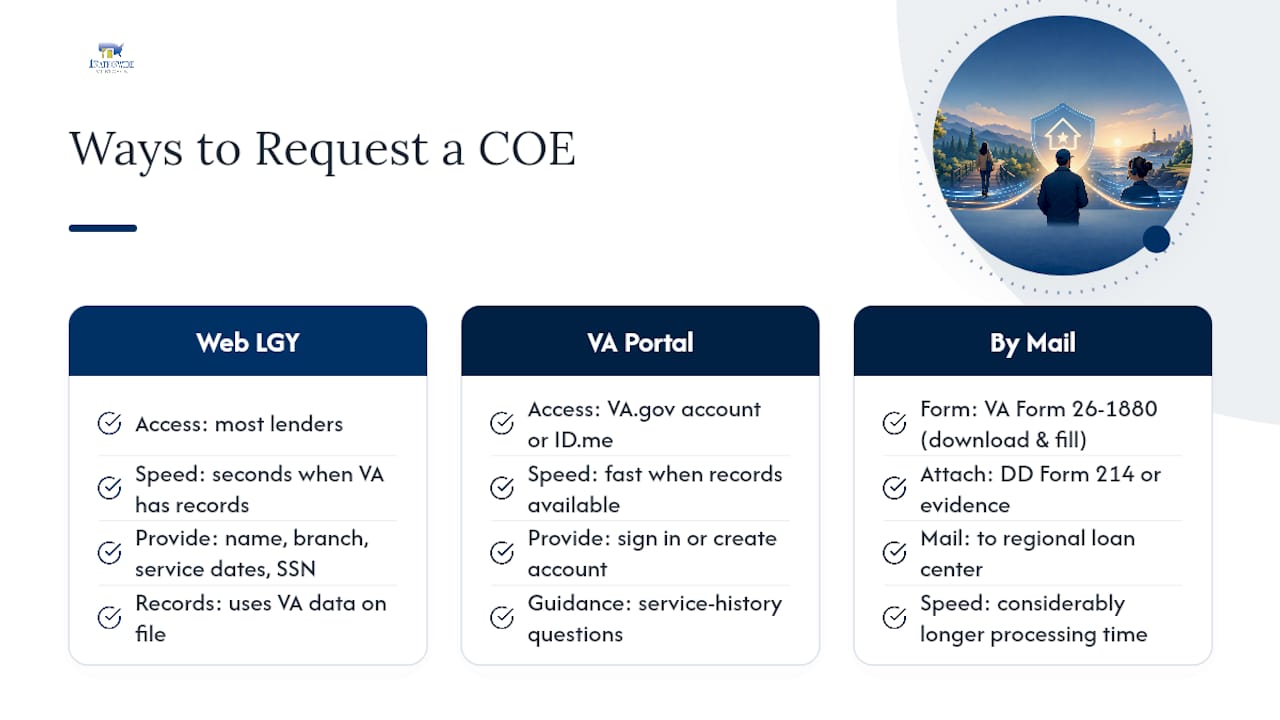
    • Request your COE online at VA.gov, through a VA-capable lender via Web LGY, or by mailing VA Form 26-1880.
    • Gather your service records (DD214 for veterans, statement of service for active-duty) before contacting a lender.

    1st Nationwide Mortgage Corporation, a direct mortgage banker with a BBB A+ rating, works with veterans and service members through the full VA qualification process, from COE retrieval to closing.


    Table of Contents

    Who qualifies for a VA home loan by service history and discharge status

    VA eligibility turns on three variables: when you served, how long you served, and how you were discharged. The VA is the only body that makes a final eligibility determination, but you can self-assess before applying.

    Era-based minimum service thresholds

    Service scenario Minimum service requirement
    Active duty, Gulf War era 24 continuous months
    Active duty, Vietnam era 24 continuous months
    Active duty, peacetime (post-Vietnam, pre-Gulf War) 24 continuous months
    Selected Reserve / National Guard 6 creditable years
    Surviving spouse Unremarried spouse of a veteran who died in service or from a service-connected disability

    Diagram of VA service eligibility minimums by era

    These thresholds are minimums. Early separation due to hardship, reduction in force, or a service-connected disability can still qualify you even if you fall short of the standard threshold — the VA reviews those cases individually.

    Character of discharge

    Your discharge must not be dishonorable. Other-than-honorable, bad conduct, and uncharacterized discharges are reviewed case by case. If your discharge character is in question, you can request a Character of Discharge determination from the VA before spending time on a COE application.

    Surviving spouse rules

    An eligible surviving spouse must be unremarried (with limited exceptions for remarriage after age 57 or after December 16, 2003). The veteran must have died in service or from a service-connected disability, or have been listed as missing in action or a prisoner of war. Surviving spouses who obtained a VA loan with their veteran spouse before the veteran’s death may also have specific one-time restoration options.

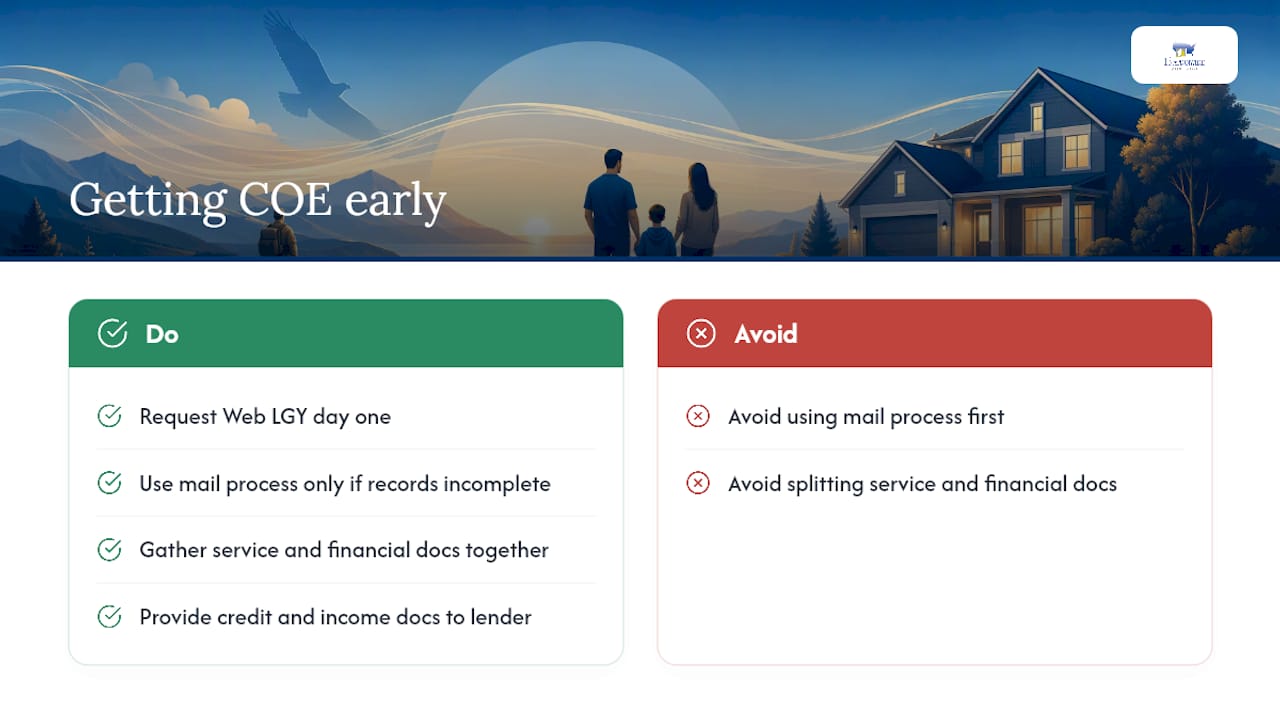
    Pro Tip: Ask your lender to pull your COE via Web LGY before you spend time gathering paper documents. If VA records are complete, the COE comes back instantly. If they are not, you will know exactly which documents to track down — typically the DD214 for veterans or an NGB Form 22 for National Guard members.


    How to get your Certificate of Eligibility (COE)

    The COE is the document that proves to a lender you have earned the VA home loan benefit. Lenders require it before they can process a VA-backed loan. Requesting a COE takes one of three paths, and the speed difference between them is significant.

    Three ways to request a COE

    1. Online via VA.gov — Sign in with DS Logon, ID.me, or My HealtheVet. Navigate to the COE request tool. If your service records are already in VA systems, you may receive your COE immediately or within a few business days.

    What lenders actually check: credit, income, residual income, and DTI

    VA eligibility and lender underwriting are two separate gates. Passing the first does not guarantee passing the second. Understanding what lenders evaluate gives you a real advantage going in.

    Credit score: the VA sets no floor, but lenders do

    The VA Buyer’s Guide is explicit: the VA does not set a universal minimum credit score. Lenders set their own thresholds, and those thresholds vary. Many lenders require a minimum credit score, though the exact threshold varies and some set it higher. Shopping multiple lenders matters here because the difference between a 580-minimum lender and a 640-minimum lender could determine whether you qualify at all.

    Lack of traditional credit history is not automatically disqualifying under VA guidelines. Lenders can consider nontraditional credit references — utility payment history, rent payment records, and similar evidence — when a borrower has thin credit files.

    Residual income: the metric that sets VA loans apart

    Residual income is the amount of money left over each month after all major obligations are paid, including the proposed mortgage payment, taxes, insurance, and other debts. The VA uses it as a secondary check on affordability, and it can be the deciding factor even when your debt-to-income ratio (DTI) looks acceptable on paper.

    Hands calculating budget with calculator and bills

    The VA sets residual income benchmarks by family size and geographic region. A borrower who falls short of the residual income threshold faces a harder path to approval, regardless of credit score. Conversely, strong residual income combined with significant liquid assets can compensate for a higher DTI or a marginal credit score.

    Automated Underwriting Systems (AUS)

    Most VA lenders run files through an Automated Underwriting System — either Fannie Mae’s Desktop Underwriter (DU) or Freddie Mac’s Loan Product Advisor (LPA) configured for VA loans. The AUS produces a recommendation (Approve/Eligible or Refer), but it is not the final decision. An underwriter reviews the full file, and a Refer recommendation does not automatically mean denial. It means a human underwriter will take a closer look.

    Pro Tip: Reducing revolving credit balances before applying has a direct effect on both your credit score and your residual income calculation. Paying down a credit card from 80% utilization to under 30% can move your score meaningfully in 30–a reasonable time after closing. If your income is variable or you are self-employed, bank statements showing consistent deposit history can support your case — see how inconsistent income affects loan approval and what documentation lenders want to see.

    Lenders also evaluate employment stability, the source and consistency of income, and how lenders assess your overall financial picture. For a deeper look at how underwriters weigh income, debt, and reserves together, this lender evaluation guide walks through the full framework.


    Occupancy rules, VA Minimum Property Requirements, and the appraisal vs. inspection question

    The occupancy rule

    VA loans are for primary residences only. You must certify your intent to personally occupy the property as your primary home within a reasonable time after closing, generally within a reasonable time. Active-duty service members who cannot occupy immediately may satisfy this requirement if a spouse or dependent child will occupy the property. You cannot use a VA loan to purchase a pure investment property or a vacation home.

    VA appraisal vs. independent home inspection

    These two things serve different purposes, and confusing them is one of the most common mistakes VA buyers make.

    VA Appraisal Independent Home Inspection
    Who orders it Lender (assigned by VA) Buyer
    Primary purpose Establish fair market value and confirm MPR compliance Identify defects, safety issues, and needed repairs for the buyer
    Protects The lender and VA guarantee The buyer
    Required for loan Yes No (but strongly recommended)
    Covers systems in detail No Yes (HVAC, plumbing, electrical, roof, etc.)

    The VA’s home buying process guidance recommends getting an independent inspection even though it is not required. An appraiser confirms the home meets VA Minimum Property Requirements (MPRs) and assigns a value — but the appraiser is not a home inspector and will not test every system in the house.

    VA Minimum Property Requirements: common issues that can stall a deal

    MPRs exist to confirm the property is safe, structurally sound, and sanitary. Common MPR failures include:

    • Exposed or faulty electrical wiring
    • Roof in poor condition or at the end of its useful life
    • Evidence of active pest infestation (termites, wood-destroying organisms)
    • Inadequate heating system for the climate
    • Lack of safe, potable water or a functioning sewage system
    • Major structural defects (foundation cracks, settling)
    • Lead-based paint hazards in homes built before 1978

    If the VA appraisal flags an MPR issue, the seller must typically repair it before closing, or the deal must be renegotiated. The VA Option Clause (also called the VA Escape Clause) in your purchase agreement protects you if the appraised value comes in below the purchase price — it lets you walk away with your earnest money intact. Never waive this clause.


    Documents to gather before you apply

    Having these ready before your first lender conversation shortens the underwriting timeline considerably. The VA Buyer’s Guide and lender checklists consistently point to the same core set.

    Service and identity documents:

    • DD214 (Member 4 copy) for veterans
    • Statement of service for active-duty members
    • NGB Form 22 and NGB Form 23 for National Guard / Reserve members
    • Government-issued photo ID

    Income documents:

    • Most recent 30 days of pay stubs or Leave and Earnings Statement (LES) for active-duty
    • W-2s for the past two years
    • Federal tax returns for the past two years (all schedules)
    • Bank statements for the past two to three months
    • Documentation of any other income (rental income, disability pay, alimony, etc.)

    VA-specific documents:

    • Certificate of Eligibility (COE) — or let your lender pull it via Web LGY
    • VA disability award letter, if applicable (required to claim a funding fee exemption)
    • Condo questionnaire or HOA documentation for condominium purchases

    Additional items lenders commonly request:

    • Letters of explanation for any derogatory credit items, late payments, or gaps in employment
    • Divorce decree or separation agreement if applicable to income or obligations
    • Signed purchase agreement with the VA Option Clause once you are under contract
    • Landlord contact information if you currently rent and the lender needs rental payment history

    Step-by-step VA loan application flow and what to expect at each stage

    The VA purchase process follows a predictable sequence. Knowing the order prevents surprises.

    1. Get preapproved. The lender reviews your credit, income, and residual income and issues a preapproval letter. Preapproval is not a guarantee of final approval — underwriting after contract can change the outcome. For a clear explanation of what preapproval actually means, see mortgage pre-qualification explained.

    Typical timeline by phase

    • COE retrieval via Web LGY can often be same day or within a few days
    • Preapproval: 1–3 business days with complete documents
    • Appraisal scheduling and completion: 1–3 weeks depending on market
    • Underwriting: 1–2 weeks for a clean file
    • Full purchase timeline (contract to close): typically 30–45 days

    For a broader view of how timelines compare across loan types, this home loan approval timeline guide provides useful context.

    Common reasons VA loan applications fail and how to fix them

    Most VA loan denials are preventable. The problems that surface most often fall into a short list, and each has a workable solution.

    Top causes of denial:

    • Insufficient residual income. The most uniquely VA-specific reason for denial. Your monthly obligations leave too little left over after the proposed payment. Fix: pay down installment debt before applying, or increase documented income.
    • Unstable or unverifiable income. Gaps in employment, recent job changes, or self-employment income that does not appear on tax returns. Fix: document 24 months of consistent income; for variable income, see variable income mortgage qualification tips.
    • Property MPR failures. The home does not meet VA safety and soundness standards. Fix: request a seller repair credit or price reduction, or walk away using the VA Option Clause.
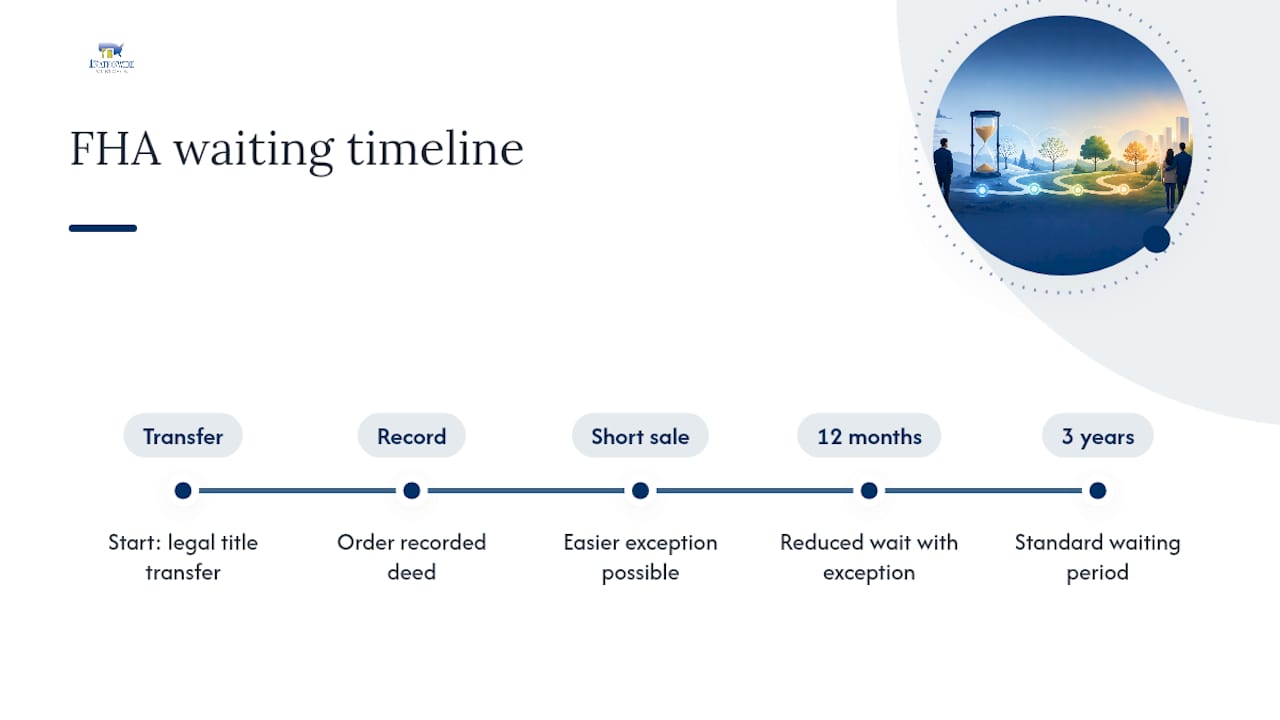
    • Unresolved derogatory credit. Recent bankruptcies, foreclosures, or collections. VA guidelines generally require a two-year waiting period after Chapter 7 bankruptcy and three years after a foreclosure, though exceptions exist. Fix: write letters of explanation, document the circumstances, and demonstrate re-established credit.
    • Incomplete service documentation. Missing DD214, unsigned statement of service, or incorrect NGB forms. Fix: order a replacement DD214 through the National Archives (eVetRecs system) well before you apply.

    Actionable remediation steps:

    • Pull your credit report at AnnualCreditReport.com and dispute any errors before applying
    • Pay revolving balances below 30% utilization
    • Build three to six months of liquid reserves — this strengthens residual income calculations
    • Get letters of explanation ready for any derogatory items; lenders want context, not just the fact
    • If the property’s condition is uncertain, order an independent inspection before signing a purchase contract

    Pro Tip: Ask your lender for a conditional underwriting review before you sign a purchase contract on a property with known condition issues. Some lenders will run a preliminary file review and flag residual income or credit concerns before you are legally committed to a deal. That conversation costs nothing and can save you a lost earnest money deposit.

    If a VA loan is not the right fit right now, a conventional loan or a bank-statement program may serve as a bridge while you address the underlying issue. A direct lender can help you evaluate which path makes the most sense for your current file.


    How VA entitlement works and how to restore it for future use

    Entitlement is the dollar amount the VA guarantees to a lender on your behalf. You do not need to understand the full math to use your benefit, but knowing the basics prevents costly surprises when you want to buy again.

    Used vs. restored entitlement

    When you close on a VA loan, a portion of your entitlement is “used.” If you sell the home and pay off the VA loan in full, you can apply to have that entitlement restored, making you eligible to use the full benefit again on a future purchase. The restoration request goes through VA Form 26-1880.

    Entitlement is not automatically restored when you pay off a VA loan. You must request it.

    Scenarios that restore entitlement

    • You paid off your prior VA loan in full and sold the property
    • A qualified assumer took over your VA loan and substituted their own entitlement for yours (the assumer must be an eligible veteran)

    Situations that block restoration

    • The VA paid a loss on a prior VA loan (a foreclosure or short sale where the VA covered the lender’s loss). Entitlement cannot be restored until that loss is repaid to the VA.
    • You still own the property securing the prior VA loan, even if the loan is paid off. Entitlement tied to a retained property is not available for reuse on a second primary residence purchase without a specific exception.

    Partial entitlement and down payment implications

    If you have used some entitlement and have not fully restored it, you may still have remaining entitlement available. Lenders can use partial entitlement to finance a new purchase, but if the loan amount exceeds the amount covered by your remaining entitlement plus the VA’s standard guarantee, a down payment may be required. Your lender can calculate this precisely once they pull your COE, which shows your available entitlement balance.

    Loan assumptions

    VA loans are assumable, meaning a buyer can take over your existing VA loan. If the assumer is not an eligible veteran, your entitlement remains tied to that loan until it is paid off. If the assumer is an eligible veteran who substitutes their entitlement, yours is released. Always confirm the assumer’s eligibility status before agreeing to an assumption if you want your entitlement back.


    Key Takeaways

    Qualifying for a VA home loan requires confirmed service eligibility, a Certificate of Eligibility, and meeting a lender’s credit, income, and residual income standards — all three must be in place before closing.

    Point Details
    Service eligibility first Confirm era, duty status, and discharge character at VA.gov before contacting a lender.
    COE via lender is fastest Lenders can pull a COE instantly through Web LGY when VA records are complete.
    Residual income is the key metric VA underwriting weighs leftover monthly income heavily — pay down debt to strengthen this number.
    VA appraisal is not a home inspection Order an independent inspection to protect your interests; the VA appraisal only confirms value and MPRs.
    Entitlement must be restored actively Pay off and sell the property, then file VA Form 26-1880 — restoration is not automatic.
    1st Nationwide Mortgage assists VA borrowers 1st Nationwide Mortgage helps veterans with COE retrieval, document review, and VA underwriting in California, Colorado, Oregon, Washington, Texas, and Idaho.

    What I have seen in VA files that most guides do not tell you

    Most articles about VA loan qualification stop at the checklist. What they skip is the pattern of problems that actually delay or kill deals in underwriting — and those patterns are consistent enough to be predictable.

    The most common file shortfall is not a credit score problem. It is a residual income problem that nobody caught early. A borrower looks fine on paper: decent credit, stable employment, manageable DTI. But after the proposed mortgage payment, taxes, insurance, and existing obligations are subtracted, the residual income falls below the VA’s regional threshold for their family size. The fix is almost always the same: pay down a car loan or a credit card before applying, not after the file is in underwriting.

    The second most common issue is documentation gaps on the service side. Veterans who separated years ago sometimes discover their DD214 has the wrong discharge characterization, or they cannot locate their copy at all. Ordering a replacement through the National Archives eVetRecs system takes time. Starting that process before you find a property is the right move.

    The third pattern is the property itself. A home that looks fine to the buyer fails the VA appraisal on an MPR issue — a roof at the end of its life, an aging heating system, or a water heater that does not meet code. An independent inspection before contract, or at minimum before the VA appraisal, gives you negotiating leverage. Without it, you are reacting to the appraiser’s findings under time pressure.

    My practical advice: get your COE pulled early, run a rough residual income calculation with your lender before you fall in love with a property, and never skip the independent inspection. The VA loan benefit is one of the most powerful financing tools available to service members and veterans. Treating the qualification process with the same discipline you brought to your service is what gets you to closing.


    VA home loan qualification help from 1st Nationwide Mortgage

    Veterans and active-duty service members who want a direct lender with VA experience have a concrete option in 1st Nationwide Mortgage Corporation. As a direct mortgage banker — not a broker — 1st Nationwide Mortgage handles VA loans from COE retrieval through closing, with no middleman adding time or cost to the process.

    1st Nationwide Mortgage

    The team assists with COE requests via Web LGY, walks you through residual income calculations before you are under contract, and reviews your document package so underwriting does not stall on a missing form. For veterans or service members whose income is variable or self-employment-based, 1st Nationwide Mortgage also offers bank statement mortgage programs for situations where tax returns understate actual income.

    VA loan programs are available in California, Colorado, Oregon, Washington, Texas, and Idaho. To get a prequalification conversation started, visit the VA home loans page or reach out directly to discuss your service history, COE status, and what lenders will want to see in your file.

    For illustration only. Not a commitment to lend. Rates and terms subject to change and qualification. 1st Nationwide Mortgage Corporation, NMLS #1281. Equal Housing Lender.


    Authority sources and official VA resources

    Use these official U.S. Department of Veterans Affairs pages to verify eligibility rules, download forms, and confirm current program details:

    For help with COE retrieval, document review, or a prequalification conversation, visit 1st Nationwide Mortgage’s VA eligibility resources or the VA home loans overview page.

  • Why Schedule C Reduces Loan Amounts: A Self-Employed Guide

    Why Schedule C Reduces Loan Amounts: A Self-Employed Guide

    Lenders underwrite self-employed borrowers on Schedule C net profit (Line 31), so ordinary business deductions lower the income lenders will count — and that reduction is then multiplied by a DTI and amortization factor that shrinks your allowable loan amount far more than the deduction itself.

    The short version:

    • Lenders use Schedule C Line 31 (net profit), not gross receipts or bank deposits, as the starting point for conventional qualifying income.
    • Common deductions — cost of goods sold, vehicle expenses, contract labor, supplies — reduce Line 31 dollar-for-dollar and therefore reduce what lenders count.
    • A few items get added back (depreciation, Section 179, business use of home, amortization), but most operating expenses do not.
    • Below-the-line deductions such as SEP/Solo 401(k) contributions, self-employed health insurance, and the QBI deduction do not reduce Line 31 at all, making them the most borrower-friendly tax moves.
    • The SBA Interim Final Rule (IFR) for PPP used a separate formula based on payroll share — different from how mortgage lenders treat Schedule C income.
    • 1st Nationwide Mortgage offers bank-statement, DSCR, and NONI programs that bypass Schedule C entirely for qualifying purposes.

    Illustrative leverage effect: A reduction in annual net profit translates to less monthly qualifying income. At a typical DTI ceiling, that decreases monthly housing room and reduces the mortgage loan amount supported (illustrative; actual results vary by rate, term, and DTI).


    Table of Contents

    1. How lenders derive qualifying income from your Schedule C

    Lenders do not simply pull a number off your tax return and call it income. They must perform a cash-flow analysis that adjusts your reported business income to reflect what you actually have available to make mortgage payments.

    The starting point is always Schedule C Line 31 (net profit or loss). From there, underwriters run a normalization sequence — commonly documented on Fannie Mae Form 1084 or Freddie Mac Form 91 — that adds back non-cash expenses and removes one-time or nonrecurring items.

    Standard normalization steps:

    • Add back: depreciation, Section 179 expensing, amortization, depletion, and the business-use-of-home deduction (these are paper expenses that don’t reduce actual cash flow).
    • Subtract: nonrecurring income (a one-time insurance settlement, for example), and required principal payments on any business debt, because those payments reduce the cash available for a mortgage.

    The Fannie Mae selling guide lists these recurring add-backs and nonrecurring removals explicitly. After normalization, lenders divide the adjusted total by 24 months to arrive at monthly qualifying income — unless a trend rule forces a different approach.

    Two-year averaging vs. single-year selection:

    Income trend Lender treatment
    Rising year over year Average both years (total ÷ 24 months)
    Falling year over year Use the lower year or most recent year only

    Infographic showing steps to calculate qualifying income

    Underwriters typically require two years of federal tax returns to establish stable income. When income is declining, using the lower year can significantly reduce the qualifying figure — sometimes below what the borrower needs to support their target loan amount. If both years show losses, conventional Schedule C qualification is generally unavailable, though alternative programs may still apply.

    Documentation lenders typically require at this stage:

    • Two years of signed federal 1040s with all Schedule C pages
    • IRS tax transcripts (Form 4506-C) to verify the returns match what was filed
    • Accountant-prepared year-to-date profit and loss statement
    • Business bank statements (12–24 months)
    • Explanation letters for any large one-time items or income swings

    2. Which Schedule C deductions actually reduce your qualifying income

    The core rule is straightforward: ordinary Schedule C operating expenses lower Line 31 dollar-for-dollar, and because lenders start with Line 31, those deductions reduce qualifying income by the same amount.

    Deductions that reduce qualifying income (no add-back):

    • Cost of goods sold (COGS)
    • Contract labor and subcontractor payments
    • Advertising and marketing expenses
    • Office supplies and materials
    • Ordinary vehicle expenses (actual method, not mileage add-back scenarios)
    • Meals and entertainment (to the extent deductible)
    • Rent or lease payments for business space
    • Utilities and phone allocated to the business

    Deductions commonly added back by lenders:

    • Depreciation and Section 179 expensing (non-cash; added back on Form 1084)
    • Amortization of startup costs or intangibles
    • Depletion
    • Business use of home (the Schedule C portion)

    Below-the-line deductions that never touch Line 31:

    These are the high-leverage moves for borrowers who want to reduce taxes without hurting their mortgage qualification. They appear on Schedule 1 of Form 1040, not on Schedule C itself:

    • SEP-IRA or Solo 401(k) contributions
    • Self-employed health insurance deduction
    • One-half of self-employment tax
    • Qualified Business Income (QBI) deduction

    Because these items reduce your adjusted gross income (AGI) without touching Line 31, they lower your tax bill while leaving your lender-counted income intact.

    Pro Tip: If you are planning to apply for a mortgage within the next 12–18 months, shift as much of your tax reduction strategy as possible toward below-the-line deductions. Max out your SEP or Solo 401(k) contribution before you consider accelerating depreciation or adding discretionary operating expenses. The tax savings are comparable; the mortgage impact is not.

    Overhead view of deductions documents and notes


    3. A worked example: how one deduction shrinks your loan amount

    An increase in Schedule C deductions reduces borrowing power by a multiple of that figure due to amplification through DTI math and loan amortization.

    Here is the step-by-step calculation, using illustrative figures:

    Step Calculation Result
    Monthly qualifying income loss $10,000 ÷ 12 months = $833
    Housing room lost (43% DTI) $833 × 0.43 = $358
    Approximate loan amount lost ~-$44,000

    Illustrative leverage effect: A deduction on Schedule C reduces your supported mortgage amount by a multiple of that figure under typical underwriting parameters. This is a framework calculation — your actual result depends on your specific rate, term, and total debt load.

    Assumptions used in this example:

    • Two-year averaging applied (income divided by 24 months)
    • 43% maximum DTI (a common conventional ceiling)
    • 30-year amortization term
    • No other debt changes; all other income and obligations held constant

    The math works the same in reverse. Adding back depreciation claimed on Schedule C can meaningfully recover loan capacity. That is why the normalization process matters: it is not just paperwork. It is the mechanism that converts your tax return into a borrowing number.


    4. How PPP historically calculated loan amounts for Schedule C filers

    PPP loan sizing for Schedule C filers followed a specific formula from the SBA Interim Final Rule — and it worked differently from how mortgage lenders use Schedule C income.

    The PPP formula treated Schedule C net profit as a proxy for owner compensation (the “payroll” of a sole proprietor). Eligible borrowers could calculate their maximum PPP loan amount based on a defined share of that net profit figure, subject to program caps. The SBA’s PPP FAQ guidance clarified how sole proprietors documented and calculated their eligible amounts.

    Key distinction: PPP measured a payroll-equivalent share of Schedule C net profit for loan sizing and forgiveness eligibility. Mortgage lenders use Schedule C net profit as a measure of ongoing business cash flow available to service debt — a fundamentally different purpose, with different normalization rules and documentation standards.

    PPP calculation vs. mortgage underwriting — direct comparison:

    • Income basis: PPP used net profit as a payroll proxy, capped at program limits per period. Mortgage lenders use normalized cash flow from Line 31 after add-backs and subtractions.
    • Documentation: PPP required the Schedule C from the most recent tax year filed. Mortgage lenders require two years of returns plus transcripts, a year-to-date P&L, and bank statements.
    • Purpose of the number: PPP sized a forgivable loan based on payroll replacement. Mortgage underwriting sizes a repayable loan based on your demonstrated ability to make monthly payments.
    • Losses: A net loss on Schedule C could disqualify a PPP borrower from the owner-compensation calculation. For mortgages, a loss year may eliminate conventional qualification entirely or force use of the lower year.
    • Add-backs: PPP did not apply the Form 1084 normalization that mortgage lenders use. Depreciation, for example, was not added back to the PPP payroll calculation.

    Understanding this distinction matters if you applied for PPP and assumed your mortgage qualification would work the same way. The two programs share a data source (Schedule C) but use it for entirely different calculations.


    5. What lenders ask for and how they verify your Schedule C income

    Lenders typically require two years of federal returns and supporting documentation; if income is declining, they may use the lower or most recent year rather than an average.

    The documentation list is predictable once you understand what underwriters are trying to confirm: that your business income is real, recurring, and sufficient to support the proposed payment.

    Standard documentation checklist:

    • Federal 1040s (two years) with all Schedule C pages, signed and dated
    • IRS tax transcripts via Form 4506-C — lenders order these directly to confirm the returns match what was filed; discrepancies between filed returns and submitted copies are a common denial trigger
    • Year-to-date profit and loss statement prepared or reviewed by a CPA, covering the period from January 1 through the most recent month
    • Business bank statements (12–24 months) to support the P&L figures and show deposit patterns
    • Explanation letters for any large one-time items, unusual expense spikes, or year-over-year income drops
    • Business license or proof of active operation (two years of self-employment history is the standard threshold)

    How underwriters handle adjustments:

    Normalization adds back non-cash expenses and removes nonrecurring items, but it also subtracts required principal payments on business debt. This is a detail many borrowers miss: if your business carries a loan with required principal payments, those payments reduce the cash available for a mortgage, and the underwriter will subtract them from your normalized income. The add-back process is a normalization, not a guaranteed cash increase — the net effect depends on your business’s capital structure.

    Pro Tip: A CPA-prepared year-to-date P&L is not just a formality. Ask your accountant to include footnotes that explain any large expense categories, document the basis for any depreciation schedule, and confirm that the P&L is consistent with the bank statements you are submitting. An underwriter who can trace every line of the P&L back to a bank deposit or a receipt is far more likely to accept an add-back or an upward income trend explanation. Mortgage scenario analysis can also help your lender model how the P&L affects your qualifying number before you submit a full application.


    6. Real alternatives when Schedule C deductions lower your qualifying income

    If Schedule C deductions reduce your conventional qualifying income below what you need, alternatives exist that use deposits, rental cash flow, or different documentation standards to qualify larger loans.

    These programs do not require you to change your tax strategy. They simply use a different income basis.

    Bank-statement loans

    Instead of Schedule C Line 31, the lender calculates qualifying income from 12–24 months of bank deposits. For high-expense businesses, this often increases borrowing capacity materially compared to the tax-return method. The standard expense factor is 50% on business accounts (meaning 50% of gross deposits are counted as income), but that factor can drop to 35–40% with a CPA-certified P&L that documents actual business expenses. Minimum credit score is typically 620, with 10–20% down.

    Best fit: self-employed borrowers with strong deposit history whose write-offs suppress Line 31 below what they need for conventional qualification.

    Man working on bank statement loan documents

    DSCR loans

    Debt Service Coverage Ratio loans qualify investment properties on the rental income the property generates, not on the borrower’s personal income. Your Schedule C plays no role in the qualification. These are investment and non-owner-occupied properties only; DSCR is not available for a primary residence. LLCs are eligible, and there is no cap on the number of financed properties.

    Best fit: real estate investors whose personal income (including Schedule C) would not support a conventional loan but whose rental properties generate sufficient cash flow.

    NONI (No Income, No Asset) loans

    NONI products are designed for borrowers with no documentable income — including foreign nationals and certain nontraditional borrowers. Qualification is based on asset profile and property characteristics rather than income documentation.

    Best fit: foreign nationals and borrowers whose income genuinely cannot be documented through standard channels.

    Pro Tip: Before choosing an alternative program, ask the lender three specific questions: (1) How do you average deposits — calendar month or rolling 12? (2) What transfers between accounts are excluded from the deposit count? (3) Will you accept a CPA-certified P&L to reduce the expense factor below 50%? The answers will tell you quickly whether the lender has real experience with self-employed files or is just offering a product.

    1st Nationwide Mortgage offers all three of these programs as a direct lender. You can explore alternative loan options for self-employed borrowers or run your deposit history through the bank-statement calculator to see a qualifying estimate before committing to a full application.


    7. Practical steps to increase the loan amount you qualify for

    You can increase qualifying income by using legitimate add-backs, shifting deductible timing, and documenting current cash flow with a year-to-date P&L or bank statements — all without changing your underlying business or filing anything inaccurate.

    Checklist of high-impact moves:

    • Identify legitimate add-backs before you apply — Review your Schedule C with your accountant and flag every depreciation, Section 179, amortization, and business-use-of-home line. These are recoverable dollars in the lender’s normalization.

    Illustrative trade-off: The same additional Schedule C deductions that provide tax savings cost a significant amount in mortgage borrowing power. For most borrowers planning to purchase in the near term, the math favors preserving Line 31 income over claiming every available deduction.

    A word on consistency. Underwriters value consistency between your tax returns, your P&L, and your bank statements. A CPA-prepared P&L and supporting bank deposits often help explain why a recent tax year looks low — but only if the numbers align. Discrepancies between what you filed and what you submit to the lender are one of the most common triggers for file delays or denials. Keep your documentation clean and consistent throughout the process.


    Key Takeaways

    Schedule C net profit (Line 31) is the foundation of conventional qualifying income for self-employed borrowers, and every dollar of operating expense that reduces it also reduces your supported loan amount by a multiple of that figure.

    Point Details
    Lenders start with Line 31 Net profit, not gross receipts, is the conventional qualifying income base for Schedule C filers.
    Add-backs recover some income Depreciation, Section 179, amortization, and business-use-of-home are added back; most operating expenses are not.
    Below-the-line deductions protect borrowing power SEP/Solo 401(k), self-employed health insurance, and QBI deductions reduce taxes without touching Line 31.
    The leverage effect is significant A $10,000 deduction reduces qualifying income by $833 per month and cuts the supported loan amount by roughly $44,000, as illustrated in the main example.
    1st Nationwide Mortgage offers alternatives Bank-statement, DSCR, and NONI programs bypass Schedule C entirely, often producing higher qualifying power for affected borrowers.

    The tax-mortgage trade-off is a real decision, not a technicality

    Most self-employed borrowers discover the Schedule C problem at the worst possible moment: after they have already filed two years of aggressive returns and found a property they want to buy. The conventional advice is to “just claim less” — but that is both an oversimplification and, in some cases, a compliance risk.

    The smarter framing is to treat your tax strategy and your mortgage strategy as two variables in the same equation. Aggressive write-offs are not inherently wrong; they become costly when you need to borrow and have not modeled the mortgage impact. The borrowers who navigate this best are the ones who run the numbers before they file, not after. They fund retirement accounts instead of accelerating depreciation. They get a CPA-prepared P&L ready before they talk to a lender. And when their Schedule C income still falls short, they choose a program that matches their actual financial reality — a bank-statement loan, a DSCR product, or a NONI structure — rather than trying to reverse two years of tax decisions in twelve months.

    The programs exist precisely because the tax code and the mortgage underwriting system were not designed with each other in mind. Using them is not a workaround. It is the correct tool for the situation.


    How 1st Nationwide Mortgage helps Schedule C filers qualify for more

    Self-employed borrowers whose deductions suppress Schedule C income have a concrete alternative to conventional qualification: programs that measure what you actually earn, not what your tax return reports after every legitimate write-off.

    1st Nationwide Mortgage

    1st Nationwide Mortgage is a direct mortgage banker (BBB A+) that underwrites bank-statement, DSCR, and NONI loans in-house — no broker markup, no third-party approval chain. For Schedule C filers, the bank-statement program uses 12–24 months of deposits as the income basis, with an expense factor that can drop to 35–40% when you provide a CPA-certified P&L. For real estate investors, DSCR loans qualify on the property’s rental cash flow, with no personal income documentation required. For borrowers with no documentable income, NONI loans up to $3.5M offer a path that conventional underwriting cannot.

    Program quick reference:

    • DSCR loans: — Investment and non-owner-occupied properties only. Rental income qualifies; personal income is not required. Works for LLCs with no limit on financed properties.
    • NONI loans: — No income, no asset documentation required. Designed for foreign nationals and nontraditional borrowers. Up to $3.5M.

    Use the bank-statement income calculator to run your deposit history against a qualifying estimate before you apply. Program availability varies by state, and all terms are confirmed at application.

    For illustration only. Not a commitment to lend. Rates and terms subject to change and qualification. 1st Nationwide Mortgage Corporation, NMLS #1281. Equal Housing Lender.


    Useful sources and further reading

    The rules governing Schedule C income for loan qualification come from primary regulatory and agency sources. These are the most authoritative references used in this article:

    • SBA Interim Final Rule — PPP Eligibility and Loan Amounts: The Treasury/SBA IFR that established how Schedule C filers calculated PPP loan amounts based on net profit as a payroll proxy.
    • SBA PPP Frequently Asked Questions: Official FAQ covering sole proprietor documentation and calculation methods for PPP eligibility.
    • Fannie Mae Selling Guide — Schedule C Income: The authoritative source for how conventional lenders normalize Schedule C cash flow, including the add-back list and nonrecurring income treatment.
    • Schedule C Mortgage Qualification Guide — OwnLuxuryHomes: Practical framework for how sole proprietors qualify under conventional and alternative programs, including the two-year averaging rule and loss-year scenarios.
    • Self-Employed Income Underwriting — Homebuyer.com: Explains how underwriters evaluate self-employment income, the two-year return requirement, and how declining income is treated.
    • Why Tax Returns Hurt Self-Employed Borrowers — 1st Nationwide Mortgage: Explains the tax vs. borrowing trade-off and how bank-statement programs produce higher qualifying power for high-deduction borrowers.
    • Alternative Income Documentation Mortgage Guide — 1st Nationwide Mortgage: Covers 2026 updates to alternative documentation methods and how bank-statement qualification works in practice.
  • Why Depreciation Recapture Matters in Mortgages

    Why Depreciation Recapture Matters in Mortgages

    Depreciation recapture is the tax event most real estate investors underestimate until closing day. When you sell a rental or investment property, the IRS does not simply tax your profit at the long-term capital gains rate. It first carves out the portion of your gain that equals the depreciation you claimed, or should have claimed, and taxes that portion separately at a higher rate. For residential rental property, that rate can reach 25% federally under the unrecaptured §1250 gain rules, and high-income investors can add another 3.8% from the Net Investment Income Tax before state tax enters the picture. The gap between what you expected to net and what you actually keep can be tens of thousands of dollars.

    Here is what you need to know immediately:

    • When recapture triggers: Any sale or transfer of ownership of a depreciable property. Gifting and certain non-1031 exchanges also qualify.
    • When recapture does NOT trigger: A refinance, including a cash-out refinance, is a liability transaction, not a sale. Ownership stays with you, so the depreciation schedule continues untouched.
    • The tax ceiling: Unrecaptured §1250 gain is taxed at a maximum federal rate of 25%, plus potential NIIT and state income tax.

    Three actions to take now:

    1. Ask your CPA to run a recapture model on your property today, not the week you list it.
    2. Talk to your lender about non-sale liquidity options such as a cash-out refinance or DSCR loan.
    3. If a sale is likely, start evaluating 1031 exchange feasibility and timing 12–24 months before you list.

    Table of Contents

    What depreciation recapture is and how the IRS calculates it

    Depreciation recapture is the mechanism by which the IRS recovers the tax benefit you received from deducting property depreciation against ordinary income, when you later sell that property at a gain.

    Every year you own a rental property, you deduct a portion of the building’s cost as depreciation. That deduction reduces your taxable income. When you sell, the IRS says: the gain up to the total depreciation you claimed, or were allowed to claim, is not treated as a simple capital gain. It is recaptured and taxed at a higher rate.

    The “allowed or allowable” rule is the most important thing to understand about recapture. The IRS reduces your adjusted basis by depreciation allowed or allowable, meaning even if you never claimed the deduction, your basis is still reduced as if you had. Skipping depreciation does not protect you from recapture at sale — it just means you paid more tax during ownership and still owe recapture tax when you sell.

    The IRS confirms this in its FAQs on the sale or trade of business property: basis is reduced by depreciation allowed or allowable, and failing to claim it does not prevent recapture.

    The code sections that govern recapture:

    • IRC §1250: Applies to real property (buildings). Gain up to accumulated straight-line depreciation is “unrecaptured §1250 gain,” taxed at a maximum 25% federal rate.
    • IRC §1245: Applies to personal property and certain improvements (equipment, cost segregation components, Section 179 assets, bonus depreciation items). Recapture here is taxed as ordinary income, which can exceed 37% for high earners.
    • IRC §1231: The broader category covering gains and losses on business property held more than one year. Recapture rules under §1245 and §1250 apply first; any remaining gain is §1231 gain, typically taxed at long-term capital gains rates.

    Cost segregation studies and 100% bonus depreciation accelerate deductions and improve current cash flow, but they reclassify portions of the building into shorter-lived personal property categories. Those components fall under §1245 when you sell, meaning the recapture is taxed at ordinary income rates, not the 25% ceiling that applies to §1250 gain. That tradeoff deserves a conversation with your CPA before you pursue aggressive depreciation strategies.


    Infographic showing triggers and tax rates for depreciation recapture

    How to calculate depreciation recapture with a worked example

    The math follows a consistent sequence. Work through these steps for any property you are considering selling.

    1. Calculate accumulated depreciation — For residential rental property, the IRS uses a straight-line schedule under MACRS with a prescribed recovery period. Divide the depreciable basis by the recovery period and multiply by the number of years held.

    Worked example

    Step Item Amount
    Purchase price Building + land
    Land allocation Non-depreciable
    Depreciable basis Building only $380,000
    Annual depreciation is calculated by dividing the depreciable basis by the prescribed recovery period.
    Accumulated depreciation Held multiple years; accumulated depreciation is proportional to the number of years held times the annual depreciation.
    Adjusted basis $380,000 − $154,545 $225,000
    Net sale price After selling costs
    Realized gain — − $225,000
    Recapture portion Up to depreciation taken $154,545
    Remaining capital gain — − $154,545 $225,000

    On this property, $154,545 is taxed as unrecaptured §1250 gain at up to 25%, producing a federal recapture tax of roughly $38,636. The remaining $225,000 is taxed at the long-term capital gains rate, typically 15% or 20% depending on income. Add the 3.8% NIIT on both portions if your modified adjusted gross income exceeds the applicable threshold, and state income tax on top of that. The total tax bill can easily exceed $70,000 on a property many investors assumed would generate a clean capital gain.

    Team discussing depreciation recapture taxes

    Unrecaptured §1250 gain creates a meaningful tax gap between the capital gains rate an investor expects and the true effective rate on sale proceeds. That gap is why planning ahead matters so much.


    Sale versus refinance: what actually triggers recapture

    The single most useful distinction in investor tax planning is this: a refinance transfers no ownership, so it triggers no recapture. A sale does.

    Refinancing is a liability transaction, not a disposition. When you take out a new mortgage or do a cash-out refinance, you are changing what you owe, not who owns the property. The IRS does not treat this as a taxable event. Your depreciation schedule continues, your adjusted basis is unchanged, and no recapture is recognized.

    LegalClarity confirms that refinancing leaves the property’s original depreciation schedule intact. Seasoned investors use cash-out refinancing math repeatedly as a tax-neutral liquidity strategy, pulling equity while keeping depreciation deductions active for years or even decades. The recapture only arises when they eventually sell.

    Events that DO trigger recapture:

    • Outright sale to a third party
    • Exchange not structured as a valid 1031 like-kind exchange
    • Gifting in certain circumstances (the recipient inherits your adjusted basis)
    • Involuntary conversion in some cases
    • Installment sale (recapture recognized in year of sale, not spread over installments)

    Common misconceptions to correct:

    • “Refinancing resets my depreciation.” It does not. Your depreciation schedule and adjusted basis are unaffected by any refinance.
    • “Moving title to my single-member LLC always triggers recapture.” Not necessarily. A disregarded entity transfer may be treated as a non-event for federal tax purposes, but this is fact-specific. Get a tax opinion before any title transfer.
    • “If I never claimed depreciation, I have no recapture.” Wrong. The IRS’s “allowed or allowable” rule means unclaimed depreciation still reduces your basis and creates recapture exposure.

    Pro Tip: Before moving title to any entity or trust, ask your CPA and a tax attorney whether the transfer constitutes a disposition under federal and state law. The answer is not always obvious, and the cost of getting it wrong is a full recapture event.


    How depreciation recapture is taxed: rates, NIIT, and state considerations

    Federal tax on recapture splits into two tracks depending on the type of property.

    Residential rental property (§1250 assets): The unrecaptured §1250 gain is taxed at a maximum federal rate of 25%. This is a ceiling, not a flat rate. If your ordinary income tax rate is below 25%, the recapture is taxed at your actual rate. Most investors in the middle-to-upper income brackets hit the full 25%.

    Personal property and cost segregation components (§1245 assets): Recapture on these items is taxed as ordinary income, at rates up to 37% for the highest earners. Investors who used aggressive cost segregation or bonus depreciation on equipment and short-lived components face this higher rate on those portions.

    Net Investment Income Tax (NIIT): The IRS imposes a 3.8% NIIT on net investment income for taxpayers whose modified adjusted gross income exceeds $200,000 (single) or $250,000 (married filing jointly). Gain from the sale of rental property, including the recapture portion, generally qualifies as net investment income. This pushes the effective federal recapture rate toward 28.8% before state tax.

    Combined effective rate example

    Tax component Rate Applied to
    Unrecaptured §1250 gain 25% $154,545 recapture portion
    NIIT 3.8% $154,545 recapture portion
    Hypothetical state income tax $154,545 recapture portion
    Combined effective rate Recapture portion only

    Combined federal and state tax rates on the recapture portion can substantially increase the tax liability relative to the federal rate alone. Investors who budget only for a 15% or 20% capital gains rate on their entire profit will be short by a significant margin at closing.

    State tax treatment varies. Some states conform to federal recapture rules; others have their own depreciation schedules or different rates for investment income. Your CPA should model both federal and state exposure together.


    Common strategies to defer, reduce, or plan for recapture

    No strategy eliminates recapture permanently except death, which produces a step-up in basis for heirs. Every other approach either defers the liability or restructures when and how it is recognized.

    1031 like-kind exchange

    A properly structured 1031 exchange defers both capital gain and depreciation recapture by rolling them into the replacement property’s basis. Deferral continues until a taxable sale, or indefinitely if the investor continues exchanging or holds until death.

    • Pro: Defers the entire tax bill, including recapture, into the next property.
    • Con: Strict timelines apply. You have 45 days to identify a replacement property and 180 days to close. Missing either deadline collapses the exchange and triggers full recognition.
    • Planning note: Identify a qualified intermediary before you list the property. You cannot touch the sale proceeds.

    Installment sale

    Spreading payments over multiple years can defer the capital gain portion, but Section 1245 ordinary-income recapture must be recognized in full in the year of sale, regardless of when you collect the cash. Unrecaptured §1250 gain can be spread proportionally across installments.

    • Pro: Smooths capital gain recognition over several years, potentially keeping you in a lower bracket.
    • Con: Does not defer §1245 recapture. Buyer credit risk is real.

    Timing the sale to a lower-income year

    If you expect a significant income drop (retirement, business sale, career change), selling in that year can reduce the effective rate on both recapture and capital gain.

    • Pro: Simple, no intermediary required.
    • Con: Requires accurate income forecasting and flexibility on sale timing.

    Step-up in basis at death

    Heirs receive a stepped-up basis equal to fair market value at the date of death. Accumulated depreciation and unrealized gain are both wiped out. No recapture is ever recognized.

    • Pro: Permanently eliminates recapture and capital gain for the estate.
    • Con: Requires holding the property until death. Not a liquidity strategy.

    Qualified Opportunity Fund (QOF)

    Investing capital gain proceeds (not the full sale price) into a Qualified Opportunity Fund can defer and potentially reduce gain recognition for investors who meet the eligibility and holding requirements.

    • Pro: Defers gain and may reduce it if held long enough.
    • Con: Complex rules, limited fund options, and recapture is not deferred the same way as a 1031.

    Cash-out refinance as an alternative to selling

    Rather than selling and triggering recapture, many investors access equity through a cash-out refinance and keep the property’s depreciation deductions active. This is not a recapture strategy per se, but it avoids the triggering event entirely.

    • Pro: Tax-neutral, preserves depreciation, and can be repeated.
    • Con: Increases debt service; requires qualifying for the new loan.

    Pro Tip: Start planning 12–24 months before any anticipated sale. By that point, a 1031 exchange can be properly structured, installment terms can be negotiated, and your lender can model refinancing alternatives. After you list, most of these options close.


    How depreciation and recapture affect your mortgage decisions

    The connection between depreciation recapture and mortgage planning is direct, and most investors miss it until they are already in escrow.

    Lenders reviewing business-purpose loans on investment properties want to understand your exit strategy. If your plan involves selling the property to repay a bridge loan or fund a 1031 exchange, an underwriter will want to see a realistic net-proceeds model, and that model must account for recapture tax. A projected sale that ignores a $60,000 recapture liability is not a credible exit plan.

    Depreciation’s role in mortgage qualification goes beyond the tax side. On the income side, depreciation deductions reduce the net income reported on Schedule E, which is what conventional lenders use to qualify self-employed investors. A property generating strong cash flow can look like a loss on paper after depreciation, making conventional qualification difficult.

    Financing options that let investors avoid selling:

    • DSCR loans: Qualify based on the property’s rental income relative to its debt service, with no personal income documentation required. Works for LLCs, no limit on financed properties. Investment and non-owner-occupied only. Use a DSCR loan calculator to estimate whether your rental income covers the new payment.
    • Bank statement loans: For self-employed investors whose tax returns show heavy write-offs. Qualifying income is derived from 12–24 months of bank deposits, not Schedule E. The standard expense factor is 50% on business accounts, dropping to 35–40% with a CPA-certified P&L.
    • NONI loans: For foreign nationals and investors with no documentable income. Qualification is asset-based rather than income-based.
    • Cash-out refinance: Pulls equity from an existing property without selling. Tax-neutral, preserves depreciation, and can fund a 1031 replacement property purchase or other investment.

    Underwriting red flags when recapture is ignored:

    • Exit strategy projections that do not net out recapture tax, leaving insufficient proceeds to repay the loan
    • Debt-to-income calculations that do not account for the tax reserve needed at closing
    • Investors who plan to 1031 exchange but have not identified a qualified intermediary or replacement property within feasible timelines
    • Title held in an entity structure that may complicate loan qualification or trigger a due-on-sale clause

    Pro Tip: Bring your CPA’s recapture estimate to your lender conversation before you list. A lender who understands your after-tax net proceeds can structure a refinancing alternative that keeps more cash in your pocket than a sale would.


    Your 12–24 month pre-sale checklist

    Acting early preserves options. Here is a practical timeline organized by how far out you are from a potential sale.

    12–24 months before listing

    1. Ask your CPA to run a full recapture model using your current adjusted basis, accumulated depreciation, and a realistic sale price range.
    2. Evaluate whether the sale year will be a high- or low-income year and whether timing the sale differently would reduce your effective rate.
    3. Assess 1031 exchange feasibility: identify potential replacement properties, confirm you can meet the 45-day identification and 180-day closing windows, and select a qualified intermediary.
    4. Review whether a Qualified Opportunity Fund investment is viable for any capital gain portion.
    5. Consider whether a cash-out refinance now could meet your liquidity needs without triggering a sale at all.

    6–12 months before listing

    1. Consult your lender about non-sale liquidity options, including DSCR cash-out refinancing or a DSCR cash-out refinance on the investment property.
    2. Finalize your capital improvement records. Every dollar of documented improvement increases your basis and reduces your taxable gain.
    3. Confirm whether cost segregation components in your property are subject to §1245 recapture at ordinary income rates, and factor that into your net-proceeds model.
    4. If an installment sale is under consideration, have your tax attorney draft preliminary terms and confirm the buyer’s creditworthiness.

    0–3 months before closing

    1. Confirm that Form 4797 (Sales of Business Property) and Schedule 1 will be prepared by your CPA to properly report recapture.
    2. Request a closing cost estimate from your title company that includes a line for estimated recapture tax, so you are not surprised by the net proceeds figure.
    3. If you are doing a 1031 exchange, confirm your qualified intermediary has received the sale proceeds directly and that replacement property identification is on track.
    4. Verify with your lender that any bridge financing or acquisition loan for the replacement property is in place before the 180-day exchange window closes.

    Key Takeaways

    Depreciation recapture creates a separate, higher-taxed gain at sale that can materially reduce net proceeds, and planning 12–24 months ahead with your CPA and lender is the most reliable way to avoid closing-day surprises.

    Point Details
    Recapture triggers on sale, not refinance A cash-out refinance is tax-neutral; only a sale or ownership transfer triggers recapture.
    Maximum federal rate of 25% on §1250 gain High-income investors add 3.8% NIIT, pushing the effective federal rate toward 28.8% before state tax.
    “Allowed or allowable” rule catches unclaimed depreciation Skipping depreciation deductions does not prevent recapture; the IRS reduces basis regardless.
    Start planning 12–24 months before listing 1031 exchanges, installment structures, and refinancing alternatives all require lead time to execute.
    1st Nationwide Mortgage offers non-sale liquidity options DSCR loans, bank statement loans, and NONI programs let investors access equity without selling.

    The mistake investors make most often with recapture

    Most investors I speak with have a solid grasp of capital gains tax. They know the long-term rate, they know their bracket, and they have a rough sense of what they will net from a sale. What catches them off guard is the recapture layer, specifically the fact that it sits on top of capital gains, not inside it.

    The scenario plays out the same way repeatedly. An investor holds a rental property for 10 or 15 years, builds substantial equity, and decides to sell. Their CPA runs the numbers a week before closing and delivers a tax estimate that is $40,000 to $80,000 higher than the investor expected. At that point, the 1031 exchange window has not been opened, no qualified intermediary is in place, and the only option is to write the check.

    What should have happened is a conversation 18 months earlier. At that stage, a 1031 exchange is entirely feasible. A cash-out refinance might have met the investor’s actual liquidity need without any sale at all. A bank statement loan or DSCR loan could have funded the next acquisition without forcing a disposition.

    The lender’s role in this conversation is underappreciated. A mortgage banker who understands recapture can model the after-tax net proceeds from a sale against the cash-out proceeds from a refinance and show you which path actually puts more money in your hands. That comparison is not complicated, but it requires the lender to know your depreciation history and your CPA to be in the conversation early.

    My advice: treat your lender as part of the planning team, not just the person you call when you have already decided to sell. The right financing structure, chosen 12 to 24 months before a potential sale, often produces a better outcome than any tax strategy applied at the last minute.


    Access equity without selling: financing options for investors

    1st Nationwide Mortgage

    If your property has appreciated significantly and you need liquidity, selling is not your only option, and given the recapture tax exposure, it may not be your best one. 1st Nationwide Mortgage, a BBB A+ rated direct mortgage banker, works with real estate investors who want to access equity through financing rather than a taxable sale.

    For investors with rental properties, DSCR loans qualify based on the property’s rental income, not your personal tax returns. That matters when depreciation write-offs have reduced your reported income below what conventional lenders accept. For self-employed investors, bank statement loans use 12–24 months of deposits to derive qualifying income, bypassing the Schedule E problem entirely. Foreign nationals and investors without documentable income can explore NONI loan options up to $3.5M.

    Hands reviewing mortgage refinance documents

    1st Nationwide Mortgage can model a cash-out refinance scenario alongside your CPA’s recapture estimate so you can see the after-tax comparison clearly before you commit to a sale. Programs are available for investment properties across a multi-state footprint. To discuss which program fits your situation, visit 1st Nationwide Mortgage’s investment property page or speak directly with the team.

    For illustration only. Not a commitment to lend. Rates and terms subject to change and qualification. 1st Nationwide Mortgage Corporation, NMLS #1281. Equal Housing Lender.

    This article is general information, not tax or legal advice. Confirm current rules and your specific tax exposure with a qualified CPA or tax attorney before making any sale or financing decision.


    Authoritative resources and technical references

    Resource Best used for
    IRS Publication 527, Residential Rental Property Depreciation schedules, MACRS rules, and rental income reporting for residential properties
    IRS Publication 544, Sales and Other Dispositions of Assets Adjusted basis calculations, recapture mechanics, and §1231 gain treatment
    IRS Form 4797 and Instructions Reporting sales of business property, including recapture amounts
    IRS Net Investment Income Tax NIIT thresholds, rates, and which income types are subject to the 3.8% surtax
    IRS FAQs: Sale or Trade of Business, Depreciation, Rentals “Allowed or allowable” rule and basis reduction for unclaimed depreciation
    LegalClarity: Tax Impact of Selling vs. Refinancing Clear explanation of why refinancing does not trigger recapture
    LegalClarity: How to Calculate Depreciation Recapture Step-by-step recapture calculation for rental property sales
    ReedCorp Tax: Depreciation Recapture Explained Planning timelines, NIIT impact, and closing-day tax shock prevention
    Hiltzik CPA: Depreciation Recapture on Rental Property Sale Practitioner-level guidance on the 25% cap and net-proceeds modeling
    Steven J. Cashiola, CPA: §1231, §1245, §1250 Explained Code section breakdown and installment sale recapture rules
    1st Nationwide Mortgage: Depreciation’s Role in Mortgage Qualification Lender-side perspective on how depreciation affects loan qualification and underwriting

    Bring the IRS publications and your CPA’s recapture model to any lender conversation. A lender who can read those numbers alongside your financing options will give you a more complete picture of your actual choices than either a tax professional or a mortgage banker working in isolation.

  • No Property Limit Loans: Benefits for Real Estate Investors

    No Property Limit Loans: Benefits for Real Estate Investors

    No property limit loans are investment-only mortgage programs—including DSCR loans, NONI, and non-owner bank-statement loans—that let you finance rental properties without hitting the property cap that Fannie Mae and Freddie Mac enforce on conventional financing. For portfolio builders and LLC owners, the core payoff is simple: you keep acquiring without re-qualifying on personal income.

    The benefits of no property limit loans come down to three fundamentals:

    • Scalability: No financed-property ceiling means continuous acquisitions without restarting the conventional approval cycle.
    • LLC-friendly closings: These programs allow title to vest in an LLC, S-Corp, or LP, supporting asset protection and multi-entity portfolio structures.
    • Rent-based qualifying: The property’s cash flow, not your W-2 or tax returns, drives the underwriting decision.

    Pro Tip: Before you apply, consolidate your rent rolls, current lease agreements, and 6–12 months of reserve statements into a single folder. Lenders who see organized documentation move faster, and a clean package often shortens the underwriting timeline.


    Table of Contents

    What are no property limit loans, and which programs qualify?

    In investor-mortgage terms, “no property limit” describes programs that do not enforce a financed-property cap. The three you will encounter most often are:

    • DSCR loans (Debt-Service Coverage Ratio): Qualification is based entirely on the property’s rental income relative to its debt service. No personal income documentation is required, and closings in an LLC, S-Corp, or LP are standard. These are investment and non-owner-occupied properties only, never a primary residence.
    • NONI (No Income, No Asset): Designed for foreign nationals and borrowers with no documentable income. 1st Nationwide Mortgage’s NONI program goes up to $3.5M, making it viable for higher-value acquisitions.
    • Bank-statement investor loans: Self-employed investors qualify on 12–24 months of business or personal bank deposits rather than tax returns. A bank-statement income calculator can help you estimate qualifying income before you apply.

    All three programs are business-purpose, non-owner-occupied products. Availability varies by state and product type, so confirm program access with your lender before proceeding.


    Why unlimited-property financing changes your portfolio strategy

    Removing the financed-property cap is not just a paperwork convenience. It restructures how you build, refinance, and hold a rental portfolio.

    Two investors discussing property portfolio strategy

    Scalability without a reset. Conventional Fannie/Freddie programs cap financed properties at 10. Once you cross that threshold, you need a different financing path. DSCR programs carry no such ceiling, so you can add properties in sequence without switching lenders or restructuring your approach mid-portfolio.

    LLC and entity flexibility. Closing in an LLC separates each property’s liability from your personal balance sheet. For investors running multiple entities, each LLC can hold distinct assets, which simplifies accounting and strengthens liability protection. DSCR and NONI programs accommodate these structures directly.

    Rent-based underwriting. When the property’s cash flow qualifies the loan, your personal debt-to-income ratio stays out of the equation. That matters most for self-employed investors whose tax write-offs compress reported income, and for foreign nationals who have no U.S. income history at all.

    Loan sizing and leverage. Program loan amounts typically range from $100,000 to $2,000,000 on standard DSCR products, with NONI programs reaching $3.5M. That range supports everything from single-family rentals to small multifamily acquisitions within a single program type.

    Scale advantage: Conventional financing enforces a 10-property cap. DSCR programs are marketed as allowing an unlimited number of financed properties, making them the practical tool for portfolio builders who have already hit that ceiling.


    What are the real tradeoffs and costs you should expect?

    No property limit programs carry a pricing premium. DSCR loans typically run 1.0%–1.5% higher than comparable conventional rates, and reserve requirements often range from 2–12 months depending on the product and borrower profile. That premium reflects the reduced documentation and the lender’s reliance on property cash flow rather than verified personal income.

    Key underwriting catches to plan for:

    • DSCR thresholds: Standard programs require a DSCR of 1.00–1.25. Sub-1.0 and no-ratio programs exist but come with stricter FICO minimums, lower LTV caps, and a wider rate premium.
    • Prepayment penalties: Prepayment penalty availability and structure vary by state, and penalties are prohibited or restricted in several. Terms are confirmed at application.
    • Property eligibility: Non-warrantable condos, properties with high vacancy, and units with weak or unsigned leases are common deal-breakers. Appraisals on investment properties can also take longer than on owner-occupied homes.
    • Loan structures: Some programs offer 40-year fixed terms with interest-only periods. That lowers the monthly payment but extends the amortization, so model both scenarios before committing.

    Watch out for: Weak rent rolls, high vacancy rates, non-warrantable condo classifications, and properties where the appraised rent falls short of the PITI payment.

    Pro Tip: The fastest way to reduce the rate premium is to strengthen your DSCR. Use conservative rent estimates, not optimistic projections, and hold reserves above the program minimum. A higher DSCR typically unlocks better pricing tiers.


    Who qualifies, and what documents do you need?

    Eligibility varies by program type, but the table below covers the common thresholds across DSCR, NONI, and bank-statement investor loans.

    Eligibility Item Typical Range
    Minimum FICO (DSCR standard) Typical range
    Minimum FICO (sub-1.0 / no-ratio) Typical range
    DSCR minimum (standard) Typical range
    Down payment Typical range
    Reserves Typical range
    Loan amount (DSCR) $100,000–$2,000,000
    Loan amount (NONI) Up to $3,500,000

    For a complete picture of DSCR qualification requirements, review the program guidelines before submitting.

    Document checklist by program:

    • Bank-statement: — 12–24 months of business or personal bank statements; CPA-certified P&L can reduce the expense factor from 50% to 35–40%.

    Pro Tip: Pull your LLC’s operating agreement, EIN confirmation letter, and articles of incorporation before you contact a lender. Missing entity paperwork is the single most common cause of closing delays on investor loans.


    How do these loans differ from conventional Fannie/Freddie financing?

    Feature Conventional (Fannie/Freddie) DSCR / No-Property-Limit
    Income documentation Full W-2s and tax returns Rent roll or bank statements
    Financed-property cap 10 properties No cap
    Qualifying metric Debt-to-income (DTI) Debt-service coverage ratio (DSCR)
    Closing entity Personal name LLC, S-Corp, LP allowed
    Typical FICO minimum 620 620 (varies by product)
    Reserves 2–6 months 2–12 months
    Rate vs. conventional Baseline Typically +1.0%–1.5%

    The practical decision rule is straightforward: conventional financing is usually cheaper when you qualify for it. DSCR becomes the right tool when your personal income documentation is insufficient, you need an LLC closing, or you have already reached the 10-property conventional cap.

    Investor profiles that favor DSCR and no-property-limit programs:

    • High-rent-roll operators with low reported personal income due to depreciation and write-offs.
    • Portfolio builders past the Fannie 10-property ceiling.
    • Foreign nationals with no U.S. income history (NONI).
    • Self-employed investors whose deposits tell a stronger story than their tax returns.

    What questions should you ask a lender before applying?

    Start with these before you submit a single document:

    1. Does your program enforce a maximum number of financed properties?
    2. Do you allow LLC, S-Corp, or LP closings, and what entity documents do you require?
    3. What is your minimum DSCR, and do you offer sub-1.0 or no-ratio products?
    4. What are the reserve requirements by product tier?
    5. Are prepayment penalties available in my state, and what structures do you offer?
    6. What states are your DSCR and NONI programs available in?
    7. What is your average time from application to closing?
    8. Can you combine DSCR and bank-statement programs across a multi-property portfolio?

    Beyond those questions, ask for the program guideline PDF in writing. Lender guideline documents contain the exact loan-size limits, interest-only availability, reserve matrices, and prepayment penalty structures. Marketing language on a website is not a substitute.

    Pro Tip: Submit your rent roll, executed leases, bank statements, and entity documents with your initial package. Lenders who receive a complete file on day one issue conditional approvals faster and request fewer follow-up items.


    Real investor scenarios and a scaling checklist

    Who uses these programs most:

    • Portfolio builders past 10 properties: Once conventional financing closes off, DSCR programs support continuous acquisitions without re-qualifying personal income.
    • LLC owners for liability segregation: Each LLC holds a distinct set of assets, keeping one property’s risk from touching another. See a practical portfolio example to understand how cash flow and compliance work across a multi-property structure.
    • Foreign nationals: NONI programs remove the U.S. income-history requirement entirely.
    • Self-employed investors: Bank-statement programs capture deposit income that tax returns understate.

    Scaling checklist before you pull the trigger:

    1. Confirm the property’s DSCR at conservative rent estimates using a DSCR loan calculator before applying.
    2. Stress-test rent at 10%–15% below market to verify coverage at 1.00 minimum.
    3. Verify reserve availability: plan for up to 12 months PITI per property on larger portfolios.
    4. Prepare entity documentation: operating agreement, EIN letter, and articles of incorporation.
    5. Map your exit or refinance strategy before closing, especially if the loan carries a prepayment penalty.
    6. Confirm state-level program availability with your lender before ordering an appraisal.

    A 10–30 property scaling plan typically sequences acquisitions in tranches: acquire 2–3 properties, stabilize occupancy, then refinance to recapture equity before the next acquisition round. DSCR programs support that cycle because each new loan underwrites on the incoming property’s rent, not your cumulative personal debt load.


    Key Takeaways

    No property limit loans, specifically DSCR, NONI, and bank-statement investor programs, remove the Fannie 10-property ceiling and let you qualify on rental income rather than personal W-2s, making them the practical financing tool for serious portfolio builders and LLC owners.

    Point Details
    No financed-property cap DSCR programs carry no ceiling, unlike conventional Fannie/Freddie loans capped at 10 properties.
    Rent-based qualifying The property’s cash flow drives approval; personal income and tax returns are not required.
    LLC closings supported DSCR and NONI programs allow title to vest in an LLC, S-Corp, or LP for asset protection.
    Rate premium applies DSCR loans typically run 1.0%–1.5% above conventional rates; reserves of 2–12 months are common.
    1st Nationwide Mortgage Offers DSCR ($100,000–$2,000,000), NONI (up to $3.5M), and bank-statement investor loans as a direct mortgage banker with a BBB A+ rating.

    When no-property-limit financing is the right strategic choice

    Most investors I speak with hit the same inflection point: they have built a solid portfolio on conventional financing, and then property 11 stops them cold. The Fannie cap is not a flaw in their strategy; it is just the boundary of one financing tool. DSCR programs exist precisely for what comes next.

    My honest view is that these programs are most valuable for three investor types: the portfolio builder who has already crossed the conventional ceiling, the LLC owner who needs entity-level closings for liability separation, and the self-employed investor whose tax returns understate actual cash flow. For everyone else, conventional financing is usually the cheaper path, and there is no reason to pay the DSCR premium if you do not need to.

    The compliance piece matters too. Program availability varies by state and property type, and sub-1.0 or no-ratio products carry stricter requirements that are not always visible in marketing materials. Always request the program guideline document before you order an appraisal or commit to a purchase timeline.


    Scale your portfolio with 1st Nationwide Mortgage

    Investors who have outgrown conventional financing need a direct lender who actually holds these programs, not a broker who shops them. 1st Nationwide Mortgage originates DSCR loans for investors, NONI loans up to $3.5M, and bank-statement investor loans in-house, with no income documentation required on DSCR and NONI products.

    1st Nationwide Mortgage

    Founded and operated by Christopher Arco, NMLS #1281, 1st Nationwide Mortgage is a direct mortgage banker with a BBB A+ rating. That means your file stays with one underwriting team from application to close, and you get direct answers on program eligibility rather than a third-party relay.

    Run your property’s numbers with the DSCR loan calculator first, then request program guidelines for your state. When you are ready to move forward, the investment property mortgage page is the right starting point.

    For illustration only. Not a commitment to lend. Rates and terms subject to change and qualification. 1st Nationwide Mortgage Corporation, NMLS #1281. Equal Housing Lender.


    Useful sources and further reading

    Program terms vary by state. Request written program guidelines from your lender before applying, and confirm state-specific availability before ordering an appraisal or committing to a purchase contract.

  • Reduce Taxable Income Mortgage Workaround: Qualify Now

    Reduce Taxable Income Mortgage Workaround: Qualify Now

    If your tax returns show low income because of legitimate write-offs, you still have three clear underwriting paths: bank statement loans, DSCR loans, and NONI programs. These are not tax tricks. They are underwriting methodologies that measure your actual cash flow instead of your IRS-reported income. 1st Nationwide Mortgage Corporation (NMLS #1281, BBB A+) offers all three programs and provides free calculators to help you estimate qualifying income before you apply.

    Here is who each path serves:

    • Bank statement loans: Self-employed borrowers, freelancers, and 1099 contractors whose deductions reduce taxable income below what conventional lenders accept
    • DSCR loans: Real estate investors whose rental properties generate positive cash flow but whose Schedule E shows losses after depreciation and expenses
    • NONI programs: Foreign nationals and borrowers with no U.S. tax documents or documentable income

    Pro Tip: The gap between your taxable income and your qualifying income is the whole story. A contractor depositing $15,000 per month but writing off $9,000 in expenses may show $72,000 in taxable income on a return — but a bank statement lender sees $180,000 in annual deposits and derives qualifying income from there.


    Table of Contents

    Which program fits your situation?

    Program Best for Qualifying income source Owner-occupied? Min. credit Down payment
    Bank statement Self-employed, 1099, business owners 12–24 months of deposits Yes (CA, CO, OR, WA, TX, ID only); investment-only elsewhere credit scores typically in the low 600s moderate down payment
    DSCR Real estate investors, LLC owners Gross monthly rent ÷ PITIA Investment/non-owner only low 600s 35–40%
    NONI Foreign nationals, no U.S. tax docs Alternative ID/asset verification Non-owner/business-purpose typically mid-600s

    A few quick rules to narrow your choice:

    • If you file a Schedule C or run a business and your deposits are strong, bank statement is usually your first look.
    • If you own or are buying a rental property and the rent covers the payment, DSCR removes your personal income from the equation entirely.
    • If you have no U.S. tax history at all, NONI is the path designed for you.

    How alternative qualifying actually works

    These programs are not workarounds in the tax-evasion sense. They are underwriting tools that align lending decisions with a borrower’s true cash flow rather than taxable income. The IRS and the mortgage underwriter are asking different questions. The IRS measures net taxable income after every allowable deduction. A lender using a bank statement program measures gross deposit activity and applies its own expense factor to estimate what the business actually earns.

    Bank statement underwriting averages 12–24 months of personal or business bank deposits to derive monthly qualifying income. Business accounts typically carry a 50% expense factor, meaning half of average monthly deposits count as income. Some lenders may reduce the expense factor to as low as 35–40% if a CPA-certified profit and loss statement supports a lower expense ratio. Owner draws and non-recurring transfers are excluded.

    Hands reviewing bank statements at home office desk

    DSCR underwriting flips the equation entirely. The borrower’s personal income never enters the calculation. Instead, the lender divides gross monthly rent by PITIA (principal, interest, taxes, insurance, and HOA dues). A ratio of 1.00 means the property breaks even; 1.25 means rent covers 125% of the payment. Most standard programs require a DSCR between 1.00 and 1.25. Sub-1.0 and no-ratio options exist but typically require stronger credit and lower loan-to-value ratios.

    NONI programs are business-purpose products that allow qualification with limited or no tax returns. Borrowers qualify through alternative ID verification, asset documentation, or property-based criteria rather than income documentation.

    These products exist because self-employed borrowers and real estate investors often have strong economic positions that tax-optimized returns simply do not reflect. Logic-based underwriting closes that gap without asking borrowers to change how they file.


    What do lenders actually require to approve you?

    Preparation is where most applications succeed or stall. Here is a practical checklist by program.

    Bank statement loan requirements:

    • One to two years of personal or business bank statements (consecutive, no gaps)
    • CPA-prepared profit and loss statement (recommended; reduces the expense factor)
    • Minimum credit score typically in the low 600s; stronger scores improve pricing
    • Down payment required, varying by loan amount and credit profile
    • 2–6 months of reserves (liquid assets after closing)
    • Self-employment documentation: business license, CPA letter, or entity formation docs

    DSCR loan requirements:

    • Lease agreement or rent roll for the subject property
    • Form 1007 (single-family comparable rent schedule) or appraisal with rent estimate
    • Minimum credit score generally in the low 600s; lower DSCR ratios may require stronger credit
    • Down payment generally in the range typically required for similar investment loans
    • Entity documents if closing in an LLC (articles of organization, operating agreement)
    • No limit on financed properties; no personal income documentation required

    NONI program requirements:

    • Valid passport or ITIN; foreign national ID accepted
    • Asset verification or alternative qualification documentation
    • Credit minimums typically in the mid-600s; down payments on the higher side are typical for this product type
    • Business-purpose use only; non-owner-occupied

    State availability note: Owner-occupied bank statement programs are available in CA, CO, OR, WA, TX, and ID. Outside those states, bank statement and NONI products are business-purpose or investment-only. DSCR is investment and non-owner-occupied in all states.

    Pro Tip: Before submitting, reconcile your bank statements. Flag and document any large non-recurring deposits (asset sales, transfers between accounts, insurance proceeds) in a brief letter. Unexplained large deposits are one of the most common reasons underwriters issue conditions that delay closing.

    Infographic showing mortgage approval steps process


    The reduce taxable income mortgage workaround framing is useful shorthand, but it is worth being precise about what these programs are and are not.

    • These are underwriting pathways, not tax strategies. You are not changing how you file; you are using a different income documentation method with the lender.
    • Do not alter tax returns for lending eligibility. Submitting a tax return to the IRS that differs from what you provide to a lender is mortgage fraud. Keep documentation consistent.
    • Prepayment penalty availability and structure vary by state, and penalties are prohibited or restricted in several. Terms are confirmed at application.
    • Consult a CPA or tax advisor before applying, especially if you are considering timing distributions, salary elections, or entity restructuring. A tax strategy checklist can help you coordinate legitimate planning with loan preparation.

    Pro Tip: If you are self-employed and considering increasing your salary from your S-corp to qualify for a conventional loan instead, run the numbers with your CPA first. The payroll tax cost may exceed the rate difference between a conventional and a bank statement product.


    How to prepare, apply, and what to expect

    1. Run the calculators first. Use 1st Nationwide’s bank statement income calculator or DSCR calculator to estimate qualifying income before you gather a single document.
    2. Assemble your documents. Pull 12–24 months of bank statements, your most recent CPA P&L, lease agreements or rent rolls, and ID documents. Organize them before you apply.
    3. Select your program. Match your borrower profile to the right product: bank statement for self-employed, DSCR for investors, NONI for foreign nationals or no-doc situations.
    4. Submit your application. A direct lender like 1st Nationwide Mortgage processes in-house, which typically means faster decisions than a brokered channel.
    5. Respond to underwriting conditions promptly. The most common delays are a missing CPA P&L, unexplained deposits, or incomplete lease documentation. Have these ready before submission.
    6. Clear to close. Once conditions are satisfied, closing timelines for Non-QM products are directionally similar to conventional loans when documentation is complete at submission.

    Timeline reality: when all documents are organized and submitted together, Non-QM underwriting can move quickly. The typical delay is not the program itself but incomplete records at submission.


    Real borrower scenarios: low taxable income, approved anyway

    1. Self-employed contractor, high deposits, low Schedule C income

    A general contractor deposits substantial monthly income across a year. After business deductions, his Schedule C shows significantly lower net income. A conventional lender declines. Under a 12-month bank statement program, the lender applies a 50% expense factor to $18,000, deriving $9,000 per month in qualifying income. With a 680 credit score and 15% down, he qualifies for a purchase in California.

    2. Real estate investor, negative Schedule E, positive rent roll

    An investor owns three rentals. Depreciation and mortgage interest produce a paper loss on Schedule E, making her taxable income appear low. Her new acquisition generates $2,800 per month in gross rent against a projected PITIA of $2,100. DSCR = 2,800 ÷ 2,100 = 1.33. That ratio clears the standard threshold. Her personal income never enters the underwriting file. The loan closes in her LLC.

    3. Foreign national, no U.S. tax return

    A Canadian buyer purchases a Florida investment condo. He has no U.S. tax history, no Social Security number, and no W-2. Through a NONI program, he qualifies using his passport, a foreign credit reference, and a 35% down payment. The property is non-owner-occupied, which is the required use for this program type.


    1st Nationwide Mortgage: direct lender for non-QM borrowers

    Self-employed borrowers, real estate investors, and foreign nationals often spend months being turned down by lenders who only know how to read a W-2. 1st Nationwide Mortgage is a direct mortgage banker, not a broker, which means your file is underwritten in-house by a team that works these programs every day.

    1st Nationwide Mortgage

    The practical starting point is the calculator. Run your deposits through the bank statement qualifier or test your rental property’s numbers with the DSCR loan calculator before you pick up the phone. If you are ready to talk through a specific scenario, the DSCR program page and bank statement program pages both have direct contact options. Bring your last 12 months of statements and a basic property rent estimate, and a loan officer can give you a realistic read on where you stand.

    For illustration only. Not a commitment to lend. Rates and terms subject to change and qualification. 1st Nationwide Mortgage Corporation, NMLS #1281. Equal Housing Lender.


    Key Takeaways

    Low taxable income does not disqualify you from a mortgage when the right underwriting method measures your actual cash flow instead of your tax return.

    Point Details
    Self-employed borrowers Bank statement loans use 12–24 months of deposits, not tax returns, to derive qualifying income.
    Real estate investors DSCR loans qualify the property on rental cash flow; your personal income is never in the equation.
    Foreign nationals / no-doc NONI programs allow qualification via alternative ID and asset verification, no U.S. tax return required.
    Trade-offs are real Non-QM products typically require stronger down payments and reserves than conventional loans.
    1st Nationwide Mortgage Offers bank statement, DSCR, and NONI programs with free calculators to estimate qualifying income before applying.

    Why logic-based underwriting matters more than most borrowers realize

    The conventional mortgage system was built around W-2 employees. That made sense decades ago, when most workers had a single employer and a predictable paycheck. Today, a significant share of the workforce is self-employed, runs an LLC, or earns income from rental properties. These borrowers are not financially weaker than W-2 earners. They are often financially stronger. They simply do not fit the documentation model that agency guidelines were designed around.

    What I find frustrating is how often borrowers assume they cannot qualify at all, when the real issue is that they have been talking to lenders who only offer one underwriting path. Bank statement, DSCR, and NONI programs are not niche products or last resorts. They are purpose-built tools for borrowers whose economic reality is more complex than a single tax return can capture. The goal at 1st Nationwide Mortgage has always been straightforward: match the underwriting method to the borrower’s actual financial picture, use the right documentation, and make a sound lending decision based on real cash flow.


    Useful sources and further reading

    • Bank statement loan basics — Bankrate overview of how deposits replace tax returns for qualifying income
    • Bank statement loans for self-employed borrowers — Industry framing of non-QM bank statement products as logic-based underwriting tools
    • DSCR math and thresholds — Complete explanation of DSCR calculation, standard ratios, and sub-1.0 options
    • Why self-employed borrowers get denied — 1st Nationwide’s guide to common denial reasons and how to prepare
    • Bank statement income calculator — Estimate your qualifying income from monthly deposits before applying
    • DSCR loan calculator — Test your rental property’s cash flow against PITIA before submitting an application
    • DSCR program overview — 1st Nationwide’s investor program details, LLC eligibility, and contact options
    • NONI program page — No-income, no-asset program features for foreign nationals and non-doc borrowers
  • Mortgage Default: What Investors and Self-Employed Borrowers Must Know

    Mortgage Default: What Investors and Self-Employed Borrowers Must Know

    A mortgage goes into default the moment you miss a required loan obligation — whether that’s a monthly payment, a property tax installment, or a homeowners’ insurance requirement written into your promissory note. The single most important action you can take is to call your mortgage servicer immediately, before a notice of default is filed. HUD guidance is explicit: treat your mortgage as a higher priority than unsecured debt, and use free HUD-approved housing counseling as your first outside resource. This guide covers the full timeline, financial consequences, every major loss-mitigation option, and specialized guidance for self-employed borrowers and real-estate investors. 1st Nationwide Mortgage Corporation, a BBB A+ rated direct mortgage banker, publishes this resource to help borrowers and investors understand their options before a default escalates.


    Table of Contents

    How a mortgage default progresses from missed payment to foreclosure

    Understanding the sequence gives you leverage. Each stage has a window where you can act.

    1. Day 1–15 (grace period). Your payment is due, typically on the first of the month. Most servicers allow a grace period of roughly two weeks before charging a late fee, which is typically a small percentage of the payment amount.
    2. Day 16–30 (late fee assessed). The servicer charges the late fee and begins internal outreach. Technically, missing one payment constitutes a default, even if foreclosure is far off.
    3. Day 30–45 (credit bureau reporting). The servicer reports the delinquency to the credit bureaus. Even one late payment can negatively affect your credit score and increase the cost of future borrowing.
    4. Day 45–90 (servicer outreach intensifies). Federal law requires the servicer to contact you personally — by phone and in writing — after two missed payments to discuss loss-mitigation options.
    5. Day 90 (breach letter / notice of default). After roughly 90 days, the servicer typically sends a breach letter describing the default and giving you 30 days to reinstate the loan by paying all overdue amounts plus fees.
    6. Day 120+ (foreclosure may begin). CFPB Regulation X requires servicers to wait until you are more than 120 days delinquent before initiating foreclosure in most cases. This window is your most valuable mitigation period.
    7. Notice of sale / auction. Once foreclosure starts, the process moves toward a public sale. Timing varies dramatically by state: judicial foreclosure states can take one to three years; nonjudicial states can move in a few months.
    8. REO and eviction. If the property sells at auction, ownership transfers. If the lender is the highest bidder, it becomes real-estate-owned (REO) and eviction proceedings follow.

    Critical window: Practitioners consistently treat the 120-day pre-foreclosure period as the best time to negotiate. Once a notice of default is filed, reinstatement costs grow quickly because default-related fees — legal costs, property inspections, and servicing charges — are added to your balance.

    State rules matter enormously here. Confirm whether your state uses judicial or nonjudicial foreclosure, and read every servicer notice carefully. Timelines and cure rights differ, and some states require pre-foreclosure mediation.


    Infographic illustrating mortgage default progression stages

    The credit damage is immediate. Mortgage servicers report payment history to the credit bureaus, and a single missed payment can lower your score enough to affect refinancing eligibility, future loan approvals, and even insurance premiums.

    Fees compound fast. Servicers can add property inspections, lawn care, boarding up windows, and legal costs directly to your loan balance, sometimes labeled as “corporate advances.” Default-related services can add hundreds or thousands of dollars to your balance before a foreclosure sale ever happens; late fees and extra interest further increase what you owe. Review your account statements closely and flag any charge you do not recognize.

    Borrowers who wait often face a reinstatement amount far larger than the original missed payments.

    Deficiency judgments are a post-foreclosure risk in many states. If the foreclosure sale price is less than your outstanding loan balance, the lender may pursue you for the difference. This is especially relevant for investors holding non-owner-occupied properties, where personal liability exposure can vary by loan structure and state law. Consult an attorney if you are in a state that permits deficiency judgments.

    For investors specifically, a default on a DSCR loan — where the property’s rental income was the qualifying factor — can also disrupt your LLC’s credit profile and complicate financing on other properties in your portfolio. Tax implications are another layer: forgiven debt from a short sale or modification may be treated as taxable income in some circumstances, so a CPA conversation is worth having early.


    Loss-mitigation options your servicer can offer

    Servicers commonly offer several paths, and the right one depends on whether your hardship is temporary or permanent and whether you want to keep the property.

    Option Purpose Keeps the home? Credit impact Best for
    Repayment plan Catch up on missed payments over time Yes Moderate Short-term income disruption
    Forbearance Temporarily pause or reduce payments Yes Moderate Job loss, medical hardship
    Loan modification Permanently change loan terms Yes Moderate to significant Long-term affordability problem
    Short sale Sell for less than owed with lender approval No Significant Underwater property, no equity
    Deed-in-lieu Voluntarily transfer title to lender No Significant Avoid foreclosure on record
    Bankruptcy Federal court protection, automatic stay Possible Severe Complex debt, foreclosure imminent

    Repayment plan: Spreads overdue amounts across future payments. Works well when you had one bad month and income has stabilized.

    Forbearance: Pauses or reduces payments for a defined period. The paused amount is still owed afterward, so confirm the repayment structure before agreeing.

    Loan modification: Changes the loan’s terms permanently — extending the term, reducing the rate, or rolling arrears into the balance. This is the most powerful tool for a permanent income reduction.

    Short sale and deed-in-lieu: Both exit strategies. A short sale requires lender approval and a buyer. A deed-in-lieu transfers the property directly. Neither eliminates a potential deficiency in all states.

    Bankruptcy: Filing triggers an automatic stay that halts foreclosure temporarily. Chapter 13 allows you to cure arrears over a repayment plan. Chapter 7 may not save the property but can discharge other debts that were straining your budget.

    Pro Tip: Contact a HUD-approved housing counselor before paying any third-party foreclosure-prevention firm. HUD-approved counseling is free or low-cost; for-profit services often charge fees equivalent to months of mortgage payments for the same work.

    Call an attorney when you face a potential deficiency judgment, when a servicer’s accounting looks wrong, or when title issues complicate the picture.


    Special guidance for self-employed borrowers and real-estate investors

    Default risk looks different when your income comes from business deposits or rental cash flow rather than a W-2. The mitigation conversation with your servicer also requires different documentation.

    Real estate investor reviewing rental income documents

    Bank-statement borrowers qualified using 12–24 months of deposits rather than tax returns. During a mitigation discussion, that same deposit history becomes your proof of income. Clean separation between business and personal accounts is not just good bookkeeping — it is the single most important operational defense you have. Mixed accounts make it nearly impossible to present a clear income picture to a servicer or a new lender. If you are self-employed and facing underwriting challenges, consistent bank records materially improve your options.

    DSCR borrowers qualified on the property’s rental income, not personal income. A vacancy or rent reduction that drops the debt-service coverage ratio below 1.0 is a direct default risk signal. Maintaining current lease agreements, rent rolls, and operating statements gives you the documentation you need if you need to request a modification or refinance. DSCR loans are investment and non-owner-occupied only — they are never used for a primary residence.

    For investors: The cleanest mitigation file includes 12 months of business bank statements, current lease agreements for every unit, a year-to-date profit-and-loss statement, and a property operating statement. Servicers respond faster when the documentation is organized.

    Program availability note: Owner-occupied bank-statement programs and conventional products are available in California, Colorado, Oregon, Washington, Texas, and Idaho. For investment properties in other states, business-purpose programs — DSCR, non-owner bank-statement, and NONI — apply. Christopher Arco, NMLS #1281, founder of 1st Nationwide Mortgage Corporation, works directly with borrowers to identify which program fits their income profile and property type.

    Checklist for investors and self-employed borrowers:

    • Separate all business and personal bank accounts now, before a problem develops
    • Keep 12–24 months of bank statements current and organized
    • Maintain signed lease agreements and rent rolls for every investment property
    • Update your profit-and-loss statement quarterly
    • Know your DSCR on each property; a ratio below 1.0 is a warning sign

    What to do right now if you missed or will miss a payment

    Act within the first 24–72 hours. The options available to you narrow with every week of delay.

    Immediate steps:

    1. Call your servicer and ask for a single point of contact (SPOC) — federal rules require servicers to assign one in many cases.
    2. Request a written list of all available loss-mitigation options and the deadlines for each.
    3. Ask for all timelines and agreements in writing before accepting any verbal offer.
    4. Review your account statement for any fees added since the missed payment and flag anything you do not recognize.

    Documents to have ready:

    • Last 12–24 months of bank statements (business and personal, separated)
    • Recent pay stubs, 1099s, or bank-statement income summaries
    • Signed lease agreements and rent rolls for investment properties
    • Year-to-date profit-and-loss statement
    • Current homeowners’ insurance declarations page and property tax receipts

    Free counseling: Reach out to a HUD-approved housing counselor at no cost through HUD’s official counselor locator. Free counselors can negotiate directly with servicers on your behalf.

    One operational note: keep your property insurance active and property taxes current throughout the process. Lapsed insurance or unpaid taxes are independent default triggers that can add costs to your reinstatement amount even while you are negotiating a payment solution. Managing financial stress during this period matters as much as the paperwork.


    Key Takeaways

    A mortgage default triggers a 120-day federal window before foreclosure can begin — acting inside that window, with organized documentation and direct servicer contact, gives you the best chance at a workable resolution.

    Point Details
    120-day federal window CFPB Regulation X bars most servicers from starting foreclosure until you are more than 120 days past due.
    Contact servicer first Call before a notice of default is filed; proactive communication expands your mitigation options significantly.
    Fees compound quickly Default-related charges — inspections, legal costs, property preservation — can add hundreds or thousands of dollars to your balance, increasing what you owe before a foreclosure sale ever happens.
    Investors need clean records Current lease agreements, rent rolls, and separated bank statements are the core of any investor mitigation file.
    1st Nationwide Mortgage Offers bank-statement and DSCR programs for self-employed borrowers and investors when standard underwriting falls short.

    What I see work — and what borrowers miss

    Most borrowers who contact us after a default scare share one thing: they waited too long to call their servicer because they assumed the conversation would go badly. It almost never does. Servicers are not eager to foreclose — the process is expensive and slow for them too. The borrowers who come out of a delinquency with their property intact are almost always the ones who picked up the phone in week two, not week ten.

    For self-employed borrowers, the documentation gap is the real problem. A servicer sees irregular deposits and no W-2 and defaults to skepticism. The fix is the same whether you are applying for a new loan or negotiating a modification: clean, separated bank statements that tell a clear income story. Investors with DSCR loans face a different version of the same issue — vacancy and rent disruption can make a property look unviable on paper even when the long-term cash flow is sound. An updated rent roll and a current operating statement change that conversation.

    Programs vary by state and borrower profile. What works for a California self-employed borrower on an owner-occupied bank-statement loan is different from what applies to an investor in a state where only business-purpose programs are available. Get the specifics confirmed before you assume an option is or is not available to you.


    How 1st Nationwide Mortgage can help when standard underwriting falls short

    When a default or delinquency has made conventional financing unavailable, the right lender matters more than ever. 1st Nationwide Mortgage Corporation is a direct mortgage banker — not a broker — founded by Christopher Arco, NMLS #1281, and BBB A+ rated. The programs here are built specifically for borrowers whose income does not fit a W-2 box.

    1st Nationwide Mortgage

    For self-employed borrowers, bank-statement loans use 12–24 months of deposits to derive qualifying income, bypassing tax-return write-offs that reduce reported income below conventional thresholds. Minimum 620 credit, 10–20% down. For real-estate investors, DSCR loans qualify on the property’s rental income — no personal income documentation required, LLC-friendly, with no cap on financed properties. DSCR is investment and non-owner-occupied only. NONI programs are available for foreign nationals and borrowers with no documentable income.

    Owner-occupied bank-statement and consumer programs are available in California, Colorado, Oregon, Washington, Texas, and Idaho. Investment-property financing through business-purpose lending programs is available across a multi-state footprint. Use the DSCR loan calculator to check your rental property’s cash-flow assumptions before you call. When you are ready for a program review, contact 1st Nationwide Mortgage directly to discuss which path fits your situation.

    For illustration only. Not a commitment to lend. Rates and terms subject to change and qualification. 1st Nationwide Mortgage Corporation, NMLS #1281. Equal Housing Lender.


    Where to get official help and learn more

    • CFPB — How foreclosure works: Plain-language explanation of judicial vs. nonjudicial foreclosure and your federal rights as a borrower.
    • HUD — Avoiding foreclosure: Loss-mitigation programs for FHA-insured loans and the official HUD-approved housing counselor locator.
    • FTC — Trouble paying your mortgage: Consumer guidance on servicer fees, loss-mitigation options, and how to spot for-profit foreclosure scams.
    • 1st Nationwide Mortgage loan programs: Overview of bank-statement, DSCR, NONI, and other programs for non-traditional borrowers and investors.
    • Investment property financing: Program details for investors purchasing or refinancing non-owner-occupied properties.

    Always use HUD-approved counselors. Free counseling is available nationwide, and no legitimate housing counselor will charge you upfront fees equivalent to months of mortgage payments.

  • AlpineBanker.com Alternatives for Self-Employed & Investors

    AlpineBanker.com Alternatives for Self-Employed & Investors

    If you’re self-employed, a real estate investor, or a foreign national who has been researching alpinebanker.com alternatives, the two most practical options to evaluate are Alpine Banker and 1st Nationwide Mortgage, a direct mortgage banker licensed in 18 states. Specialized non-QM lenders that underwrite on bank statements, DSCR, or NONI documentation are the right category to shop. Borrowers whose tax returns understate their actual income are routinely approved through these channels when conventional lenders decline them. Pricing and program availability are file-specific, so always verify NMLS license numbers and confirm state coverage before submitting documents.

    Quick shortlist:

    • 1st Nationwide Mortgage (NMLS #1281, BBB A+): Direct lender, in-house underwriting on bank-statement, DSCR, and NONI loans. Best fit for self-employed borrowers, real estate investors, and foreign nationals in licensed states.
    • Alpine Banker (alpinebanker.com): Non-QM focused lender offering bank-statement and investor programs. Confirm current state licensing and program availability directly.
    • Mortgage broker networks / regional direct lenders: Useful when your state is not covered by a specific direct lender or when you want multiple quotes quickly.

    Table of Contents

    How do alpinebanker.com alternatives compare side by side?

    Dimension Alpine Banker 1st Nationwide Mortgage Alternative routes (broker / regional lender)
    Loan programs Bank statement, DSCR, non-QM Bank statement, DSCR, NONI, FHA, VA, USDA, conventional, jumbo Varies by lender; full non-QM menu possible
    Borrower fit Self-employed, investor Self-employed, investor, foreign national, W-2 high-DTI Broad; depends on lender
    Documentation method Bank statements, NOI/rent rolls Bank statements, P&L, 1099, NOI, ITIN/foreign docs Tax returns, bank statements, or NOI depending on lender
    Min. credit score Varies by program typically a mid-600s credit score for bank statement programs, varying by program Typically 620+ for non-QM
    Down payment / LTV Program-dependent a moderate down payment, often around 10–20% for bank statement loans 20–30% common for DSCR/non-QM
    States licensed Confirm directly 18 states Nationwide possible via broker
    Typical fees & timeline Not publicly listed File-specific; confirm via Loan Estimate Varies; broker adds origination layer
    Channel Direct lender Direct lender (never broker) Broker or direct depending on entity

    Two professionals discussing mortgage alternatives

    These cells are directional. File-level underwriting, overlays, and state licensing change frequently. Always verify on NMLS Consumer Access and request a Loan Estimate.

    Infographic comparing alpinebanker.com alternatives


    How do the core loan programs actually differ?

    Understanding the program mechanics helps you match your file to the right lender before you ever pick up the phone.

    Bank statement loans

    Bank-statement loans qualify borrowers using a year or more of personal or business deposits. The lender totals eligible deposits and applies an expense factor to calculate qualifying income, typically 50% on business accounts, dropping to 35–40% when a CPA-certified P&L supports lower overhead. Tax returns are not the primary document. This is the program built for self-employed business owners whose write-offs reduce adjusted gross income well below what they actually deposit.

    Who benefits most:

    • Small business owners, sole proprietors, and LLC owners with strong cash flow but aggressive tax deductions
    • Freelancers and 1099 contractors with variable monthly deposits
    • Borrowers who have been denied by conventional underwriters because of low reported AGI

    Example qualifying path: A restaurant owner deposits $25,000/month in business accounts over 24 months. With a reasonable expense factor, qualifying income is calculated accordingly — enough to support a significant purchase price.

    DSCR loans

    DSCR loans qualify the property, not the borrower’s personal income. The lender calculates whether the property’s net operating income covers debt service, with a typical threshold above 1.0 to ensure net operating income covers debt service. Personal tax returns, W-2s, and pay stubs are not required. LLCs are eligible, and there is no cap on the number of financed properties at 1st Nationwide Mortgage.

    Who benefits most:

    • Real estate investors buying rental properties or expanding a portfolio
    • Borrowers with complex personal income who want to keep the file clean
    • LLC owners who prefer to keep investment properties in an entity

    NONI (No Income, No Asset)

    NONI loans are designed for foreign nationals and borrowers with no documentable U.S. income. Qualification relies on the property itself and the borrower’s overall credit profile rather than income verification. This is a narrow program, but it fills a real gap for international buyers and certain non-traditional borrowers.

    1099 and CPA P&L

    Alternative qualification routes include 1099 income verification and CPA-prepared P&L statements. A 1099 loan works similarly to a bank-statement loan but uses annual 1099 forms as the income document. A CPA P&L can reduce the expense factor applied to business deposits, increasing qualifying income when overhead is genuinely low.

    Conventional and non-QM distinctions

    Conventional loans follow Fannie Mae and Freddie Mac guidelines, which means tax returns, W-2s, and strict DTI limits. Non-QM loans are fully underwritten but use alternative documentation to match underwriting to a borrower’s actual liquidity and business viability. They are not subprime products.


    How do you choose between Alpine Banker, 1st Nationwide, or another lender?

    Prioritize license verification, program fit, and total cost of capital over the headline rate. Two quotes are not comparable unless they share the same LTV, occupancy type, and documentation method.

    Selection criteria, in order:

    1. License and state coverage. Confirm the lender holds an active license in your state via NMLS Consumer Access before sharing any documents.
    2. Direct lender vs. broker. A direct lender underwrites in-house, which typically means faster decisions and fewer handoffs. A broker can access multiple lenders but adds a layer between you and the underwriter.
    3. Documentation approach. Ask specifically whether the lender will use bank statements, a P&L, 1099s, or NOI to calculate qualifying income. The answer changes your rate and approval odds.
    4. Program availability by state. Some non-QM products are restricted by state licensing or investor overlays. Confirm your specific program is available in your state.
    5. Total cost of capital. Non-QM pricing is driven by credit, LTV, property type, occupancy, and documentation method. Rate plus points plus origination fees is the number that matters.

    Questions to ask your loan officer:

    1. Which documentation method will you use to calculate my qualifying income?
    2. Do you underwrite in-house, or does my file go to a third-party investor?
    3. What are typical points and origination fees for my LTV and credit profile?
    4. Is this program available in my state under your current license?
    5. Can you provide a Loan Estimate once I have a property address?
    6. What is the minimum DSCR ratio you require for my property type?
    7. How do you handle months with irregular deposits in a bank-statement file?

    Red flags:

    • Evasive or vague answers about NMLS license number or state authority
    • Refusal to provide a Loan Estimate before collecting a large upfront fee
    • Any guarantee of the “lowest rate” without reviewing your full file
    • Pressure to submit sensitive documents before confirming program eligibility

    What should you expect for eligibility, costs, and timelines?

    Most non-QM programs share directional ranges, though your specific file will determine the final terms.

    Typical documentation by program:

    • Bank statement: about a year or more of personal or business bank statements, CPA P&L (optional but helpful), 2 years business license or CPA letter confirming self-employment
    • DSCR: Lease agreement or rent roll, appraisal with market rent analysis, entity docs if using an LLC
    • NONI: Passport/ITIN, property appraisal, down payment source documentation
    • 1099: Two years of 1099 forms, year-to-date P&L or bank statements
    • Conventional: Two years tax returns, W-2s, pay stubs, 60 days bank statements

    Typical credit and down payment ranges (directional):

    • Bank statement: 620+ credit, 10–20% down
    • DSCR: credit requirements generally in the mid-600s to high 600s and down payments around 20–25%
    • NONI: higher credit scores are typical along with larger down payments
    • Conventional: 620+ credit, down payment requirements vary widely depending on the specific conventional program

    Timeline by stage:

    • Prequalification: a few business days
    • Document collection and review: several business days
    • Underwriting: about one to two weeks of business days
    • Clear-to-close: several business days
    • DSCR loans often close within a few weeks because underwriting focuses on property cash flow rather than personal income verification

    Use a mortgage calculator to estimate payments before requesting a Loan Estimate, which is the binding fee disclosure document.


    What do people get wrong about non-QM lenders?

    The most common misconception is that non-QM equals subprime. It does not. Non-QM loans are fully underwritten, file-specific products that assess a borrower’s actual liquidity and business viability rather than checking boxes on a tax-return checklist.

    What the data actually shows:

    • Non-QM products include bank statement, DSCR, 1099, P&L, and asset depletion pathways, each with its own underwriting logic
    • Lenders that specialize in bank statements and business viability can approve files that conventional underwriters decline because of tax deductions, not because of actual financial weakness
    • DSCR loans often have a slightly higher interest rate than conventional loans, trading cost for speed and simplified documentation, but that premium buys speed and the removal of personal income documentation

    Consider two borrowers with nearly identical tax returns showing $60,000 in adjusted gross income. One deposits $18,000/month consistently across 24 months of business statements. The other deposits $6,000/month with irregular gaps. The first borrower qualifies comfortably on a bank-statement program. The second does not, regardless of what the tax return shows. The underwriting is not lenient; it is simply measuring the right thing.

    Pro Tip: Deposit sourcing and consistency matter as much as deposit volume. Transfers between your own accounts, loan proceeds, and one-time windfalls are typically excluded from qualifying deposits.


    Why does state licensing matter, and how do you verify it?

    Verify a lender’s NMLS license and state authority before submitting any sensitive documents. This is the single most important pre-application step.

    Some loan products are restricted by state licensing or investor overlays. A lender may offer DSCR loans in 30 states but bank-statement loans in only 15. Geographic availability for non-QM products varies more than most borrowers expect.

    Action steps:

    • Go to NMLS Consumer Access and search by company name or NMLS number
    • Confirm the lender holds an active license in your state, not just a pending or expired one
    • Ask for the specific NMLS number (1st Nationwide Mortgage: NMLS #1281) and cross-reference it
    • Check BBB accreditation for an additional trust signal; 1st Nationwide Mortgage holds a BBB A+ rating
    • Confirm direct-lender status: ask whether the company underwrites in-house or places loans with third-party investors

    Pro Tip: A lender licensed in your state for one program may not be licensed for another. Always confirm the specific program, not just the company.


    Step-by-step application checklist when shopping alternatives

    Assemble a consistent file and use the same LTV and loan structure when requesting quotes from multiple lenders. Inconsistent file structures make quotes incomparable.

    1. Gather documents by program type. Pull the specific documents your program requires before contacting any lender.
    2. Get prequalification with documentation approach stated. Ask the loan officer to confirm in writing which documentation method they will use.
    3. Request Loan Estimates with the same LTV and structure. A Loan Estimate is the standardized fee disclosure; comparing them on identical terms is the only valid comparison.
    4. Confirm license and direct-lender status. Run NMLS Consumer Access before submitting a full application.
    5. Select based on total cost of capital and underwriting certainty. Rate alone is not the deciding factor; points, fees, and the lender’s ability to close on time all count.

    Pre-application document checklist:

    • 12–24 months business or personal bank statements
    • 1099 forms (two years, if applicable)
    • CPA-prepared P&L (if using to reduce expense factor)
    • Lease agreements or rent rolls (DSCR)
    • Asset statements (60–90 days)
    • Government-issued ID; ITIN or passport for foreign nationals
    • Purchase contract (if property is under contract)

    For self-employed borrowers, the self-employed mortgage qualification process has specific nuances worth reviewing before you start gathering documents. Investors shopping DSCR options can also compare multiple lender offers to speed the quote process.


    Key Takeaways

    For self-employed borrowers and real estate investors, the right alpinebanker.com alternative is a direct lender with in-house non-QM underwriting, verified NMLS licensing in your state, and a documentation method matched to your actual income source.

    Point Details
    Verify NMLS first Confirm active state licensing on NMLS Consumer Access before submitting any documents.
    Match program to income type Bank statement fits self-employed; DSCR fits investors; NONI fits foreign nationals with no U.S. income, as explained in detail in this guide to underwriting self employed borrowers variable income.
    Total cost beats headline rate Compare rate plus points plus origination fees on identical LTV and documentation terms.
    Direct lender advantage In-house underwriting means faster decisions and fewer handoffs than a broker channel.
    1st Nationwide Mortgage Direct lender (NMLS #1281, BBB A+), licensed in 18 states, offering bank statement, DSCR, and NONI programs.

    What the “non-QM is risky” narrative misses

    The conventional wisdom frames non-QM lending as a last resort for borrowers who can’t qualify anywhere else. That framing is backwards. Many self-employed borrowers with strong cash flow and clean deposit histories are better served by a bank-statement program than by forcing a conventional file that misrepresents their actual financial position. The tax return is a tax-minimization document. It was never designed to be a mortgage qualification document.

    The real risk in this space is not the loan type. It is shopping on rate alone without verifying licensing, confirming the documentation method, or understanding total cost of capital. A lender who quotes a low rate but applies a high expense factor to your bank statements, or who is not licensed in your state for the specific program you need, costs you more than a slightly higher rate from a lender who closes your file cleanly.

    Direct lenders with in-house underwriting, like 1st Nationwide Mortgage, give you a cleaner line of communication with the person making the credit decision. That matters when your file has nuances that a checklist cannot capture.


    1st Nationwide Mortgage: direct non-QM lending for your file

    If you’re a self-employed borrower, a real estate investor, or a foreign national who needs a lender that underwrites on your actual financial picture, 1st Nationwide Mortgage offers bank-statement loans, DSCR investment property loans, and NONI programs with in-house underwriting. No broker layer. No third-party credit decisions.

    1st Nationwide Mortgage

    1st Nationwide Mortgage is a direct mortgage banker, NMLS #1281, BBB A+, licensed in 18 states. Christopher Arco and his team underwrite bank-statement, DSCR, and NONI files directly. To get started, verify state coverage for your program, then request a Loan Estimate through the self-employed mortgage page or contact a loan officer directly for program eligibility. Pricing varies by file, state, and documentation method. No rate guarantees; all terms subject to underwriting review.


    Authoritative resources for verifying lender program details

    Before applying anywhere, use these sources to verify licensing, understand your options, and request proper fee disclosures.

    • NMLS Consumer Access: The official federal registry. Search any lender by name or NMLS number to confirm active state licensing.
    • CFPB Loan Estimate guidance: Explains what a Loan Estimate must contain and how to compare offers across lenders.
    • Investopedia: Non-Qualified Mortgages: Clear overview of non-QM loan types, alternatives, and what to consider before applying.
    • Experian: What Is a Non-Qualified Mortgage?: Explains where to find non-QM lenders and how to evaluate your options.
    • HousingWire: What Are Non-QM Loans?: Industry-level explanation of program types, underwriting logic, and borrower fit.

    Confirm any lender’s NMLS number and request a Loan Estimate before committing to a program. This article is general educational information, not legal or financial advice. Verify current program availability, rates, and licensing with the lender directly for your specific situation.