
Category: Uncategorized

  • No Property Limit Loans: Benefits for Real Estate Investors

    No Property Limit Loans: Benefits for Real Estate Investors

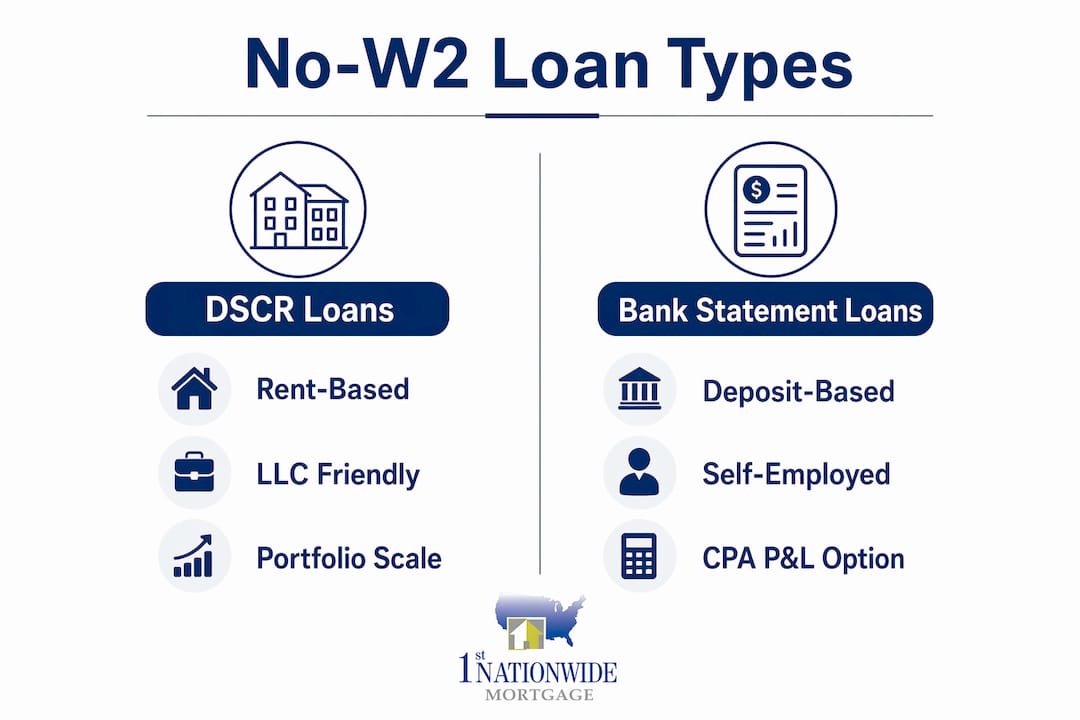
    No property limit loans are investment-only mortgage programs—including DSCR loans, NONI, and non-owner bank-statement loans—that let you finance rental properties without hitting the property cap that Fannie Mae and Freddie Mac enforce on conventional financing. For portfolio builders and LLC owners, the core payoff is simple: you keep acquiring without re-qualifying on personal income.

    The benefits of no property limit loans come down to three fundamentals:

    • Scalability: No financed-property ceiling means continuous acquisitions without restarting the conventional approval cycle.
    • LLC-friendly closings: These programs allow title to vest in an LLC, S-Corp, or LP, supporting asset protection and multi-entity portfolio structures.
    • Rent-based qualifying: The property’s cash flow, not your W-2 or tax returns, drives the underwriting decision.

    Pro Tip: Before you apply, consolidate your rent rolls, current lease agreements, and 6–12 months of reserve statements into a single folder. Lenders who see organized documentation move faster, and a clean package often shortens the underwriting timeline.


    Table of Contents

    What are no property limit loans, and which programs qualify?

    In investor-mortgage terms, “no property limit” describes programs that do not enforce a financed-property cap. The three you will encounter most often are:

    • DSCR loans (Debt-Service Coverage Ratio): Qualification is based entirely on the property’s rental income relative to its debt service. No personal income documentation is required, and closings in an LLC, S-Corp, or LP are standard. These are investment and non-owner-occupied properties only, never a primary residence.
    • NONI (No Income, No Asset): Designed for foreign nationals and borrowers with no documentable income. 1st Nationwide Mortgage’s NONI program goes up to $3.5M, making it viable for higher-value acquisitions.
    • Bank-statement investor loans: Self-employed investors qualify on 12–24 months of business or personal bank deposits rather than tax returns. A bank-statement income calculator can help you estimate qualifying income before you apply.

    All three programs are business-purpose, non-owner-occupied products. Availability varies by state and product type, so confirm program access with your lender before proceeding.


    Why unlimited-property financing changes your portfolio strategy

    Removing the financed-property cap is not just a paperwork convenience. It restructures how you build, refinance, and hold a rental portfolio.

    Two investors discussing property portfolio strategy

    Scalability without a reset. Conventional Fannie/Freddie programs cap financed properties at 10. Once you cross that threshold, you need a different financing path. DSCR programs carry no such ceiling, so you can add properties in sequence without switching lenders or restructuring your approach mid-portfolio.

    LLC and entity flexibility. Closing in an LLC separates each property’s liability from your personal balance sheet. For investors running multiple entities, each LLC can hold distinct assets, which simplifies accounting and strengthens liability protection. DSCR and NONI programs accommodate these structures directly.

    Rent-based underwriting. When the property’s cash flow qualifies the loan, your personal debt-to-income ratio stays out of the equation. That matters most for self-employed investors whose tax write-offs compress reported income, and for foreign nationals who have no U.S. income history at all.

    Loan sizing and leverage. Program loan amounts typically range from $100,000 to $2,000,000 on standard DSCR products, with NONI programs reaching $3.5M. That range supports everything from single-family rentals to small multifamily acquisitions within a single program type.

    Scale advantage: Conventional financing enforces a 10-property cap. DSCR programs are marketed as allowing an unlimited number of financed properties, making them the practical tool for portfolio builders who have already hit that ceiling.


    What are the real tradeoffs and costs you should expect?

    No property limit programs carry a pricing premium. DSCR loans typically run 1.0%–1.5% higher than comparable conventional rates, and reserve requirements often range from 2–12 months depending on the product and borrower profile. That premium reflects the reduced documentation and the lender’s reliance on property cash flow rather than verified personal income.

    Key underwriting catches to plan for:

    • DSCR thresholds: Standard programs require a DSCR of 1.00–1.25. Sub-1.0 and no-ratio programs exist but come with stricter FICO minimums, lower LTV caps, and a wider rate premium.
    • Prepayment penalties: Prepayment penalty availability and structure vary by state, and penalties are prohibited or restricted in several. Terms are confirmed at application.
    • Property eligibility: Non-warrantable condos, properties with high vacancy, and units with weak or unsigned leases are common deal-breakers. Appraisals on investment properties can also take longer than on owner-occupied homes.
    • Loan structures: Some programs offer 40-year fixed terms with interest-only periods. That lowers the monthly payment but extends the amortization, so model both scenarios before committing.

    Watch out for: Weak rent rolls, high vacancy rates, non-warrantable condo classifications, and properties where the appraised rent falls short of the PITI payment.

    Pro Tip: The fastest way to reduce the rate premium is to strengthen your DSCR. Use conservative rent estimates, not optimistic projections, and hold reserves above the program minimum. A higher DSCR typically unlocks better pricing tiers.


    Who qualifies, and what documents do you need?

    Eligibility varies by program type, but the table below covers the common thresholds across DSCR, NONI, and bank-statement investor loans.

    Eligibility Item Typical Range
    Minimum FICO (DSCR standard) Typical range
    Minimum FICO (sub-1.0 / no-ratio) Typical range
    DSCR minimum (standard) Typical range
    Down payment Typical range
    Reserves Typical range
    Loan amount (DSCR) $100,000–$2,000,000
    Loan amount (NONI) Up to $3,500,000

    For a complete picture of DSCR qualification requirements, review the program guidelines before submitting.

    Document checklist by program:

    • Bank-statement: — 12–24 months of business or personal bank statements; CPA-certified P&L can reduce the expense factor from 50% to 35–40%.

    Pro Tip: Pull your LLC’s operating agreement, EIN confirmation letter, and articles of incorporation before you contact a lender. Missing entity paperwork is the single most common cause of closing delays on investor loans.


    How do these loans differ from conventional Fannie/Freddie financing?

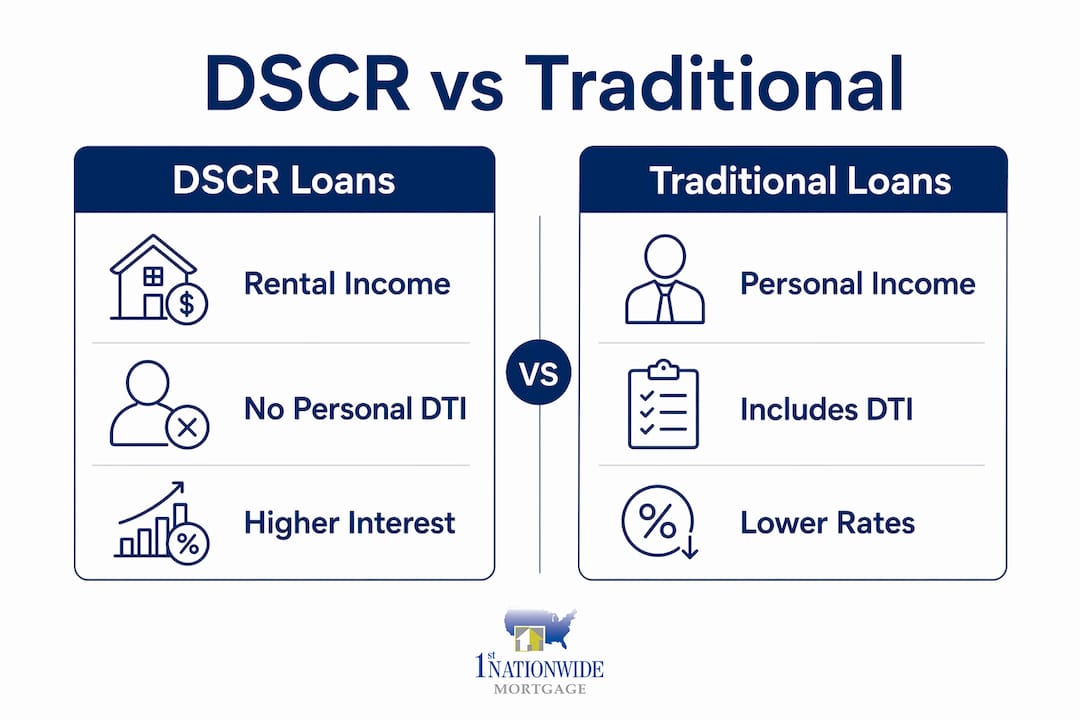
    Feature Conventional (Fannie/Freddie) DSCR / No-Property-Limit
    Income documentation Full W-2s and tax returns Rent roll or bank statements
    Financed-property cap 10 properties No cap
    Qualifying metric Debt-to-income (DTI) Debt-service coverage ratio (DSCR)
    Closing entity Personal name LLC, S-Corp, LP allowed
    Typical FICO minimum 620 620 (varies by product)
    Reserves 2–6 months 2–12 months
    Rate vs. conventional Baseline Typically +1.0%–1.5%

    The practical decision rule is straightforward: conventional financing is usually cheaper when you qualify for it. DSCR becomes the right tool when your personal income documentation is insufficient, you need an LLC closing, or you have already reached the 10-property conventional cap.

    Investor profiles that favor DSCR and no-property-limit programs:

    • High-rent-roll operators with low reported personal income due to depreciation and write-offs.
    • Portfolio builders past the Fannie 10-property ceiling.
    • Foreign nationals with no U.S. income history (NONI).
    • Self-employed investors whose deposits tell a stronger story than their tax returns.

    What questions should you ask a lender before applying?

    Start with these before you submit a single document:

    1. Does your program enforce a maximum number of financed properties?
    2. Do you allow LLC, S-Corp, or LP closings, and what entity documents do you require?
    3. What is your minimum DSCR, and do you offer sub-1.0 or no-ratio products?
    4. What are the reserve requirements by product tier?
    5. Are prepayment penalties available in my state, and what structures do you offer?
    6. What states are your DSCR and NONI programs available in?
    7. What is your average time from application to closing?
    8. Can you combine DSCR and bank-statement programs across a multi-property portfolio?

    Beyond those questions, ask for the program guideline PDF in writing. Lender guideline documents contain the exact loan-size limits, interest-only availability, reserve matrices, and prepayment penalty structures. Marketing language on a website is not a substitute.

    Pro Tip: Submit your rent roll, executed leases, bank statements, and entity documents with your initial package. Lenders who receive a complete file on day one issue conditional approvals faster and request fewer follow-up items.


    Real investor scenarios and a scaling checklist

    Who uses these programs most:

    • Portfolio builders past 10 properties: Once conventional financing closes off, DSCR programs support continuous acquisitions without re-qualifying personal income.
    • LLC owners for liability segregation: Each LLC holds a distinct set of assets, keeping one property’s risk from touching another. See a practical portfolio example to understand how cash flow and compliance work across a multi-property structure.
    • Foreign nationals: NONI programs remove the U.S. income-history requirement entirely.
    • Self-employed investors: Bank-statement programs capture deposit income that tax returns understate.

    Scaling checklist before you pull the trigger:

    1. Confirm the property’s DSCR at conservative rent estimates using a DSCR loan calculator before applying.
    2. Stress-test rent at 10%–15% below market to verify coverage at 1.00 minimum.
    3. Verify reserve availability: plan for up to 12 months PITI per property on larger portfolios.
    4. Prepare entity documentation: operating agreement, EIN letter, and articles of incorporation.
    5. Map your exit or refinance strategy before closing, especially if the loan carries a prepayment penalty.
    6. Confirm state-level program availability with your lender before ordering an appraisal.

    A 10–30 property scaling plan typically sequences acquisitions in tranches: acquire 2–3 properties, stabilize occupancy, then refinance to recapture equity before the next acquisition round. DSCR programs support that cycle because each new loan underwrites on the incoming property’s rent, not your cumulative personal debt load.


    Key Takeaways

    No property limit loans, specifically DSCR, NONI, and bank-statement investor programs, remove the Fannie 10-property ceiling and let you qualify on rental income rather than personal W-2s, making them the practical financing tool for serious portfolio builders and LLC owners.

    Point Details
    No financed-property cap DSCR programs carry no ceiling, unlike conventional Fannie/Freddie loans capped at 10 properties.
    Rent-based qualifying The property’s cash flow drives approval; personal income and tax returns are not required.
    LLC closings supported DSCR and NONI programs allow title to vest in an LLC, S-Corp, or LP for asset protection.
    Rate premium applies DSCR loans typically run 1.0%–1.5% above conventional rates; reserves of 2–12 months are common.
    1st Nationwide Mortgage Offers DSCR ($100,000–$2,000,000), NONI (up to $3.5M), and bank-statement investor loans as a direct mortgage banker with a BBB A+ rating.

    When no-property-limit financing is the right strategic choice

    Most investors I speak with hit the same inflection point: they have built a solid portfolio on conventional financing, and then property 11 stops them cold. The Fannie cap is not a flaw in their strategy; it is just the boundary of one financing tool. DSCR programs exist precisely for what comes next.

    My honest view is that these programs are most valuable for three investor types: the portfolio builder who has already crossed the conventional ceiling, the LLC owner who needs entity-level closings for liability separation, and the self-employed investor whose tax returns understate actual cash flow. For everyone else, conventional financing is usually the cheaper path, and there is no reason to pay the DSCR premium if you do not need to.

    The compliance piece matters too. Program availability varies by state and property type, and sub-1.0 or no-ratio products carry stricter requirements that are not always visible in marketing materials. Always request the program guideline document before you order an appraisal or commit to a purchase timeline.


    Scale your portfolio with 1st Nationwide Mortgage

    Investors who have outgrown conventional financing need a direct lender who actually holds these programs, not a broker who shops them. 1st Nationwide Mortgage originates DSCR loans for investors, NONI loans up to $3.5M, and bank-statement investor loans in-house, with no income documentation required on DSCR and NONI products.
    1st Nationwide Mortgage

    Founded and operated by Christopher Arco, NMLS #1281, 1st Nationwide Mortgage is a direct mortgage banker with a BBB A+ rating. That means your file stays with one underwriting team from application to close, and you get direct answers on program eligibility rather than a third-party relay.

    Run your property’s numbers with the DSCR loan calculator first, then request program guidelines for your state. When you are ready to move forward, the investment property mortgage page is the right starting point.

    For illustration only. Not a commitment to lend. Rates and terms subject to change and qualification. 1st Nationwide Mortgage Corporation, NMLS #1281. Equal Housing Lender.


    Useful sources and further reading

    Program terms vary by state. Request written program guidelines from your lender before applying, and confirm state-specific availability before ordering an appraisal or committing to a purchase contract.


  • Reduce Taxable Income Mortgage Workaround: Qualify Now

    Reduce Taxable Income Mortgage Workaround: Qualify Now

    If your tax returns show low income because of legitimate write-offs, you still have three clear underwriting paths: bank statement loans, DSCR loans, and NONI programs. These are not tax tricks. They are underwriting methodologies that measure your actual cash flow instead of your IRS-reported income. 1st Nationwide Mortgage Corporation (NMLS #1281, BBB A+) offers all three programs and provides free calculators to help you estimate qualifying income before you apply.

    Here is who each path serves:

    • Bank statement loans: Self-employed borrowers, freelancers, and 1099 contractors whose deductions reduce taxable income below what conventional lenders accept
    • DSCR loans: Real estate investors whose rental properties generate positive cash flow but whose Schedule E shows losses after depreciation and expenses
    • NONI programs: Foreign nationals and borrowers with no U.S. tax documents or documentable income

    Pro Tip: The gap between your taxable income and your qualifying income is the whole story. A contractor depositing $15,000 per month but writing off $9,000 in expenses may show $72,000 in taxable income on a return — but a bank statement lender sees $180,000 in annual deposits and derives qualifying income from there.


    Table of Contents

    Which program fits your situation?

    Program Best for Qualifying income source Owner-occupied? Min. credit Down payment
    Bank statement Self-employed, 1099, business owners 12–24 months of deposits Yes (CA, CO, OR, WA, TX, ID only); investment-only elsewhere credit scores typically in the low 600s moderate down payment
    DSCR Real estate investors, LLC owners Gross monthly rent ÷ PITIA Investment/non-owner only low 600s 35–40%
    NONI Foreign nationals, no U.S. tax docs Alternative ID/asset verification Non-owner/business-purpose typically mid-600s —

    A few quick rules to narrow your choice:

    • If you file a Schedule C or run a business and your deposits are strong, bank statement is usually your first look.
    • If you own or are buying a rental property and the rent covers the payment, DSCR removes your personal income from the equation entirely.
    • If you have no U.S. tax history at all, NONI is the path designed for you.

    How alternative qualifying actually works

    These programs are not workarounds in the tax-evasion sense. They are underwriting tools that align lending decisions with a borrower’s true cash flow rather than taxable income. The IRS and the mortgage underwriter are asking different questions. The IRS measures net taxable income after every allowable deduction. A lender using a bank statement program measures gross deposit activity and applies its own expense factor to estimate what the business actually earns.

    Bank statement underwriting averages 12–24 months of personal or business bank deposits to derive monthly qualifying income. Business accounts typically carry a 50% expense factor, meaning half of average monthly deposits count as income. Some lenders may reduce the expense factor to as low as 35–40% if a CPA-certified profit and loss statement supports a lower expense ratio. Owner draws and non-recurring transfers are excluded.

    Hands reviewing bank statements at home office desk

    DSCR underwriting flips the equation entirely. The borrower’s personal income never enters the calculation. Instead, the lender divides gross monthly rent by PITIA (principal, interest, taxes, insurance, and HOA dues). A ratio of 1.00 means the property breaks even; 1.25 means rent covers 125% of the payment. Most standard programs require a DSCR between 1.00 and 1.25. Sub-1.0 and no-ratio options exist but typically require stronger credit and lower loan-to-value ratios.

    NONI programs are business-purpose products that allow qualification with limited or no tax returns. Borrowers qualify through alternative ID verification, asset documentation, or property-based criteria rather than income documentation.

    These products exist because self-employed borrowers and real estate investors often have strong economic positions that tax-optimized returns simply do not reflect. Logic-based underwriting closes that gap without asking borrowers to change how they file.


    What do lenders actually require to approve you?

    Preparation is where most applications succeed or stall. Here is a practical checklist by program.

    Bank statement loan requirements:

    • One to two years of personal or business bank statements (consecutive, no gaps)
    • CPA-prepared profit and loss statement (recommended; reduces the expense factor)
    • Minimum credit score typically in the low 600s; stronger scores improve pricing
    • Down payment required, varying by loan amount and credit profile
    • 2–6 months of reserves (liquid assets after closing)
    • Self-employment documentation: business license, CPA letter, or entity formation docs

    DSCR loan requirements:

    • Lease agreement or rent roll for the subject property
    • Form 1007 (single-family comparable rent schedule) or appraisal with rent estimate
    • Minimum credit score generally in the low 600s; lower DSCR ratios may require stronger credit
    • Down payment generally in the range typically required for similar investment loans
    • Entity documents if closing in an LLC (articles of organization, operating agreement)
    • No limit on financed properties; no personal income documentation required

    NONI program requirements:

    • Valid passport or ITIN; foreign national ID accepted
    • Asset verification or alternative qualification documentation
    • Credit minimums typically in the mid-600s; down payments on the higher side are typical for this product type
    • Business-purpose use only; non-owner-occupied

    State availability note: Owner-occupied bank statement programs are available in CA, CO, OR, WA, TX, and ID. Outside those states, bank statement and NONI products are business-purpose or investment-only. DSCR is investment and non-owner-occupied in all states.

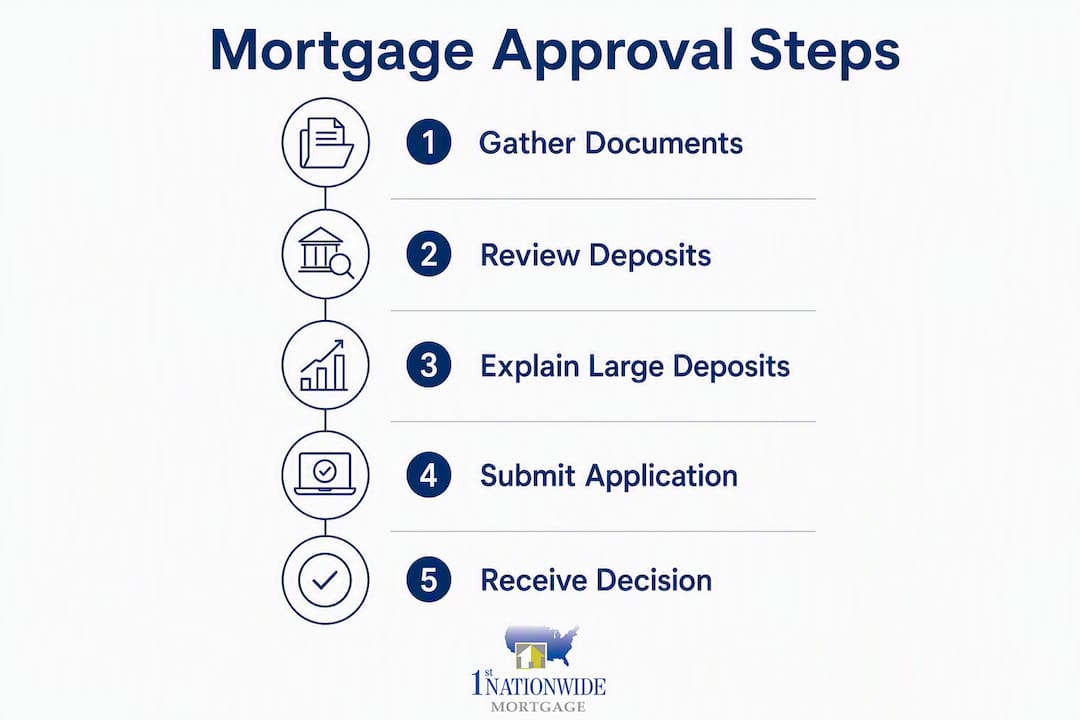
    Pro Tip: Before submitting, reconcile your bank statements. Flag and document any large non-recurring deposits (asset sales, transfers between accounts, insurance proceeds) in a brief letter. Unexplained large deposits are one of the most common reasons underwriters issue conditions that delay closing.

    Infographic showing mortgage approval steps process


    The reduce taxable income mortgage workaround framing is useful shorthand, but it is worth being precise about what these programs are and are not.

    • These are underwriting pathways, not tax strategies. You are not changing how you file; you are using a different income documentation method with the lender.
    • Do not alter tax returns for lending eligibility. Submitting a tax return to the IRS that differs from what you provide to a lender is mortgage fraud. Keep documentation consistent.
    • Prepayment penalty availability and structure vary by state, and penalties are prohibited or restricted in several. Terms are confirmed at application.
    • Consult a CPA or tax advisor before applying, especially if you are considering timing distributions, salary elections, or entity restructuring. A tax strategy checklist can help you coordinate legitimate planning with loan preparation.

    Pro Tip: If you are self-employed and considering increasing your salary from your S-corp to qualify for a conventional loan instead, run the numbers with your CPA first. The payroll tax cost may exceed the rate difference between a conventional and a bank statement product.


    How to prepare, apply, and what to expect

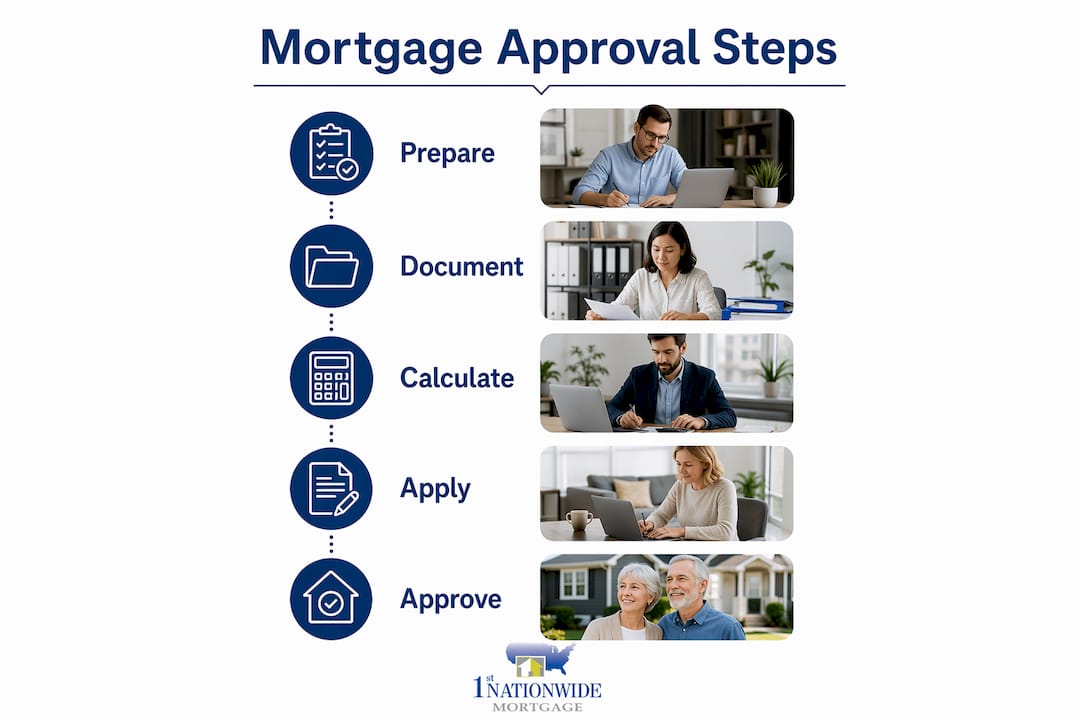
    1. Run the calculators first. Use 1st Nationwide’s bank statement income calculator or DSCR calculator to estimate qualifying income before you gather a single document.
    2. Assemble your documents. Pull 12–24 months of bank statements, your most recent CPA P&L, lease agreements or rent rolls, and ID documents. Organize them before you apply.
    3. Select your program. Match your borrower profile to the right product: bank statement for self-employed, DSCR for investors, NONI for foreign nationals or no-doc situations.
    4. Submit your application. A direct lender like 1st Nationwide Mortgage processes in-house, which typically means faster decisions than a brokered channel.
    5. Respond to underwriting conditions promptly. The most common delays are a missing CPA P&L, unexplained deposits, or incomplete lease documentation. Have these ready before submission.
    6. Clear to close. Once conditions are satisfied, closing timelines for Non-QM products are directionally similar to conventional loans when documentation is complete at submission.

    Timeline reality: when all documents are organized and submitted together, Non-QM underwriting can move quickly. The typical delay is not the program itself but incomplete records at submission.


    Real borrower scenarios: low taxable income, approved anyway

    1. Self-employed contractor, high deposits, low Schedule C income

    A general contractor deposits substantial monthly income across a year. After business deductions, his Schedule C shows significantly lower net income. A conventional lender declines. Under a 12-month bank statement program, the lender applies a 50% expense factor to $18,000, deriving $9,000 per month in qualifying income. With a 680 credit score and 15% down, he qualifies for a purchase in California.

    2. Real estate investor, negative Schedule E, positive rent roll

    An investor owns three rentals. Depreciation and mortgage interest produce a paper loss on Schedule E, making her taxable income appear low. Her new acquisition generates $2,800 per month in gross rent against a projected PITIA of $2,100. DSCR = 2,800 ÷ 2,100 = 1.33. That ratio clears the standard threshold. Her personal income never enters the underwriting file. The loan closes in her LLC.

    3. Foreign national, no U.S. tax return

    A Canadian buyer purchases a Florida investment condo. He has no U.S. tax history, no Social Security number, and no W-2. Through a NONI program, he qualifies using his passport, a foreign credit reference, and a 35% down payment. The property is non-owner-occupied, which is the required use for this program type.


    1st Nationwide Mortgage: direct lender for non-QM borrowers

    Self-employed borrowers, real estate investors, and foreign nationals often spend months being turned down by lenders who only know how to read a W-2. 1st Nationwide Mortgage is a direct mortgage banker, not a broker, which means your file is underwritten in-house by a team that works these programs every day.

    1st Nationwide Mortgage

    The practical starting point is the calculator. Run your deposits through the bank statement qualifier or test your rental property’s numbers with the DSCR loan calculator before you pick up the phone. If you are ready to talk through a specific scenario, the DSCR program page and bank statement program pages both have direct contact options. Bring your last 12 months of statements and a basic property rent estimate, and a loan officer can give you a realistic read on where you stand.

    For illustration only. Not a commitment to lend. Rates and terms subject to change and qualification. 1st Nationwide Mortgage Corporation, NMLS #1281. Equal Housing Lender.


    Key Takeaways

    Low taxable income does not disqualify you from a mortgage when the right underwriting method measures your actual cash flow instead of your tax return.

    Point Details
    Self-employed borrowers Bank statement loans use 12–24 months of deposits, not tax returns, to derive qualifying income.
    Real estate investors DSCR loans qualify the property on rental cash flow; your personal income is never in the equation.
    Foreign nationals / no-doc NONI programs allow qualification via alternative ID and asset verification, no U.S. tax return required.
    Trade-offs are real Non-QM products typically require stronger down payments and reserves than conventional loans.
    1st Nationwide Mortgage Offers bank statement, DSCR, and NONI programs with free calculators to estimate qualifying income before applying.

    Why logic-based underwriting matters more than most borrowers realize

    The conventional mortgage system was built around W-2 employees. That made sense decades ago, when most workers had a single employer and a predictable paycheck. Today, a significant share of the workforce is self-employed, runs an LLC, or earns income from rental properties. These borrowers are not financially weaker than W-2 earners. They are often financially stronger. They simply do not fit the documentation model that agency guidelines were designed around.

    What I find frustrating is how often borrowers assume they cannot qualify at all, when the real issue is that they have been talking to lenders who only offer one underwriting path. Bank statement, DSCR, and NONI programs are not niche products or last resorts. They are purpose-built tools for borrowers whose economic reality is more complex than a single tax return can capture. The goal at 1st Nationwide Mortgage has always been straightforward: match the underwriting method to the borrower’s actual financial picture, use the right documentation, and make a sound lending decision based on real cash flow.


    Useful sources and further reading

    • Bank statement loan basics — Bankrate overview of how deposits replace tax returns for qualifying income
    • Bank statement loans for self-employed borrowers — Industry framing of non-QM bank statement products as logic-based underwriting tools
    • DSCR math and thresholds — Complete explanation of DSCR calculation, standard ratios, and sub-1.0 options
    • Why self-employed borrowers get denied — 1st Nationwide’s guide to common denial reasons and how to prepare
    • Bank statement income calculator — Estimate your qualifying income from monthly deposits before applying
    • DSCR loan calculator — Test your rental property’s cash flow against PITIA before submitting an application
    • DSCR program overview — 1st Nationwide’s investor program details, LLC eligibility, and contact options
    • NONI program page — No-income, no-asset program features for foreign nationals and non-doc borrowers
  • Mortgage Default: What Investors and Self-Employed Borrowers Must Know

    Mortgage Default: What Investors and Self-Employed Borrowers Must Know

    A mortgage goes into default the moment you miss a required loan obligation — whether that’s a monthly payment, a property tax installment, or a homeowners’ insurance requirement written into your promissory note. The single most important action you can take is to call your mortgage servicer immediately, before a notice of default is filed. HUD guidance is explicit: treat your mortgage as a higher priority than unsecured debt, and use free HUD-approved housing counseling as your first outside resource. This guide covers the full timeline, financial consequences, every major loss-mitigation option, and specialized guidance for self-employed borrowers and real-estate investors. 1st Nationwide Mortgage Corporation, a BBB A+ rated direct mortgage banker, publishes this resource to help borrowers and investors understand their options before a default escalates.


    Table of Contents

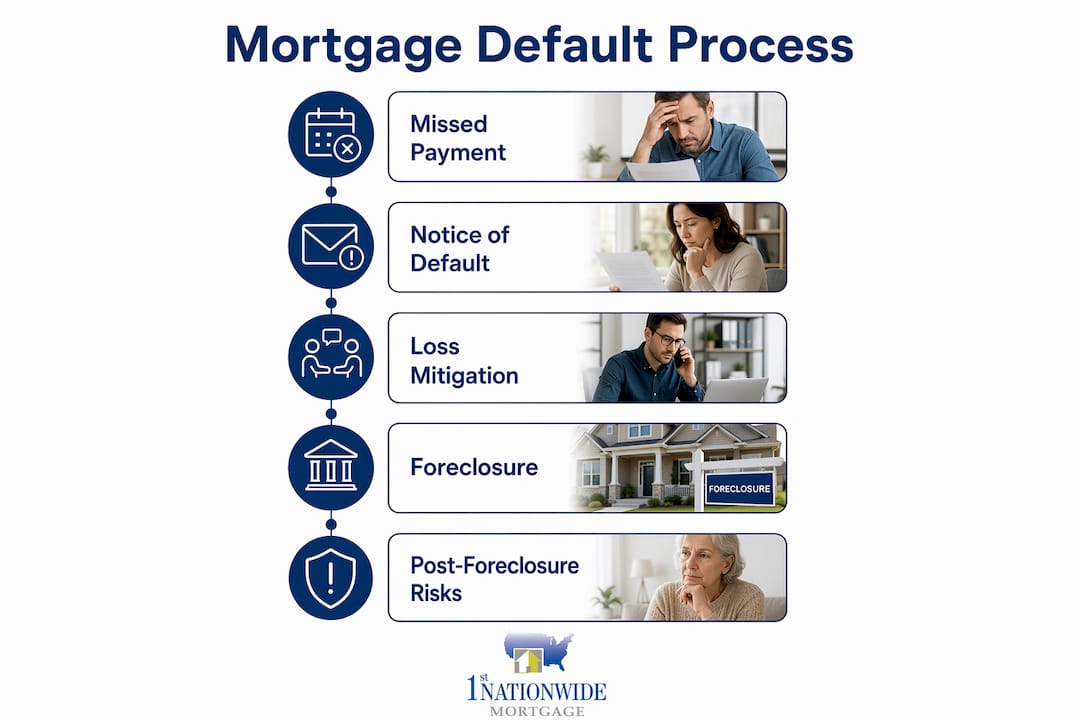
    How a mortgage default progresses from missed payment to foreclosure

    Understanding the sequence gives you leverage. Each stage has a window where you can act.

    1. Day 1–15 (grace period). Your payment is due, typically on the first of the month. Most servicers allow a grace period of roughly two weeks before charging a late fee, which is typically a small percentage of the payment amount.
    2. Day 16–30 (late fee assessed). The servicer charges the late fee and begins internal outreach. Technically, missing one payment constitutes a default, even if foreclosure is far off.
    3. Day 30–45 (credit bureau reporting). The servicer reports the delinquency to the credit bureaus. Even one late payment can negatively affect your credit score and increase the cost of future borrowing.
    4. Day 45–90 (servicer outreach intensifies). Federal law requires the servicer to contact you personally — by phone and in writing — after two missed payments to discuss loss-mitigation options.
    5. Day 90 (breach letter / notice of default). After roughly 90 days, the servicer typically sends a breach letter describing the default and giving you 30 days to reinstate the loan by paying all overdue amounts plus fees.
    6. Day 120+ (foreclosure may begin). CFPB Regulation X requires servicers to wait until you are more than 120 days delinquent before initiating foreclosure in most cases. This window is your most valuable mitigation period.
    7. Notice of sale / auction. Once foreclosure starts, the process moves toward a public sale. Timing varies dramatically by state: judicial foreclosure states can take one to three years; nonjudicial states can move in a few months.
    8. REO and eviction. If the property sells at auction, ownership transfers. If the lender is the highest bidder, it becomes real-estate-owned (REO) and eviction proceedings follow.

    Critical window: Practitioners consistently treat the 120-day pre-foreclosure period as the best time to negotiate. Once a notice of default is filed, reinstatement costs grow quickly because default-related fees — legal costs, property inspections, and servicing charges — are added to your balance.

    State rules matter enormously here. Confirm whether your state uses judicial or nonjudicial foreclosure, and read every servicer notice carefully. Timelines and cure rights differ, and some states require pre-foreclosure mediation.


    Infographic illustrating mortgage default progression stages

    The credit damage is immediate. Mortgage servicers report payment history to the credit bureaus, and a single missed payment can lower your score enough to affect refinancing eligibility, future loan approvals, and even insurance premiums.

    Fees compound fast. Servicers can add property inspections, lawn care, boarding up windows, and legal costs directly to your loan balance, sometimes labeled as “corporate advances.” Default-related services can add hundreds or thousands of dollars to your balance before a foreclosure sale ever happens; late fees and extra interest further increase what you owe. Review your account statements closely and flag any charge you do not recognize.

    Borrowers who wait often face a reinstatement amount far larger than the original missed payments.

    Deficiency judgments are a post-foreclosure risk in many states. If the foreclosure sale price is less than your outstanding loan balance, the lender may pursue you for the difference. This is especially relevant for investors holding non-owner-occupied properties, where personal liability exposure can vary by loan structure and state law. Consult an attorney if you are in a state that permits deficiency judgments.

    For investors specifically, a default on a DSCR loan — where the property’s rental income was the qualifying factor — can also disrupt your LLC’s credit profile and complicate financing on other properties in your portfolio. Tax implications are another layer: forgiven debt from a short sale or modification may be treated as taxable income in some circumstances, so a CPA conversation is worth having early.


    Loss-mitigation options your servicer can offer

    Servicers commonly offer several paths, and the right one depends on whether your hardship is temporary or permanent and whether you want to keep the property.

    Option Purpose Keeps the home? Credit impact Best for
    Repayment plan Catch up on missed payments over time Yes Moderate Short-term income disruption
    Forbearance Temporarily pause or reduce payments Yes Moderate Job loss, medical hardship
    Loan modification Permanently change loan terms Yes Moderate to significant Long-term affordability problem
    Short sale Sell for less than owed with lender approval No Significant Underwater property, no equity
    Deed-in-lieu Voluntarily transfer title to lender No Significant Avoid foreclosure on record
    Bankruptcy Federal court protection, automatic stay Possible Severe Complex debt, foreclosure imminent

    Repayment plan: Spreads overdue amounts across future payments. Works well when you had one bad month and income has stabilized.

    Forbearance: Pauses or reduces payments for a defined period. The paused amount is still owed afterward, so confirm the repayment structure before agreeing.

    Loan modification: Changes the loan’s terms permanently — extending the term, reducing the rate, or rolling arrears into the balance. This is the most powerful tool for a permanent income reduction.

    Short sale and deed-in-lieu: Both exit strategies. A short sale requires lender approval and a buyer. A deed-in-lieu transfers the property directly. Neither eliminates a potential deficiency in all states.

    Bankruptcy: Filing triggers an automatic stay that halts foreclosure temporarily. Chapter 13 allows you to cure arrears over a repayment plan. Chapter 7 may not save the property but can discharge other debts that were straining your budget.

    Pro Tip: Contact a HUD-approved housing counselor before paying any third-party foreclosure-prevention firm. HUD-approved counseling is free or low-cost; for-profit services often charge fees equivalent to months of mortgage payments for the same work.

    Call an attorney when you face a potential deficiency judgment, when a servicer’s accounting looks wrong, or when title issues complicate the picture.


    Special guidance for self-employed borrowers and real-estate investors

    Default risk looks different when your income comes from business deposits or rental cash flow rather than a W-2. The mitigation conversation with your servicer also requires different documentation.

    Real estate investor reviewing rental income documents

    Bank-statement borrowers qualified using 12–24 months of deposits rather than tax returns. During a mitigation discussion, that same deposit history becomes your proof of income. Clean separation between business and personal accounts is not just good bookkeeping — it is the single most important operational defense you have. Mixed accounts make it nearly impossible to present a clear income picture to a servicer or a new lender. If you are self-employed and facing underwriting challenges, consistent bank records materially improve your options.

    DSCR borrowers qualified on the property’s rental income, not personal income. A vacancy or rent reduction that drops the debt-service coverage ratio below 1.0 is a direct default risk signal. Maintaining current lease agreements, rent rolls, and operating statements gives you the documentation you need if you need to request a modification or refinance. DSCR loans are investment and non-owner-occupied only — they are never used for a primary residence.

    For investors: The cleanest mitigation file includes 12 months of business bank statements, current lease agreements for every unit, a year-to-date profit-and-loss statement, and a property operating statement. Servicers respond faster when the documentation is organized.

    Program availability note: Owner-occupied bank-statement programs and conventional products are available in California, Colorado, Oregon, Washington, Texas, and Idaho. For investment properties in other states, business-purpose programs — DSCR, non-owner bank-statement, and NONI — apply. Christopher Arco, NMLS #1281, founder of 1st Nationwide Mortgage Corporation, works directly with borrowers to identify which program fits their income profile and property type.

    Checklist for investors and self-employed borrowers:

    • Separate all business and personal bank accounts now, before a problem develops
    • Keep 12–24 months of bank statements current and organized
    • Maintain signed lease agreements and rent rolls for every investment property
    • Update your profit-and-loss statement quarterly
    • Know your DSCR on each property; a ratio below 1.0 is a warning sign

    What to do right now if you missed or will miss a payment

    Act within the first 24–72 hours. The options available to you narrow with every week of delay.

    Immediate steps:

    1. Call your servicer and ask for a single point of contact (SPOC) — federal rules require servicers to assign one in many cases.
    2. Request a written list of all available loss-mitigation options and the deadlines for each.
    3. Ask for all timelines and agreements in writing before accepting any verbal offer.
    4. Review your account statement for any fees added since the missed payment and flag anything you do not recognize.

    Documents to have ready:

    • Last 12–24 months of bank statements (business and personal, separated)
    • Recent pay stubs, 1099s, or bank-statement income summaries
    • Signed lease agreements and rent rolls for investment properties
    • Year-to-date profit-and-loss statement
    • Current homeowners’ insurance declarations page and property tax receipts

    Free counseling: Reach out to a HUD-approved housing counselor at no cost through HUD’s official counselor locator. Free counselors can negotiate directly with servicers on your behalf.

    One operational note: keep your property insurance active and property taxes current throughout the process. Lapsed insurance or unpaid taxes are independent default triggers that can add costs to your reinstatement amount even while you are negotiating a payment solution. Managing financial stress during this period matters as much as the paperwork.


    Key Takeaways

    A mortgage default triggers a 120-day federal window before foreclosure can begin — acting inside that window, with organized documentation and direct servicer contact, gives you the best chance at a workable resolution.

    Point Details
    120-day federal window CFPB Regulation X bars most servicers from starting foreclosure until you are more than 120 days past due.
    Contact servicer first Call before a notice of default is filed; proactive communication expands your mitigation options significantly.
    Fees compound quickly Default-related charges — inspections, legal costs, property preservation — can add hundreds or thousands of dollars to your balance, increasing what you owe before a foreclosure sale ever happens.
    Investors need clean records Current lease agreements, rent rolls, and separated bank statements are the core of any investor mitigation file.
    1st Nationwide Mortgage Offers bank-statement and DSCR programs for self-employed borrowers and investors when standard underwriting falls short.

    What I see work — and what borrowers miss

    Most borrowers who contact us after a default scare share one thing: they waited too long to call their servicer because they assumed the conversation would go badly. It almost never does. Servicers are not eager to foreclose — the process is expensive and slow for them too. The borrowers who come out of a delinquency with their property intact are almost always the ones who picked up the phone in week two, not week ten.

    For self-employed borrowers, the documentation gap is the real problem. A servicer sees irregular deposits and no W-2 and defaults to skepticism. The fix is the same whether you are applying for a new loan or negotiating a modification: clean, separated bank statements that tell a clear income story. Investors with DSCR loans face a different version of the same issue — vacancy and rent disruption can make a property look unviable on paper even when the long-term cash flow is sound. An updated rent roll and a current operating statement change that conversation.

    Programs vary by state and borrower profile. What works for a California self-employed borrower on an owner-occupied bank-statement loan is different from what applies to an investor in a state where only business-purpose programs are available. Get the specifics confirmed before you assume an option is or is not available to you.


    How 1st Nationwide Mortgage can help when standard underwriting falls short

    When a default or delinquency has made conventional financing unavailable, the right lender matters more than ever. 1st Nationwide Mortgage Corporation is a direct mortgage banker — not a broker — founded by Christopher Arco, NMLS #1281, and BBB A+ rated. The programs here are built specifically for borrowers whose income does not fit a W-2 box.

    1st Nationwide Mortgage

    For self-employed borrowers, bank-statement loans use 12–24 months of deposits to derive qualifying income, bypassing tax-return write-offs that reduce reported income below conventional thresholds. Minimum 620 credit, 10–20% down. For real-estate investors, DSCR loans qualify on the property’s rental income — no personal income documentation required, LLC-friendly, with no cap on financed properties. DSCR is investment and non-owner-occupied only. NONI programs are available for foreign nationals and borrowers with no documentable income.

    Owner-occupied bank-statement and consumer programs are available in California, Colorado, Oregon, Washington, Texas, and Idaho. Investment-property financing through business-purpose lending programs is available across a multi-state footprint. Use the DSCR loan calculator to check your rental property’s cash-flow assumptions before you call. When you are ready for a program review, contact 1st Nationwide Mortgage directly to discuss which path fits your situation.

    For illustration only. Not a commitment to lend. Rates and terms subject to change and qualification. 1st Nationwide Mortgage Corporation, NMLS #1281. Equal Housing Lender.


    Where to get official help and learn more

    • CFPB — How foreclosure works: Plain-language explanation of judicial vs. nonjudicial foreclosure and your federal rights as a borrower.
    • HUD — Avoiding foreclosure: Loss-mitigation programs for FHA-insured loans and the official HUD-approved housing counselor locator.
    • FTC — Trouble paying your mortgage: Consumer guidance on servicer fees, loss-mitigation options, and how to spot for-profit foreclosure scams.
    • 1st Nationwide Mortgage loan programs: Overview of bank-statement, DSCR, NONI, and other programs for non-traditional borrowers and investors.
    • Investment property financing: Program details for investors purchasing or refinancing non-owner-occupied properties.

    Always use HUD-approved counselors. Free counseling is available nationwide, and no legitimate housing counselor will charge you upfront fees equivalent to months of mortgage payments.

  • AlpineBanker.com Alternatives for Self-Employed & Investors

    AlpineBanker.com Alternatives for Self-Employed & Investors

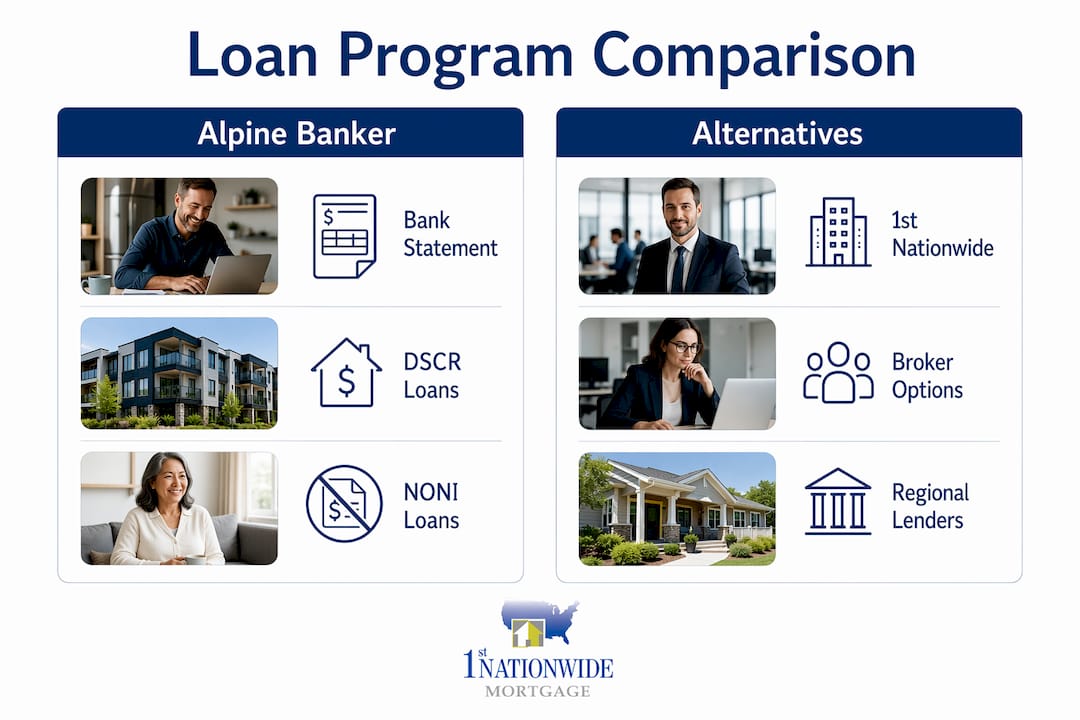
    If you’re self-employed, a real estate investor, or a foreign national who has been researching alpinebanker.com alternatives, the two most practical options to evaluate are Alpine Banker and 1st Nationwide Mortgage, a direct mortgage banker licensed in 18 states. Specialized non-QM lenders that underwrite on bank statements, DSCR, or NONI documentation are the right category to shop. Borrowers whose tax returns understate their actual income are routinely approved through these channels when conventional lenders decline them. Pricing and program availability are file-specific, so always verify NMLS license numbers and confirm state coverage before submitting documents.

    Quick shortlist:

    • 1st Nationwide Mortgage (NMLS #1281, BBB A+): Direct lender, in-house underwriting on bank-statement, DSCR, and NONI loans. Best fit for self-employed borrowers, real estate investors, and foreign nationals in licensed states.
    • Alpine Banker (alpinebanker.com): Non-QM focused lender offering bank-statement and investor programs. Confirm current state licensing and program availability directly.
    • Mortgage broker networks / regional direct lenders: Useful when your state is not covered by a specific direct lender or when you want multiple quotes quickly.

    Table of Contents

    How do alpinebanker.com alternatives compare side by side?

    Dimension Alpine Banker 1st Nationwide Mortgage Alternative routes (broker / regional lender)
    Loan programs Bank statement, DSCR, non-QM Bank statement, DSCR, NONI, FHA, VA, USDA, conventional, jumbo Varies by lender; full non-QM menu possible
    Borrower fit Self-employed, investor Self-employed, investor, foreign national, W-2 high-DTI Broad; depends on lender
    Documentation method Bank statements, NOI/rent rolls Bank statements, P&L, 1099, NOI, ITIN/foreign docs Tax returns, bank statements, or NOI depending on lender
    Min. credit score Varies by program typically a mid-600s credit score for bank statement programs, varying by program Typically 620+ for non-QM
    Down payment / LTV Program-dependent a moderate down payment, often around 10–20% for bank statement loans 20–30% common for DSCR/non-QM
    States licensed Confirm directly 18 states Nationwide possible via broker
    Typical fees & timeline Not publicly listed File-specific; confirm via Loan Estimate Varies; broker adds origination layer
    Channel Direct lender Direct lender (never broker) Broker or direct depending on entity

    Two professionals discussing mortgage alternatives

    These cells are directional. File-level underwriting, overlays, and state licensing change frequently. Always verify on NMLS Consumer Access and request a Loan Estimate.

    Infographic comparing alpinebanker.com alternatives


    How do the core loan programs actually differ?

    Understanding the program mechanics helps you match your file to the right lender before you ever pick up the phone.

    Bank statement loans

    Bank-statement loans qualify borrowers using a year or more of personal or business deposits. The lender totals eligible deposits and applies an expense factor to calculate qualifying income, typically 50% on business accounts, dropping to 35–40% when a CPA-certified P&L supports lower overhead. Tax returns are not the primary document. This is the program built for self-employed business owners whose write-offs reduce adjusted gross income well below what they actually deposit.

    Who benefits most:

    • Small business owners, sole proprietors, and LLC owners with strong cash flow but aggressive tax deductions
    • Freelancers and 1099 contractors with variable monthly deposits
    • Borrowers who have been denied by conventional underwriters because of low reported AGI

    Example qualifying path: A restaurant owner deposits $25,000/month in business accounts over 24 months. With a reasonable expense factor, qualifying income is calculated accordingly — enough to support a significant purchase price.

    DSCR loans

    DSCR loans qualify the property, not the borrower’s personal income. The lender calculates whether the property’s net operating income covers debt service, with a typical threshold above 1.0 to ensure net operating income covers debt service. Personal tax returns, W-2s, and pay stubs are not required. LLCs are eligible, and there is no cap on the number of financed properties at 1st Nationwide Mortgage.

    Who benefits most:

    • Real estate investors buying rental properties or expanding a portfolio
    • Borrowers with complex personal income who want to keep the file clean
    • LLC owners who prefer to keep investment properties in an entity

    NONI (No Income, No Asset)

    NONI loans are designed for foreign nationals and borrowers with no documentable U.S. income. Qualification relies on the property itself and the borrower’s overall credit profile rather than income verification. This is a narrow program, but it fills a real gap for international buyers and certain non-traditional borrowers.

    1099 and CPA P&L

    Alternative qualification routes include 1099 income verification and CPA-prepared P&L statements. A 1099 loan works similarly to a bank-statement loan but uses annual 1099 forms as the income document. A CPA P&L can reduce the expense factor applied to business deposits, increasing qualifying income when overhead is genuinely low.

    Conventional and non-QM distinctions

    Conventional loans follow Fannie Mae and Freddie Mac guidelines, which means tax returns, W-2s, and strict DTI limits. Non-QM loans are fully underwritten but use alternative documentation to match underwriting to a borrower’s actual liquidity and business viability. They are not subprime products.


    How do you choose between Alpine Banker, 1st Nationwide, or another lender?

    Prioritize license verification, program fit, and total cost of capital over the headline rate. Two quotes are not comparable unless they share the same LTV, occupancy type, and documentation method.

    Selection criteria, in order:

    1. License and state coverage. Confirm the lender holds an active license in your state via NMLS Consumer Access before sharing any documents.
    2. Direct lender vs. broker. A direct lender underwrites in-house, which typically means faster decisions and fewer handoffs. A broker can access multiple lenders but adds a layer between you and the underwriter.
    3. Documentation approach. Ask specifically whether the lender will use bank statements, a P&L, 1099s, or NOI to calculate qualifying income. The answer changes your rate and approval odds.
    4. Program availability by state. Some non-QM products are restricted by state licensing or investor overlays. Confirm your specific program is available in your state.
    5. Total cost of capital. Non-QM pricing is driven by credit, LTV, property type, occupancy, and documentation method. Rate plus points plus origination fees is the number that matters.

    Questions to ask your loan officer:

    1. Which documentation method will you use to calculate my qualifying income?
    2. Do you underwrite in-house, or does my file go to a third-party investor?
    3. What are typical points and origination fees for my LTV and credit profile?
    4. Is this program available in my state under your current license?
    5. Can you provide a Loan Estimate once I have a property address?
    6. What is the minimum DSCR ratio you require for my property type?
    7. How do you handle months with irregular deposits in a bank-statement file?

    Red flags:

    • Evasive or vague answers about NMLS license number or state authority
    • Refusal to provide a Loan Estimate before collecting a large upfront fee
    • Any guarantee of the “lowest rate” without reviewing your full file
    • Pressure to submit sensitive documents before confirming program eligibility

    What should you expect for eligibility, costs, and timelines?

    Most non-QM programs share directional ranges, though your specific file will determine the final terms.

    Typical documentation by program:

    • Bank statement: about a year or more of personal or business bank statements, CPA P&L (optional but helpful), 2 years business license or CPA letter confirming self-employment
    • DSCR: Lease agreement or rent roll, appraisal with market rent analysis, entity docs if using an LLC
    • NONI: Passport/ITIN, property appraisal, down payment source documentation
    • 1099: Two years of 1099 forms, year-to-date P&L or bank statements
    • Conventional: Two years tax returns, W-2s, pay stubs, 60 days bank statements

    Typical credit and down payment ranges (directional):

    • Bank statement: 620+ credit, 10–20% down
    • DSCR: credit requirements generally in the mid-600s to high 600s and down payments around 20–25%
    • NONI: higher credit scores are typical along with larger down payments
    • Conventional: 620+ credit, down payment requirements vary widely depending on the specific conventional program

    Timeline by stage:

    • Prequalification: a few business days
    • Document collection and review: several business days
    • Underwriting: about one to two weeks of business days
    • Clear-to-close: several business days
    • DSCR loans often close within a few weeks because underwriting focuses on property cash flow rather than personal income verification

    Use a mortgage calculator to estimate payments before requesting a Loan Estimate, which is the binding fee disclosure document.


    What do people get wrong about non-QM lenders?

    The most common misconception is that non-QM equals subprime. It does not. Non-QM loans are fully underwritten, file-specific products that assess a borrower’s actual liquidity and business viability rather than checking boxes on a tax-return checklist.

    What the data actually shows:

    • Non-QM products include bank statement, DSCR, 1099, P&L, and asset depletion pathways, each with its own underwriting logic
    • Lenders that specialize in bank statements and business viability can approve files that conventional underwriters decline because of tax deductions, not because of actual financial weakness
    • DSCR loans often have a slightly higher interest rate than conventional loans, trading cost for speed and simplified documentation, but that premium buys speed and the removal of personal income documentation

    Consider two borrowers with nearly identical tax returns showing $60,000 in adjusted gross income. One deposits $18,000/month consistently across 24 months of business statements. The other deposits $6,000/month with irregular gaps. The first borrower qualifies comfortably on a bank-statement program. The second does not, regardless of what the tax return shows. The underwriting is not lenient; it is simply measuring the right thing.

    Pro Tip: Deposit sourcing and consistency matter as much as deposit volume. Transfers between your own accounts, loan proceeds, and one-time windfalls are typically excluded from qualifying deposits.


    Why does state licensing matter, and how do you verify it?

    Verify a lender’s NMLS license and state authority before submitting any sensitive documents. This is the single most important pre-application step.

    Some loan products are restricted by state licensing or investor overlays. A lender may offer DSCR loans in 30 states but bank-statement loans in only 15. Geographic availability for non-QM products varies more than most borrowers expect.

    Action steps:

    • Go to NMLS Consumer Access and search by company name or NMLS number
    • Confirm the lender holds an active license in your state, not just a pending or expired one
    • Ask for the specific NMLS number (1st Nationwide Mortgage: NMLS #1281) and cross-reference it
    • Check BBB accreditation for an additional trust signal; 1st Nationwide Mortgage holds a BBB A+ rating
    • Confirm direct-lender status: ask whether the company underwrites in-house or places loans with third-party investors

    Pro Tip: A lender licensed in your state for one program may not be licensed for another. Always confirm the specific program, not just the company.


    Step-by-step application checklist when shopping alternatives

    Assemble a consistent file and use the same LTV and loan structure when requesting quotes from multiple lenders. Inconsistent file structures make quotes incomparable.

    1. Gather documents by program type. Pull the specific documents your program requires before contacting any lender.
    2. Get prequalification with documentation approach stated. Ask the loan officer to confirm in writing which documentation method they will use.
    3. Request Loan Estimates with the same LTV and structure. A Loan Estimate is the standardized fee disclosure; comparing them on identical terms is the only valid comparison.
    4. Confirm license and direct-lender status. Run NMLS Consumer Access before submitting a full application.
    5. Select based on total cost of capital and underwriting certainty. Rate alone is not the deciding factor; points, fees, and the lender’s ability to close on time all count.

    Pre-application document checklist:

    • 12–24 months business or personal bank statements
    • 1099 forms (two years, if applicable)
    • CPA-prepared P&L (if using to reduce expense factor)
    • Lease agreements or rent rolls (DSCR)
    • Asset statements (60–90 days)
    • Government-issued ID; ITIN or passport for foreign nationals
    • Purchase contract (if property is under contract)

    For self-employed borrowers, the self-employed mortgage qualification process has specific nuances worth reviewing before you start gathering documents. Investors shopping DSCR options can also compare multiple lender offers to speed the quote process.


    Key Takeaways

    For self-employed borrowers and real estate investors, the right alpinebanker.com alternative is a direct lender with in-house non-QM underwriting, verified NMLS licensing in your state, and a documentation method matched to your actual income source.

    Point Details
    Verify NMLS first Confirm active state licensing on NMLS Consumer Access before submitting any documents.
    Match program to income type Bank statement fits self-employed; DSCR fits investors; NONI fits foreign nationals with no U.S. income, as explained in detail in this guide to underwriting self employed borrowers variable income.
    Total cost beats headline rate Compare rate plus points plus origination fees on identical LTV and documentation terms.
    Direct lender advantage In-house underwriting means faster decisions and fewer handoffs than a broker channel.
    1st Nationwide Mortgage Direct lender (NMLS #1281, BBB A+), licensed in 18 states, offering bank statement, DSCR, and NONI programs.

    What the “non-QM is risky” narrative misses

    The conventional wisdom frames non-QM lending as a last resort for borrowers who can’t qualify anywhere else. That framing is backwards. Many self-employed borrowers with strong cash flow and clean deposit histories are better served by a bank-statement program than by forcing a conventional file that misrepresents their actual financial position. The tax return is a tax-minimization document. It was never designed to be a mortgage qualification document.

    The real risk in this space is not the loan type. It is shopping on rate alone without verifying licensing, confirming the documentation method, or understanding total cost of capital. A lender who quotes a low rate but applies a high expense factor to your bank statements, or who is not licensed in your state for the specific program you need, costs you more than a slightly higher rate from a lender who closes your file cleanly.

    Direct lenders with in-house underwriting, like 1st Nationwide Mortgage, give you a cleaner line of communication with the person making the credit decision. That matters when your file has nuances that a checklist cannot capture.


    1st Nationwide Mortgage: direct non-QM lending for your file

    If you’re a self-employed borrower, a real estate investor, or a foreign national who needs a lender that underwrites on your actual financial picture, 1st Nationwide Mortgage offers bank-statement loans, DSCR investment property loans, and NONI programs with in-house underwriting. No broker layer. No third-party credit decisions.

    1st Nationwide Mortgage

    1st Nationwide Mortgage is a direct mortgage banker, NMLS #1281, BBB A+, licensed in 18 states. Christopher Arco and his team underwrite bank-statement, DSCR, and NONI files directly. To get started, verify state coverage for your program, then request a Loan Estimate through the self-employed mortgage page or contact a loan officer directly for program eligibility. Pricing varies by file, state, and documentation method. No rate guarantees; all terms subject to underwriting review.


    Authoritative resources for verifying lender program details

    Before applying anywhere, use these sources to verify licensing, understand your options, and request proper fee disclosures.

    • NMLS Consumer Access: The official federal registry. Search any lender by name or NMLS number to confirm active state licensing.
    • CFPB Loan Estimate guidance: Explains what a Loan Estimate must contain and how to compare offers across lenders.
    • Investopedia: Non-Qualified Mortgages: Clear overview of non-QM loan types, alternatives, and what to consider before applying.
    • Experian: What Is a Non-Qualified Mortgage?: Explains where to find non-QM lenders and how to evaluate your options.
    • HousingWire: What Are Non-QM Loans?: Industry-level explanation of program types, underwriting logic, and borrower fit.

    Confirm any lender’s NMLS number and request a Loan Estimate before committing to a program. This article is general educational information, not legal or financial advice. Verify current program availability, rates, and licensing with the lender directly for your specific situation.

  • Business Income vs Personal Income Mortgage: Self-Employed Guide

    Business Income vs Personal Income Mortgage: Self-Employed Guide

    Yes, lenders can use your business income to qualify you for a mortgage — but they won’t take your revenue at face value. Underwriters convert your reported business results into qualifying income by applying add-backs, trend analysis, and distribution rules before a single dollar counts toward your debt-to-income ratio. The core difference between business income and personal income in a mortgage context is documentation depth: personal W-2 income is verified in minutes, while business income requires a structured analysis of two years of tax returns and supporting financials before underwriters can confirm it’s stable enough to service a loan.

    Here’s what you need to know at a glance:

    • Business income counts when it’s recurring, consistently distributed to you as the owner, and documented across at least two tax years.
    • Business income doesn’t count when it’s a one-time gain, retained inside the company without distribution, or declining year over year.
    • Your immediate next step: Gather two years of personal tax returns (Form 1040), two years of business tax returns (Schedule C, Form 1120S, or Form 1065), and a year-to-date profit-and-loss statement signed by your CPA.

    If your tax write-offs reduce your reported income below what you actually live on, alternative programs like bank-statement loans and DSCR loans offer a different path—one that doesn’t rely on your tax returns at all.


    Table of Contents

    How lenders calculate qualifying income from business vs personal income

    Underwriters aren’t trying to measure your business’s total revenue. They’re trying to answer one specific question: how much recurring cash flow is reliably available to you, the borrower, to make a mortgage payment every month?

    That distinction matters because business revenue and personal qualifying income are rarely the same number. A sole proprietor earning $200,000 in gross receipts might show $60,000 in net profit after deductions. An S-corp owner drawing a $70,000 salary might have an additional $80,000 in K-1 distributions — some of which lenders will count and some of which they won’t.

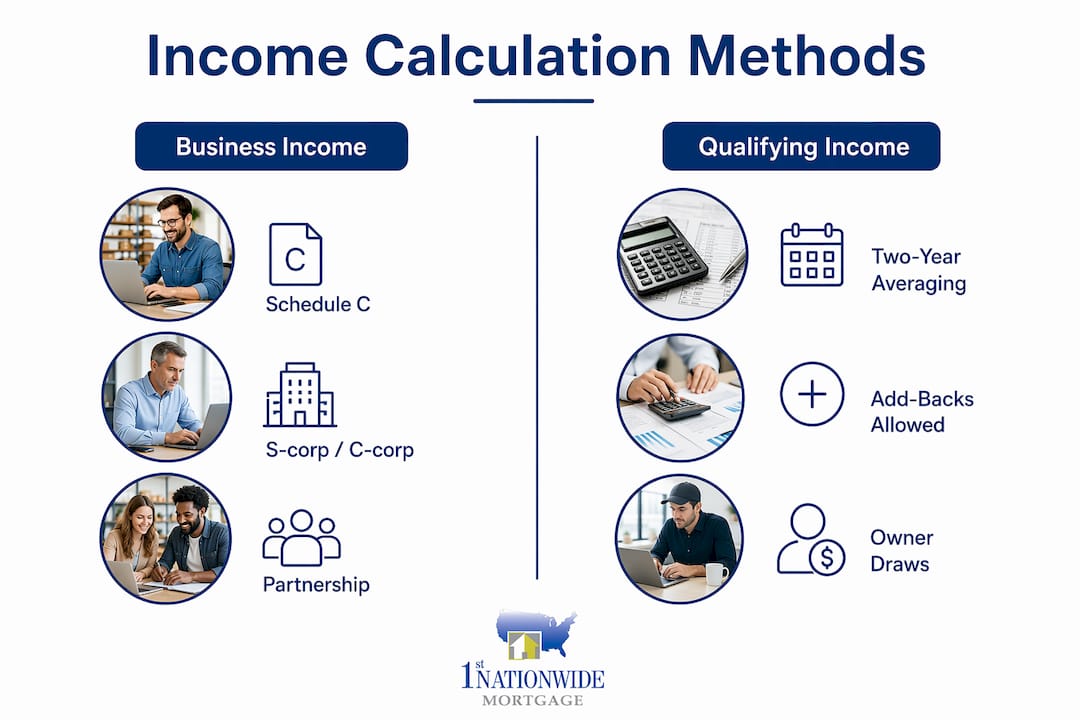
    The two-year averaging rule

    Fannie Mae requires lenders to determine the amount of stable and continuous income available to the borrower and to prepare a written evaluation when self-employment income is used for qualifying. In practice, that means lenders average your adjusted business income over two years to smooth out volatility. If your income is trending upward, some lenders will use the most recent year’s figure instead of the average. If income is declining, expect the lower year to carry more weight — or for the lender to question whether the income is stable enough to count at all.

    Infographic comparing business income and qualifying income methods

    Income calculation by business structure

    Schedule C (sole proprietor / single-member LLC): Your net profit flows directly to your personal Form 1040. Lenders start there and add back noncash deductions like depreciation and amortization. The problem: every dollar you deduct to reduce your tax bill also reduces your qualifying income. Aggressive write-offs that make sense for taxes often work against you in underwriting.

    S-corp or C-corp (Form 1120S / corporate return): Lenders look at two income streams separately. Your W-2 salary from the business is straightforward. Distributions shown on your K-1 may also count, but only after underwriters verify business liquidity — the business must be able to sustain those distributions without harming operations. Profit sitting inside the corporation that hasn’t been distributed to you typically doesn’t count.

    Hands holding business tax return forms

    Partnership (Form 1065 / K-1): Similar logic applies. Your share of business income on the K-1 may count, but lenders will analyze whether distributions have actually been taken and whether the business can continue supporting them.

    Pro Tip: Underwriters care far more about consistent, documented owner draws than about a single high-revenue year. If you’ve been taking irregular distributions, start establishing a regular draw pattern at least 12 months before you apply.

    The Schedule Analysis Method (SAM) and tools like Fannie Mae’s Comparative Income Analysis (Form 1088) are the standard frameworks lenders use to convert tax-return figures into a reliable cash-flow estimate. SAM systematically adds back noncash items and removes nonrecurring events, giving underwriters a normalized monthly income figure they can use with confidence.


    What documents lenders will ask you to provide

    A complete file moves faster and qualifies more cleanly. Here’s what lenders typically request and why each item matters:

    • Two years of personal tax returns (Form 1040 with all schedules): The starting point for income analysis. Underwriters trace your reported income, deductions, and business activity from here.
    • Two years of business tax returns (Schedule C, Form 1120S, or Form 1065): Reveals business-level income, expenses, depreciation, and distributions. Required for any entity beyond a sole proprietor.
    • K-1 forms (all years requested): Documents your share of partnership or S-corp income and distributions. Lenders cross-reference K-1s against the business return to confirm consistency.
    • 1099 forms: Useful for 1099 contractors and freelancers to corroborate income reported on Schedule C. A 1099 contractor mortgage application typically relies heavily on these.
    • Year-to-date profit-and-loss statement (CPA-signed): Bridges the gap between your last filed tax return and today. Lenders accept CPA-prepared YTD P&Ls and business bank statements as supplemental documentation to explain tax-year discrepancies.
    • 12–24 months of business and personal bank statements: Confirms cash flow, owner draws, and that business deposits match what’s reported on tax returns.
    • Payroll records (if applicable): Required for S-corp or C-corp owners drawing a W-2 salary from their own company.

    Additional documents that strengthen your file:

    • CPA letter summarizing normalized income: Explains add-backs and one-time adjustments in plain language for the underwriter.
    • Accounts receivable aging report: Demonstrates ongoing business activity and future cash flow.
    • Articles of Organization or Incorporation: Confirms business structure and your ownership percentage.
    • Evidence of separate business and personal accounts: Mixing personal and business accounts is one of the most common underwriting red flags for self-employed borrowers. Separate accounts create an auditable record of owner draws.

    How tax deductions affect your qualifying income

    The deductions that lower your tax bill often lower your qualifying income by the same amount. Understanding which ones lenders adjust — and in which direction — lets you anticipate what your qualifying income will look like before you apply.

    Common Deduction Typical Lender Action Reason
    Depreciation Added back Noncash expense; doesn’t reduce actual cash flow
    Amortization Added back Noncash; same logic as depreciation
    Depletion Added back Noncash charge on natural resources
    One-time business loss Removed from calculation Nonrecurring; doesn’t reflect ongoing operations
    Home-office expense Sometimes adjusted Lender may question personal vs. business use split
    Excessive owner compensation to related parties May reduce qualifying income Inflated expenses can mask true cash flow
    Ongoing operating losses Reduces qualifying income Signals business instability
    Mileage and vehicle expenses Reviewed case by case Partially noncash; lender may add back depreciation component

    The Schedule Analysis Method is the standard tool for this process. It systematically adds noncash expenses back to taxable income and removes nonrecurring items, producing a normalized cash-flow figure. Underwriters typically add back noncash charges and adjust for recurring versus nonrecurring income to arrive at a qualifying number.

    Pro Tip: When you submit your file, include the supporting schedules and depreciation worksheets from your tax return. A CPA note that explains each add-back in plain language reduces back-and-forth with the underwriter and speeds up approval.


    Alternative qualifying paths when tax returns understate your income

    Tax returns are the default, but they’re not the only road. When write-offs reduce your reported income below what you actually earn, two programs offer a different approach: bank-statement loans and DSCR loans.

    Bank-statement loans

    Bank-statement programs let self-employed borrowers qualify using 12–24 months of personal or business bank deposits instead of tax returns. The lender totals your deposits over the statement period, applies an expense factor to estimate business costs, and arrives at a monthly qualifying income figure.

    At 1st Nationwide Mortgage, the standard expense factor on business accounts is 50% — meaning half of your total deposits are treated as business expenses, and the remaining half counts as qualifying income. That factor can drop to 35–40% if you provide a CPA-certified profit-and-loss statement showing your actual expense ratio is lower. The program requires a minimum 620 credit score and typically 10–20% down.

    Bank-statement loans are built for one specific problem: your tax return shows $55,000 in net income because you wrote off $120,000 in legitimate business expenses, but your bank deposits show $175,000 flowing through your accounts. The loan program uses the deposit history — not the tax return — to measure your real cash flow. That’s the core difference between this program and a conventional mortgage.

    You can estimate your qualifying income before you apply using the bank-statement loan calculator at 1st Nationwide Mortgage.

    DSCR loans for real estate investors

    Man reviewing bank statements on tablet in café

    Debt-Service Coverage Ratio (DSCR) loans remove personal income from the equation entirely. Qualifying is based on whether the rental income from the property covers the mortgage payment. If the property generates enough rent to service the debt, you qualify — regardless of what your personal tax return shows.

    This program works well for LLC-held properties and investors who have multiple financed properties. There’s no limit on the number of financed properties, and the loan can close in the LLC’s name. For investors whose personal income is thin on paper but whose portfolio generates strong rental cash flow, DSCR is often the cleaner path. See the DSCR loan program details or run the numbers with the DSCR loan calculator.

    Choosing between programs

    Use conventional underwriting when your tax returns show two years of stable, growing income and your net profit after deductions still supports your debt-to-income ratio. Choose a bank-statement loan when write-offs have reduced your reported income significantly but your deposits tell a different story. Choose DSCR when you’re financing an investment property and the rental income covers the payment, regardless of your personal income situation.


    Practical steps to improve your qualifying income before you apply

    Most self-employed borrowers can meaningfully improve their qualifying income with some preparation. The key is timing: some changes take effect quickly, while others require a full tax cycle to show up in underwriting.

    Immediate steps (within 30–90 days):

    • Open dedicated business checking and savings accounts if you haven’t already. Strict separation of business and personal accounts is the single most common advice mortgage professionals give self-employed borrowers — it creates a clean, auditable record of owner draws.
    • Ask your CPA to prepare a current year-to-date P&L and balance sheet. This document can supplement your tax returns and explain income that hasn’t yet appeared on a filed return.
    • Establish a consistent, documented owner draw or payroll schedule. Irregular distributions are harder for underwriters to verify and count.

    Medium-term steps (3–12 months before applying):

    1. Stop large discretionary write-offs that reduce net income without reflecting real business costs. Talk to your CPA about which deductions are worth keeping versus which ones hurt your qualifying income more than they save in taxes.
    2. Build cash reserves in both your business and personal accounts. Lenders look at reserves as a sign of financial stability, and stronger reserves can offset other risk factors.
    3. If you operate as an S-corp, ask your CPA whether establishing formal W-2 payroll from the business helps your qualifying picture. A documented salary is easier for underwriters to count than irregular distributions.
    4. Review your self-employed home loan preparation checklist at least six months before you plan to apply.

    Longer-term steps (two years before applying):

    • For tax-return-based qualifying, two full years of filed returns showing stable or growing income is the gold standard. If your income has been declining, address the underlying business issue before applying — lenders will see the trend and factor it in.
    • If you recently transitioned from W-2 employment to self-employment, plan for a two-year wait before conventional lenders will count your business income. Some non-QM programs have shorter seasoning requirements.

    Questions to ask your CPA and lender:

    • Which of my current deductions can be documented as add-backs for underwriting purposes?
    • Would switching to S-corp payroll improve my qualifying income, and how long before it shows up in my file?
    • Does my current draw history support the income level I need to qualify?

    Understanding why self-employed borrowers get denied is as useful as knowing what to do right — the two sides of the same preparation.


    Worked examples: converting business figures into qualifying income

    These examples use simplified numbers to show the calculation logic. Your actual qualifying income will depend on your specific tax returns, business structure, and lender guidelines.

    Example 1: Schedule C sole proprietor

    Example 2: S-corp owner (W-2 salary + K-1 distributions)

    Income Component Amount
    W-2 salary from S-corp (Year 1 + Year 2 average) $60,000/year

    Note: The K-1 income counts only after the lender confirms the business has sufficient liquidity to sustain distributions. Retained earnings that haven’t been distributed typically don’t count.

    Example 3: Bank-statement loan (12 months of deposits)

    Line Item Amount
    Less: standard expense factor (50%) ($120,000)
    Qualifying income (annual) $120,000

    The difference between a 50% and 35% expense factor in this example is $3,000 per month in qualifying income — which can be the difference between approval and denial at a given purchase price.

    Documents needed for each example:

    • Schedule C: Form 1040 (both years), Schedule C with depreciation worksheets, CPA add-back letter
    • S-corp: Form 1040, Form 1120S, K-1s (both years), W-2 from the business, business bank statements
    • Bank-statement: 12–24 months of business bank statements, CPA-signed YTD P&L (to reduce expense factor)

    Key Takeaways

    Lenders convert business income into qualifying mortgage income through a structured analysis of tax returns, add-backs, and distribution history — and alternative programs exist when that process undervalues your real cash flow.

    Point Details
    Two-year averaging is standard Lenders average adjusted business income over two years; a positive trend may allow use of the most recent year only.
    Add-backs increase qualifying income Noncash deductions like depreciation are added back to net profit, raising the income figure underwriters use.
    Distributions, not profits, count Retained corporate profit doesn’t qualify; only income actually distributed to you and verified as sustainable counts.
    Bank-statement loans bypass tax returns Qualifying income is derived from 12–24 months of deposits; a CPA-certified P&L can reduce the expense factor from 50% to 35–40%.
    1st Nationwide Mortgage offers both paths Bank-statement and DSCR loan programs are available for self-employed borrowers and investors who don’t qualify through conventional underwriting.

    What most self-employed borrowers get wrong about qualifying

    The conventional wisdom says self-employment makes mortgages harder. That’s only partially true. What actually makes mortgages harder is undocumented self-employment income — and those are two very different problems.

    The borrowers who struggle most aren’t the ones with complex business structures. They’re the ones who’ve spent years minimizing taxable income without thinking about what that looks like to an underwriter. A tax return showing $45,000 in net income after $130,000 in deductions is a legitimate tax strategy. It’s also a qualifying-income problem. The solution isn’t to stop deducting — it’s to understand which deductions are add-backs in underwriting, and to build a documentation trail that tells the full story.

    The other mistake I see regularly: borrowers who assume that because their business is profitable, they’ll qualify easily. Profit on paper doesn’t equal qualifying cash flow. An underwriter’s job is to determine whether the business can sustain distributions to you over the life of the loan without harming operations. That’s a higher bar than “the business made money last year.”

    If your tax returns understate your real income, bank-statement and DSCR programs exist precisely for that situation. They’re not workarounds or last resorts — they’re purpose-built products for borrowers whose financial reality doesn’t fit a W-2 template. The key is knowing which program fits your situation before you apply, not after a conventional lender declines you.


    How 1st Nationwide Mortgage works with self-employed borrowers

    Self-employed borrowers whose write-offs reduce their reported income often qualify for more than a conventional lender’s tax-return analysis suggests. 1st Nationwide Mortgage is a direct mortgage banker — not a broker — that specializes in exactly this gap.

    1st Nationwide Mortgage

    Two programs are particularly relevant here. The bank-statement mortgage program uses 12 or 24 months of business or personal deposits to derive qualifying income, with a standard 50% expense factor that drops to 35–40% when you provide a CPA-certified P&L. Minimum 620 credit score, 10–20% down. The investment property DSCR program qualifies on rental cash flow rather than personal income — useful for investors holding properties in an LLC or those with thin personal income on paper.

    1st Nationwide Mortgage is licensed in 18 states. Christopher Arco, NMLS #1281, founded and operates the company. To check program eligibility or estimate your qualifying income from bank deposits, use the bank-statement income calculator or review the full loan programs page. This article is general information, not financial or legal advice — confirm current program guidelines and your specific eligibility with a licensed loan originator before applying.


    Useful sources and further reading

  • Sole Proprietor Mortgage Approval: How to Qualify

    Sole Proprietor Mortgage Approval: How to Qualify

    Yes, sole proprietors can get mortgages. The path depends on how you document income, how long you’ve been in business, and which loan program fits your financial picture. Three primary qualifying routes exist: tax-return-based qualification using Schedule C net profit, bank-statement programs that average 12–24 months of deposits, and CPA-prepared profit-and-loss statements paired with alternative documentation. The underwriting levers that matter most are your two-year income history, credit score, debt-to-income ratio (DTI), liquid reserves, and documentation consistency across every form you submit.

    The sole proprietor mortgage approval process is more demanding than a W-2 application, but it’s far from impossible. Lenders want to see stable, verifiable income. Your job is to show them exactly that, in the format they expect.

    • Qualifying route 1: Tax-return-based (Schedule C net profit, averaged over two years)
    • Qualifying route 2: Bank-statement program (deposits averaged, expense ratio applied)
    • Qualifying route 3: CPA-prepared P&L with supporting alternative documentation

    Table of Contents

    Can you qualify for a mortgage as a sole proprietor?

    Lenders define you as self-employed when you own 25% or more of a business. Sole proprietors file Schedule C on their personal Form 1040, which means your business income and personal income are one and the same thing in the lender’s eyes. That simplifies some things and complicates others.

    Fannie Mae requires two years of signed personal federal tax returns as the standard for verifying self-employment income. A narrow exception exists: if you’ve owned the business for five or more years and the business has been stable or growing, some lenders may accept one year of returns. Treat that as the exception, not the plan.

    Typical baseline thresholds most lenders apply:

    • Credit score: 620 minimum for most programs; 680+ opens more options and better pricing
    • DTI: 43% or below for conventional loans; non-QM programs can go higher with compensating factors
    • Business history: Two years operating as a sole proprietor, evidenced by tax returns and business records (the two-year returns requirement is the standard for Fannie Mae; a five-year ownership exception may permit one year in limited cases)
    • Reserves: Two to six months of mortgage payments in liquid assets, depending on the program

    Two scenarios illustrate how these rules play out. A sole proprietor with two consecutive Schedule C years showing steady or rising net profit is in the strongest position for conventional approval. A business owner in year one, even with strong deposits, will find conventional options limited and should look at non-QM programs instead. Lenders view sole proprietorships as higher underwriting risk partly because there’s no legal separation between personal and business assets, which means cash-flow reviews are more rigorous than for incorporated borrowers.


    Infographic showing mortgage approval steps

    How lenders verify your self-employed income

    Income verification is where most self-employed mortgage applications succeed or stall. The method you use determines your qualifying income number, and that number determines your loan size.

    The four main verification methods

    • Schedule C / tax-return method: Underwriters pull net profit from Schedule C, add back allowable non-cash items like depreciation, then average the two-year total and divide by 24 to get monthly qualifying income. Fannie Mae requires a written cash-flow analysis (Form 1084 or equivalent) in the loan file.
    • Bank-statement programs: Lenders average 12–24 months of deposits and apply an expense ratio to estimate net income. Standard expense factor on business accounts is 50%; a CPA-certified P&L can reduce that to 35–40%, increasing your qualifying income.
    • CPA-prepared P&L with CPA letter: A year-to-date profit-and-loss statement signed by a licensed CPA, paired with a letter confirming the business’s financial condition, can supplement or replace certain return requirements depending on the program.
    • 1099s and invoices: Useful as supporting documentation, especially for 1099 contractors. Lenders rarely use these alone but they strengthen the overall file.

    Sample qualifying income calculation (Schedule C method)

    1. Year 1 Schedule C net profit: $72,000
    2. Year 2 Schedule C net profit: $84,000
    3. Add depreciation add-back (Year 1: $3,000 / Year 2: $4,000): total add-backs $7,000
    4. Combined adjusted income: $163,000
    5. Divide by 24 months: $6,791/month qualifying income

    Underwriters add back depreciation because it’s a non-cash expense. Cash expenses, including supplies, travel, and contractor payments, stay subtracted. That distinction matters when you’re deciding which deductions to take in the year before you apply.

    Pro Tip: Keep business and personal bank accounts completely separate. Commingled accounts and inconsistent names across 1099s, Schedule C, and bank deposits are among the most common triggers for underwriter documentation requests, and they slow closings significantly.

    Underwriter checking tax documents at desk


    What documents do you need to apply?

    Assembling a lender-ready file before you apply is the single most effective way to reduce underwriting delays. Here’s what to gather, grouped by category.

    Personal documentation

    • Two years of signed personal federal tax returns (Form 1040) with all schedules, including Schedule C
    • W-2s or 1099s from all income sources for the past two years
    • Two months of personal bank statements (all pages)
    • Government-issued photo ID
    • Social Security number for credit authorization

    Business documentation

    • Business license or DBA registration
    • Proof of business existence (state registration, professional license, or business insurance)
    • Year-to-date profit-and-loss statement, CPA-signed
    • CPA letter confirming business viability and ownership percentage
    • Two months of business bank statements (all pages, all accounts)
    • List of business debts and liabilities

    Alternative documentation (bank-statement programs)

    • More than a year of business or personal bank statements
    • CPA-prepared expense ratio letter (reduces the standard 50% expense factor)
    • Explanation letters for large or irregular deposits

    For sole proprietors, personal returns verify business income directly, since there are no separate business returns to file. Lenders may waive business tax returns in narrow cases when reserves and ownership history meet strict criteria, but personal returns are always required.

    If you plan to use business funds for your down payment or closing costs, expect additional scrutiny. Lenders will request a business cash-flow analysis and current balance sheets to confirm the withdrawal won’t impair business operations.

    Document Purpose Notes
    Form 1040 (2 years, signed) Primary income verification Include all schedules, especially Schedule C
    Schedule C Net profit calculation Lender uses this to calculate qualifying income
    Business bank statements Deposit verification 12–24 months for bank-statement programs
    CPA-signed P&L Income supplement/alternative Year-to-date; required for expense ratio reduction
    IRS tax transcripts Lender verification Order early — transcript processing can add days to underwriting
    Business license / DBA Business existence proof State registration or professional license acceptable
    1099s Supporting income documentation Strengthens file; rarely used alone

    Which loan programs work best for sole proprietors?

    Not every program fits every borrower. The right choice depends on how your income is documented and what your Schedule C shows after deductions.

    Program Best for Key documentation Rate/cost note
    Conventional (Fannie/Freddie) Strong Schedule C income, 2+ years returns 2 years personal returns, Form 1084 Lowest rates when you qualify
    FHA Lower credit scores, higher DTI 2 years returns, 3.5% down minimum Mortgage insurance adds cost
    VA Eligible veterans with self-employment income 2 years returns, COE No down payment; funding fee applies
    Bank-statement (non-QM) High deposits, low Schedule C net profit Extensive bank statements, CPA P&L Higher rate than conventional; more flexibility
    DSCR Real estate investors Rental income documentation; no personal income required Qualification based on property cash flow
    NONI Foreign nationals, no documentable income Asset documentation Specialty program; limited availability

    Non-QM programs including bank-statement loans, DSCR, and NONI exist specifically for borrowers whose tax returns don’t reflect their true financial capacity. Bank-statement loans are the most common path for sole proprietors with strong revenue but aggressive deductions. DSCR loans work when you’re buying investment property and want the rental income to carry the qualification entirely. For 1099 contractors and consultants, a dedicated 1099 mortgage program can use contractor income documentation without requiring full Schedule C analysis.


    What does the mortgage approval process look like, step by step?

    The self-employed mortgage approval process follows the same general stages as any mortgage, but each stage tends to take longer because of the additional documentation review.

    1. Prequalification (1–3 days): You provide income estimates, credit authorization, and a summary of assets. The lender gives you a rough loan range. No documents verified yet.

    2. Preapproval (3–7 days): You submit your full documentation package. The lender pulls credit, reviews two years of returns, and issues a preapproval letter. Self-employed borrowers often receive conditional preapprovals with a list of additional items needed.

    3. Application and property selection (varies): Once you’re under contract, you complete the formal loan application (Uniform Residential Loan Application). The lender issues a Loan Estimate within three business days.

    4. Underwriting (10–21 days for self-employed borrowers): This is where the detailed cash-flow analysis happens. The underwriter completes Form 1084 or an equivalent written analysis, verifies IRS transcripts against your returns, and may request a CPA letter or updated P&L. Expect at least one round of conditions.

    5. Clear to close (1–3 days after final conditions): All conditions are satisfied. The lender issues a Closing Disclosure at least three business days before closing.

    6. Closing (1–2 hours): You sign final documents, funds are disbursed, and you receive keys.

    Self-employed borrowers should budget 30–45 days from application to closing under normal conditions, compared to 21–30 days for W-2 borrowers. Complex files or missing documents can push that to 60 days.

    Pro Tip: Order your IRS tax transcripts and a CPA-prepared year-to-date P&L before you start the preapproval process. Transcript processing can add unexpected days to underwriting, and having the P&L ready reduces the most common conditional request.

    Couple discussing mortgage steps with banker outdoors


    How can you improve your approval odds?

    A strong application doesn’t happen at the last minute. These steps, taken in the right order, give you the best chance of a smooth approval.

    Before you apply (3–12 months out):

    • Pull your credit reports from all three bureaus and dispute any errors
    • Pay down revolving balances to reduce your DTI and improve your credit utilization ratio
    • Separate business and personal bank accounts if you haven’t already
    • Build liquid reserves equal to at least three to six months of the target mortgage payment
    • Consult a CPA about which deductions affect qualifying income and whether a bridge year makes sense

    In the weeks before application:

    • Gather two full years of signed tax returns and confirm they match your IRS transcripts
    • Request a year-to-date P&L from your CPA and have a CPA letter ready
    • Prepare written explanations for any large deposits, business losses, or income fluctuations
    • Avoid opening new credit accounts or making large purchases

    Common underwriting red flags and how to address them:

    • Low Schedule C net income: Consider a bank-statement program or reduce deductions in the prior year. Document that income is stable or growing.
    • Large one-time deductions: Prepare a written explanation and supporting documentation showing the expense was non-recurring.
    • Commingled accounts: Open a dedicated business account immediately and maintain it for at least 12 months before applying.
    • Thin reserves: Delay the application until reserves reach the program minimum; some programs accept gift funds or business assets with additional documentation.

    If you need to explain a large deposit, keep it simple and factual. A one-paragraph letter stating the source, the date, and why it’s not recurring income is usually sufficient. Attach supporting documentation such as a contract, invoice, or transfer record.


    Tax strategy vs. borrowing power: what sole proprietors need to plan for

    The most common financial tension sole proprietors face before applying is this: the same deductions that reduce your tax bill also reduce your qualifying income. A CPA who optimizes your taxes without considering your mortgage timeline can inadvertently shrink your loan eligibility.

    Underwriters add back non-cash expenses like depreciation, but cash-paid deductions, including supplies, subcontractors, and vehicle expenses, stay subtracted from qualifying income. Knowing which expenses are reversible before you file is the key planning insight most borrowers miss.

    The “bridge year” tactic addresses this directly. In the tax year before you plan to apply, you intentionally minimize certain discretionary deductions to increase your Schedule C net profit. That higher net profit then appears in the returns you submit to the lender. The tradeoff is a higher tax bill for that year, but the increase in qualifying income often justifies it when you’re targeting a specific loan amount.

    Fannie Mae’s underwriting guidelines and a CPA-prepared P&L together give you a clear picture of what your qualifying income will look like before you apply. Run the numbers with both your CPA and your mortgage banker before filing returns or changing your deduction strategy.

    Pro Tip: Do not change your business entity structure in the year before you apply. Converting from a sole proprietorship to an LLC or S-corp triggers lender scrutiny about business continuity and can require additional documentation that delays underwriting significantly.


    Key Takeaways

    Sole proprietors who prepare their documentation, understand their qualifying income, and choose the right loan program have informed pathways to mortgage approval.

    Point Details
    You can qualify Sole proprietors qualify via Schedule C returns, bank-statement programs, or CPA-prepared P&L documentation.
    Two years is the standard Fannie Mae requires two years of signed personal federal tax returns to verify self-employment income. The five-year ownership exception may allow one year of returns in limited cases, when the business and ownership history meet strict criteria.
    Deductions reduce qualifying income Cash expenses stay subtracted; only non-cash items like depreciation are added back by underwriters.
    Separate accounts matter Commingled business and personal accounts are a leading cause of underwriting delays and documentation requests.
    1st Nationwide Mortgage Offers bank-statement, DSCR, and NONI programs for sole proprietors whose Schedule C income doesn’t reflect their full financial picture.

    What most mortgage advice gets wrong about sole proprietors

    Most articles frame the self-employed mortgage problem as a documentation problem. It’s not. It’s a planning problem. The borrowers who struggle most aren’t disorganized; they’re borrowers who made perfectly rational tax decisions without accounting for how those decisions would look to an underwriter 12 months later.

    The bridge year concept is underused because most CPAs aren’t thinking about mortgage qualification when they advise on deductions. That’s not a criticism; it’s a scope issue. Your CPA’s job is to minimize your tax liability. Your mortgage banker’s job is to maximize your qualifying income. Those two goals can conflict, and the only way to resolve the conflict is to have both professionals in the same conversation before you file your returns.

    The other thing borrowers underestimate is how much the choice of lender matters. A conventional bank underwriter who has never seen a bank-statement loan file will treat your application very differently than a direct lender who works with self-employed borrowers every week. The program you apply to and the lender you choose are as important as the documents you submit.


    How 1st Nationwide Mortgage works with sole proprietors

    If your Schedule C net income doesn’t reflect what you actually earn, you have real options. 1st Nationwide Mortgage is a direct mortgage banker, not a broker, which means your file is underwritten in-house by a team that works with self-employed borrowers regularly.

    1st Nationwide Mortgage

    For sole proprietors with strong deposits but low reported income, the bank-statement loan program uses 12–24 months of deposits to calculate qualifying income, with a standard 50% expense factor that drops to 35–40% when you provide a CPA-certified P&L. Minimum 620 credit score, 10–20% down. For real estate investors, the DSCR loan program qualifies the property on rental cash flow alone; your personal income isn’t part of the equation. NONI programs are available for borrowers with no documentable income.

    1st Nationwide Mortgage also offers conventional, FHA, VA, and jumbo programs in its licensed states. To find out which program fits your situation, contact 1st Nationwide Mortgage for a confidential eligibility review. There’s no obligation, and the conversation will tell you exactly where you stand before you start gathering documents.

    This article is general information, not professional financial or legal advice. Confirm current program guidelines and eligibility requirements with a qualified mortgage professional for your specific situation.


    Authoritative sources and further reading

    The sources below are the most relevant for sole proprietors preparing a mortgage application. Use them to verify program rules, understand your consumer rights, and prepare documentation.

    Primary and regulatory sources:

    • IRS Self-Employed Tax Center: The authoritative source for Schedule C filing, allowable deductions, and self-employment tax obligations. Review this before discussing deduction strategy with your CPA.
    • CFPB: What to do if your mortgage application is denied: Explains your rights under ECOA and HMDA, including the right to a written explanation of denial.
    • Fannie Mae Selling Guide: Self-Employed Borrower Documentation: The underwriting standard most conventional lenders follow. Read the cash-flow analysis and documentation sections before you apply.

    Publisher resources:

  • Property Cash Flow Mortgage Approval: Investor’s 2026 Guide

    Property Cash Flow Mortgage Approval: Investor’s 2026 Guide

    Yes, you can get mortgage approval based primarily on a rental property’s cash flow. DSCR loans (Debt Service Coverage Ratio loans) qualify you on what the property earns, not what you report on a W-2 or tax return. Most lenders require a minimum DSCR of 1.00–1.25, a credit score floor, and documented reserves. You can often satisfy income requirements with leases, market-rent appraisals, or bank statements alone.

    Here is what you need to move forward:

    • Run a quick DSCR check: Divide annual gross rent by annual debt service (principal + interest + taxes + insurance). A result at or above 1.00 means the property covers its own payment.
    • Gather your documents: Current leases or a market-rent appraisal, 2–3 months of bank statements, entity paperwork if you hold the property in an LLC.
    • Use a DSCR loan calculator to model how rent, rate, and loan size interact before you contact a lender.

    A fast screen: multiply monthly rent by 50%, then subtract the estimated mortgage payment. If the result is positive, the deal is worth underwriting in full.


    Table of Contents

    What is a DSCR loan and how does it differ from a traditional mortgage?

    A DSCR loan is a non-QM (non-qualified mortgage) product designed specifically for real estate investors. The lender’s primary qualification metric is the property’s net operating income (NOI) divided by its annual debt service. Your personal income, employment history, and debt-to-income ratio are not part of the approval equation.

    The core idea: if the property generates enough rent to cover its own mortgage, taxes, and insurance, the loan can close — regardless of how many properties you already own or how your personal tax returns look.

    Traditional mortgage underwriting works the opposite way. Lenders calculate your DTI by stacking all your monthly debt obligations against your documented gross income from W-2s or tax returns. For investors with multiple properties and aggressive depreciation write-offs, that DTI calculation often disqualifies them even when their portfolio is profitable. DSCR underwriting sidesteps that entirely.

    The trade-offs are real. DSCR loans typically carry interest rates 1–2 percentage points higher than conventional investor pricing, plus origination costs and reserve requirements that exceed what most primary-residence buyers expect. Prepayment penalties, often structured on a 5-4-3-2-1 declining schedule, are common. For investors who need to scale without hitting personal income ceilings, those costs are usually worth it.

    Infographic comparing DSCR and traditional loans


    How lenders underwrite property cash flow mortgage approval

    The DSCR formula is straightforward:

    DSCR = NOI ÷ Annual Debt Service

    • NOI (Net Operating Income): Gross rent minus operating expenses (taxes, insurance, management, maintenance, vacancy allowance). Does not include the mortgage payment itself.
    • Annual Debt Service: Total principal, interest, taxes, and insurance (PITI) paid over 12 months.

    A DSCR of 1.00 means the property breaks even. A DSCR of 1.25 means it generates 25% more income than its debt obligation. Most lenders want to see at least 1.00, and many prefer 1.20–1.25 for better pricing.

    What counts as income varies by program:

    • Active leases: A signed lease is the cleanest income document. The lender uses the lower of the lease rent or the appraised market rent.
    • Market-rent appraisal: When there is no lease or the property is between tenants, an appraiser determines market rent. Lenders often use this appraised figure to set the income number, which can reduce the loan size if the appraised rent comes in below what you expected.
    • Short-term rental (STR) history: Some lenders accept Airbnb or Vrbo platform data, though they typically require 12–24 months of booking history and apply a conservative occupancy discount.
    • Bank-statement deposits: Certain cash-flow programs allow 12–24 months of deposits to support income, particularly for self-employed investors.

    Documents lenders typically request:

    • Current signed lease(s) or rent roll
    • Full appraisal with market-rent addendum (Form 1007 or 1025)
    • 2–3 months of bank statements (personal and/or entity)
    • LLC operating agreement and articles of organization (if applicable)
    • Proof of reserves (bank or investment account statements)
    • Property insurance declarations page

    Pro Tip: Order a local rent comp or appraisal before you apply. If the appraised market rent comes in lower than your lease, the lender will resize the loan to match the lower figure, and you will need to bring more cash to closing.


    Who qualifies for a cash-flow or DSCR loan?

    DSCR loans were built for three investor profiles that traditional banks struggle to serve.

    Active investors with LLCs are the most common applicants. Because DSCR underwriting ignores personal DTI, there is no limit on the number of financed properties. An LLC can hold the asset, which provides liability separation and cleaner entity documentation for the lender.

    Self-employed owners whose tax returns show low net income due to depreciation and write-offs often qualify through bank-statement programs. Twelve to 24 months of deposits replace tax returns as the income source.

    Foreign nationals with no U.S. income documentation can use NONI (No Income, No Asset) programs, which underwrite entirely on the property’s cash flow and asset position.

    Baseline thresholds to expect: Most DSCR lenders require a minimum credit score in the 620–680 range, a down payment of 20%–25% (LTV of 75%–80%), and 6–12 months of PITI reserves. The 3-3-3 rule’s suggestion of three months of mortgage reserves is well below what DSCR lenders actually require — plan for at least six.

    The same deal can underwrite very differently from one lender to another. Lender overlays on minimum DSCR, eligible property types, and reserve calculations vary enough that a file declined at one shop may close cleanly at another. That is why working with a direct lender who knows non-QM guidelines matters more than shopping on rate alone.


    Which property types and loan terms qualify for cash-flow-based underwriting?

    Property Type Typically Eligible Common LTV Cap Notes
    Single-family rental (1 unit) Yes 75%–80% Most widely accepted
    Small multifamily (2–4 units) Yes 65%–70% Rent roll required for all units
    Condos Often, with restrictions 65%–70% Warrantability and HOA review required
    Short-term rentals Lender-dependent 65%–75% Platform history and STR appraisal required
    5+ unit / commercial Select lenders only 65%–70% Commercial DSCR rules apply

    Loan terms typically run 30 years fixed, though 5/1 and 7/1 ARMs are available and can improve DSCR at origination by lowering the initial payment. Fixed-rate products carry higher rates but eliminate rate-reset risk, which matters when you are modeling long-term cash flow. Down payment requirements generally increase as property complexity rises: a single-family rental at 20% down is standard, while a short-term rental or mixed-use property may require 25%–30%.

    Short-term rental policies deserve special attention. Many lenders require a specialized STR appraisal rather than a standard Form 1007, and some cap STR loans at 65% LTV regardless of DSCR. If your portfolio is primarily Airbnb properties, confirm the lender’s STR overlay before you invest time in an application.


    How to calculate property cash flow and DSCR

    Real estate cash flow has four layers. Skipping any one of them produces a number that looks better than reality.

    1. Gross Rent: Total scheduled rent at 100% occupancy.
    2. Effective Gross Income (EGI): Gross rent minus vacancy allowance (typically 5%–10%).
    3. NOI: EGI minus operating expenses (management, taxes, insurance, maintenance, CapEx reserve).
    4. Cash Flow: NOI minus annual debt service (PITI).

    The 50% Rule as a fast screen: Operating expenses typically consume 35%–50% of gross rent, not including the mortgage. Using 50% is the conservative quick-check that avoids optimistic bias.

    Worked example:

    • Monthly rent: $2,000 ($24,000/year)
    • Vacancy (5%): $1,200/year
    • EGI: $22,800/year
    • Operating expenses (50% of gross rent): $12,000/year
    • NOI: $10,800/year
    • Annual PITI (on a $200,000 loan at 8%): approximately $18,000/year
    • DSCR: $10,800 ÷ $18,000 = 0.60 — this deal does not qualify at standard thresholds.

    Now adjust: if the property costs $160,000 with the same rent, annual PITI drops to roughly $14,400, and DSCR rises to 0.75. Still below 1.00. To hit a 1.00 DSCR, you need NOI to equal or exceed the full debt service. That is why professional investors now target a 1.1%–1.2% rent-to-price ratio rather than the old 1% rule, which no longer reliably produces positive cash flow at current rates.


    How to improve your odds of DSCR loan approval

    Most DSCR declines are preventable. The issues that kill deals fall into a short list: low DSCR, thin reserves, credit score just below the floor, or entity paperwork that is not lender-ready.

    Before you apply:

    • Increase the down payment if DSCR is borderline. A larger down payment reduces debt service, which directly improves the ratio.
    • Lock in leases before application. A signed lease at market rent is stronger than a verbal agreement or a vacant unit.
    • Order rent comps early. If the appraiser’s market-rent figure comes in below your lease, the lender will use the lower number. Knowing this in advance lets you price the deal correctly.
    • Clean up credit. Pay down revolving balances to below 30% utilization. Even a 20-point credit score improvement can move you into a better rate tier.
    • Show reserves. Six months of PITI in a verifiable account is a baseline; 12 months puts the file in a stronger position.
    • Prepare entity documents. If you are buying in an LLC, have the operating agreement, articles of organization, and EIN letter ready before the application.

    Pro Tip: Model your deal with a 10% vacancy rate and 50% operating expenses before you submit. If the DSCR still clears 1.20 under those conservative inputs, the file is unlikely to surprise you at underwriting.

    A common mistake newer investors make is submitting a deal with a DSCR of exactly 1.00 and expecting smooth approval. Lenders price risk into the rate at that threshold, and any appraisal variance can push the ratio below the minimum. Target 1.20 or above before you apply. For a deeper look at lender overlays and document checklists, the DSCR loan qualification guide at 1st Nationwide Mortgage covers current requirements in detail.

    Hands reviewing DSCR loan worksheet on tablet


    What does the timeline and cost look like from application to close?

    Typical timeline:

    • Pre-qualification: 1–3 business days. Lender reviews rent, estimated value, credit, and reserves to give a preliminary approval range.
    • Underwriting and appraisal: 10–30 days. The appraisal is usually the longest step, particularly in markets where STR appraisers are limited.
    • Clear-to-close to funding: 7–14 days after conditions are satisfied.

    Total time from application to funded loan: 21–45 days in most markets, though complex files or appraisal delays can extend that.

    Fees and costs to budget:

    • Origination: typically 1–2 points on DSCR loans
    • Appraisal: $500–$800 for single-family; more for multifamily or STR-specific appraisals
    • Underwriting and processing fees: vary by lender
    • Prepayment penalty: often a 5-4-3-2-1 step-down structure (5% of loan balance in year one, declining by 1% per year)

    Reserve requirements: DSCR lenders commonly require 6–12 months of PITI reserves, held in liquid accounts after closing. On a $200,000 loan with $1,500/month PITI, that means $9,000–$18,000 sitting in reserve after your down payment and closing costs. Budget for this separately from your acquisition capital.


    The hidden expenses investors miss in cash-flow math

    DSCR alone does not tell the full story. A property can show a DSCR of 1.10 and still produce negative actual cash flow once you account for all operating costs.

    Industry analysts recommend budgeting 35%–50% of gross rent for operating expenses as a conservative quick-check for cash flow. That range covers the line items most investors undercount:

    Expense Category Typical % of Gross Rent
    Property management 8%–12%
    Maintenance and repairs 5%–10%
    CapEx reserve 5%–10%
    Vacancy allowance 5%–10%
    Property taxes and insurance 10%
    Total operating expenses 35%–50%

    The DSCR calculation a lender runs often uses a simplified NOI that may not capture full CapEx reserves or management fees at market rates. That is why a deal that clears the lender’s DSCR threshold can still underperform in your actual portfolio.

    A good cash-on-cash return benchmark for 2026 is 8%–12%. Returns below 6% rarely justify the operational demands of owning rental property. Run your own full-expense model before you rely on the lender’s DSCR calculation as a proxy for profitability. Avoiding common value investing mistakes applies directly here: optimistic assumptions at acquisition are the single most common reason rental portfolios underperform.


    Key Takeaways

    DSCR loans qualify investors on rental income alone, making property cash flow mortgage approval accessible without W-2s, tax returns, or personal DTI calculations.

    Point Details
    DSCR threshold to target Aim for 1.20 or above; 1.00 is the floor, but better pricing starts at 1.20–1.25.
    Operating expense reality Budget 35%–50% of gross rent for operating costs before calculating true cash flow.
    Reserve requirement Plan for 6–12 months of PITI in liquid reserves after closing, not the 3-month rule.
    Key documents Signed leases, market-rent appraisal, bank statements, entity docs, and reserve proof.
    1st Nationwide Mortgage Direct DSCR lender offering investor loans with no personal income docs required.

    What most investors get wrong about DSCR underwriting

    The most common misconception I see is treating DSCR as a pass/fail checkbox rather than a pricing lever. Investors submit files at 1.00 DSCR and expect the same terms as a file at 1.30. They are not the same deal. Rate, reserve requirement, and lender appetite all shift meaningfully between those two numbers.

    The second issue is appraisal surprise. Investors negotiate a lease at above-market rent, build their DSCR model on that number, and then discover at appraisal that the market supports something lower. The lender uses the appraised figure, not the lease, when the two diverge downward. Order a rent comp before you finalize your offer price, not after you are in underwriting.

    Finally, the reserve requirement catches people off guard. Six to twelve months of PITI is a real number. On a $300,000 loan, that is $12,000–$24,000 sitting in an account after closing. Investors who plan their capital around the down payment and closing costs alone often find themselves short. Model the full cash requirement before you commit to a purchase price.

    1st Nationwide Mortgage is licensed in 18 states and operates as a direct lender, NMLS #1281, with a BBB A+ rating. If you want to run the numbers on a specific deal, the DSCR loan calculator gives you an instant read on how rent, rate, and loan size interact.


    How 1st Nationwide Mortgage structures DSCR and investor loans

    Qualifying on rental income rather than personal tax returns is exactly what 1st Nationwide Mortgage was built for. As a direct lender, not a broker, the firm underwrites DSCR loans in-house, which means faster decisions and no middleman adding conditions to your file.

    1st Nationwide Mortgage

    The core programs for investors: DSCR loans that qualify on property income with no personal income docs required, bank-statement loans for self-employed investors who need to document income through deposits rather than tax returns, and NONI loans for foreign nationals or borrowers with no documentable U.S. income. LLCs are accepted, and there is no cap on the number of financed properties.

    The simplest next step is to run your deal through the DSCR loan calculator, then submit a short pre-qualification request. The team can model conservative cash-flow scenarios, including full operating expense loads, so you know exactly where your file stands before you go under contract. 1st Nationwide Mortgage is licensed in 18 states; check the states served page to confirm coverage for your market, or go directly to the investment property mortgage page to get started.

    This article is general educational information, not financial or legal advice. Confirm current program guidelines and eligibility with a licensed mortgage professional for your specific situation.


    Useful sources and tools

    • DSCR Loan Calculator — 1st Nationwide Mortgage: Run instant DSCR checks and model how rent, rate, and loan size affect qualification.
    • DSCR Loans for Investors — 1st Nationwide Mortgage: Program details, eligibility highlights, and a direct contact path for investor borrowers.
    • DSCR Loan Qualification Requirements: 2026 Guide: Detailed breakdown of lender overlays, reserve calculations, and document checklists.
    • How to Calculate Rental Property Cash Flow — ARVCalc: Step-by-step cash-flow formula with the 50% Rule explained.
    • 5 Numbers That Tell You If a Rental Is Worth Buying — Canopy Press: Operating expense benchmarks, rent-to-price thresholds, and cash-on-cash return targets.
    • What Is the Downside of a DSCR Loan? — Nicholas Davis Realtor: Honest breakdown of DSCR trade-offs including rate premiums and appraisal risk.
  • ITIN Mortgage Application Steps for Non-QM Borrowers

    ITIN Mortgage Application Steps for Non-QM Borrowers

    Applying for an ITIN mortgage follows eight steps: prequalify → choose your income-verification program → gather documents → submit a full application → move through underwriting → complete the appraisal → receive clear to close → close. The core application workflow mirrors a standard mortgage, but the documentation load is heavier and every stage runs through manual underwriting.

    Minimum documents at application:

    1. ITIN assignment letter or IRS-issued ITIN documentation
    2. Passport or government-issued photo ID (USA PATRIOT Act requirement)
    3. several months of bank statements or signed lease agreements (DSCR) or asset statements (NONI)
    4. CPA-prepared profit and loss statement (bank-statement route)
    5. Proof of reserves (typically 3–6 months of PITI)
    6. Credit report authorization

    Typical total timeline: several weeks. Underwriting and appraisal consume the most time, often several weeks combined.


    Table of Contents

    Who qualifies and how to get prequalified for an ITIN loan

    ITIN loans are non-QM or portfolio loans, which means lenders set their own eligibility rules rather than following agency guidelines. Generally, you need a valid ITIN (most lenders want at least two years of filing history), an acceptable photo ID, and evidence of consistent income or cash flow. Credit minimums vary by program: bank-statement loans at 1st Nationwide Mortgage start at 620, while NONI programs for foreign nationals or asset-rich borrowers may have different thresholds.

    Loan officer discussing prequalification with couple

    At the prequalification call, have these ready: estimated purchase price, planned down payment amount, property type (primary, investment, or second home), and your preferred income-verification path. Lenders use that information to match you to the right program before pulling credit.

    Pro Tip: If your credit file is thin, gather 12 months of on-time utility, rent, and telecom payment records. Alternative credit references can substitute for a traditional score at lender discretion, and presenting them upfront signals you are a prepared borrower.

    Infographic illustrating ITIN mortgage application steps


    Step-by-step ITIN mortgage application workflow

    The steps below are sequential. Skipping or reordering them is the most common cause of delays.

    1. Prequalify. Share income path, purchase price, and down payment with a direct lender. Get a program match in writing.
    2. Choose your income-verification method. Bank statements, DSCR, or NONI — each has a different document set (see the next section).
    3. Gather and organize documents. Use the checklist in Section 5. Submit PDFs, one document per file.
    4. Submit the full application. Sign the loan application (Form 1003) and authorize credit.
    5. Receive the Loan Estimate. You have three business days to review it and sign your intent to proceed.
    6. Order appraisal and title. The lender orders these after you proceed. Do not make large deposits or new credit inquiries at this stage.
    7. Underwriting. The underwriter reviews your file manually. Expect conditions — written requests for additional documents.
    8. Clear to close. All conditions are satisfied. Final numbers are locked.
    9. Closing. Sign documents, wire funds, receive keys.
    Stage Typical Duration Common Delay
    Prequalification 1–3 days Missing program info
    Full application 2–5 days Incomplete documents
    Underwriting 10–20 days Sourcing large deposits
    Appraisal 7 days Scheduling, value disputes
    Clear to close 2–5 days Outstanding conditions
    Closing 1 day Wire timing

    How lenders verify income for ITIN loans: bank statements, DSCR, and NONI

    Three income routes cover the majority of ITIN non-QM borrowers. Each has a different qualifying logic, and choosing the wrong one early wastes weeks.

    Bank Statement Loans fit self-employed borrowers whose tax write-offs reduce reported income below what conventional lenders accept. Lenders calculate qualifying income by totaling 12–24 months of deposits, then applying an expense ratio. The standard ratio is 50% on business accounts, meaning half of gross deposits become qualifying income. A CPA-certified profit and loss statement can lower that ratio to 35–40%, which increases qualifying income. Personal accounts typically use a lower expense ratio. The tax-return problem for self-employed borrowers is exactly why this route exists.

    DSCR Loans are built for real estate investors. The property’s rental income, not your personal income, drives qualification. Lenders compute the debt-service coverage ratio by dividing gross rental income by the total monthly payment (principal, interest, taxes, insurance, and HOA). A DSCR at or above 1.0 means the property covers its own debt. DSCR underwriting works for LLCs and imposes no limit on the number of financed properties.

    NONI (No Income, No Asset) programs serve foreign nationals and borrowers with no documentable income or assets. Qualification relies on other compensating factors set by the lender.

    Method Best For Qualifying Basis Key Documents
    Bank Statement Self-employed 12–24 months deposits × expense ratio Bank statements, CPA P&L
    DSCR Rental investors Rental income ÷ PITI Lease agreements, rent schedule
    NONI Foreign nationals, no-income Lender-specific compensating factors Passport, ITIN, asset statements

    Exact documents to gather before you apply

    ITIN mortgage files are document-heavy by design. Organize everything before you contact a lender.

    Identity:

    • ITIN assignment letter or IRS CP565 notice
    • Passport, driver’s license, or consular ID (photo ID required under USA PATRIOT Act)

    Income (by program):

    • Bank statement: 12–24 months of business or personal bank statements; CPA-prepared P&L if you want a lower expense ratio
    • DSCR: Signed lease agreements, rent roll, property operating statement
    • NONI: Asset statements, title documents, or lender-specified compensating documents

    Assets and reserves:

    • Two months of asset statements showing reserves (checking, savings, investment accounts)
    • Gift letters if any portion of the down payment is gifted

    Credit:

    • Authorization to pull credit; if thin file, 12 months of utility/rent payment records

    Pro Tip: Name every PDF with a clear convention: LastName_BankStmt_Jan2025.pdf. Underwriters process dozens of files simultaneously, and a clearly labeled package moves faster through the queue than a folder of unnamed scans.


    What underwriters actually check and realistic timelines

    ITIN loans are portfolio programs with no agency secondary market, so underwriting is fully manual and more intensive than a conventional file. Expect the underwriter to scrutinize every deposit, verify business ownership, and confirm identity under USA PATRIOT Act standards.

    Specific items underwriters focus on:

    • Deposit consistency: Month-to-month swings raise questions. Explain any outlier months in writing before they ask.
    • Large deposit sourcing: Any deposit outside your normal pattern needs a paper trail — wire confirmation, sale receipt, or transfer record.
    • Business ownership proof: Articles of incorporation, business license, or CPA letter confirming ownership percentage.
    • Reserves: Funds must be seasoned (typically 60 days in the account) and liquid.
    • Undisclosed debts: Underwriters pull a final credit check before closing. New credit lines opened during the process can kill an approval.
    • Identity verification: Lenders cross-check ITIN against photo ID and may request additional documentation.

    The limited secondary market for ITIN loans means lenders carry these loans on their own books, which is why they set stricter thresholds and spend more time on each file.


    What to expect for credit, down payment, and reserves

    ITIN non-QM pricing reflects program risk, not ITIN status alone. Rates run higher than conventional loans, and down payment requirements are larger because lenders hold these loans in portfolio rather than selling them to the secondary market.

    Typical thresholds by program — and if you need options for combining purchase with renovation or construction, see our custom home construction financing options — are:

    • Bank Statement Loans: Minimum credit score; down payment starting in the low double digits; several months of reserves
    • DSCR Loans: Credit minimums vary; down payment often 20–25% for investment properties; reserves tied to property count
    • NONI: Lender-specific; generally requires larger down payment and significant compensating factors

    Pro Tip: A larger down payment does more than reduce your loan amount. It signals lower risk to the portfolio lender and can improve your rate tier. If you are on the edge of a credit or LTV threshold, adding reserves or increasing your down payment by 5% can shift your pricing meaningfully.


    Common mistakes that delay or derail ITIN loan applications

    The top red flags underwriters flag most often are inconsistent deposits, commingled accounts, missing source documentation for large deposits, undisclosed debts, and weak asset seasoning. Most are avoidable with preparation.

    • Commingled accounts: Mixing personal and business deposits forces the underwriter to treat the account as a business account or request extensive sourcing. Separate accounts before you apply.
    • Unexplained large deposits: Any deposit that breaks your normal pattern needs documentation. Prepare a brief letter of explanation with supporting records.
    • Unresolved credit disputes: Active disputes freeze the tradeline and can distort your score. Resolve them before applying.
    • New credit during the process: Opening a credit card or auto loan after application can change your debt-to-income ratio and trigger a re-underwrite.
    • Weak reserve seasoning: Funds moved into your account in the last 30 days may not count. Move reserves early.

    Red flag in practice: A borrower submits 12 months of bank statements showing $15,000 average monthly deposits, but three months show $40,000 spikes with no explanation. The underwriter issues a condition requesting sourcing for each spike. The file stalls for two weeks while the borrower locates wire records and drafts explanation letters. The fix: document abnormal deposits before submitting the file.


    How 1st Nationwide Mortgage supports ITIN applicants

    1st Nationwide Mortgage, founded and operated by Chris Arco (NMLS #1281), is a direct mortgage banker, not a broker, offering Bank Statement Loans, DSCR Loans, and NONI programs to ITIN borrowers. As a direct lender with a BBB A+ rating, the company underwrites and funds loans in-house across 18 licensed states.

    Program highlights:

    • Bank Statement Loans: 12 or 24 months of deposits; 50% standard expense ratio, dropping to 35–40% with a CPA-certified P&L; minimum 620 credit; 10–20% down
    • DSCR Loans: Rental income qualifies; works for LLCs; no cap on financed properties; explore the investment property program for details
    • NONI: Designed for foreign nationals and borrowers with no documentable income or assets; see the NONI loan guide for qualifying mechanics

    Pro Tip: Before your first call with 1st Nationwide Mortgage, have your ITIN documentation, 12 months of bank statements, and your target purchase price ready. That 10-minute preparation cuts the prequalification call in half and gets you a program match the same day.


    Key Takeaways

    An ITIN mortgage is a non-QM, portfolio-held loan requiring manual underwriting, alternative income verification, and larger down payments than conventional programs.

    Point Details
    Eight-step process Prequalify, choose income path, gather docs, apply, underwrite, appraise, clear to close, close.
    Three income routes Bank statements (self-employed), DSCR (investors), NONI (no-income/foreign nationals) each require different documents.
    Timeline: 30–60 days Underwriting and appraisal take the longest; prepare documents before applying to avoid delays.
    Credit and down payment Bank Statement Loans start at 620 credit and 10–20% down; DSCR and NONI thresholds vary by program.

    The part most ITIN borrowers underestimate

    Most borrowers focus on whether they qualify. The harder question is whether their documentation tells a clean, consistent story. An ITIN file that qualifies on paper can still stall for weeks if deposits are erratic, accounts are commingled, or reserves appeared last month. Underwriters are not looking for perfection. They are looking for a pattern they can defend to the portfolio committee.

    The other thing worth saying plainly: ITIN status does not make a loan harder to get in isolation. What makes it harder is the combination of non-QM program rules, manual underwriting, and the limited secondary market that pushes lenders toward stricter thresholds. A borrower with two years of clean bank statements, a 680 credit score, and 20% down is a strong file regardless of whether they have an SSN or an ITIN. Prepare the file as if you are making the underwriter’s job easy, because you are.

    This article is educational and does not constitute a rate quote, loan commitment, or approval guarantee. Program availability and thresholds vary by state and lender. Confirm current requirements with a licensed mortgage professional for your specific situation.


    Ready to start your ITIN mortgage application?

    1st Nationwide Mortgage works directly with ITIN borrowers across 18 states as a direct lender, not a broker, which means your file stays in-house from application through funding. No middlemen, no handoffs.

    1st Nationwide Mortgage

    If you are self-employed, the bank statement mortgage program lets you qualify on 12–24 months of deposits without tax returns. Real estate investors can use the investment property DSCR program to qualify on rental income alone. Call or submit an inquiry online to speak with Chris Arco (NMLS #1281) directly. Have your ITIN documentation, bank statements, and target purchase price ready, and you can get a program match on the first call.


    Useful sources and further reading

    The claims in this article draw on the following authoritative sources. Consult a licensed mortgage professional before making program-specific decisions.

    • ITIN Mortgages — Urban Institute: Best for policy context, secondary-market constraints, and underwriting intensity. The primary research brief on ITIN mortgage program structure.
    • ITIN Loans: How to Get a Mortgage as a Non-U.S. Citizen — Yahoo Finance: Practical overview of application steps, documentation requirements, and alternative credit options.
    • What Are ITIN Loans? — Business Insider: Accessible explainer on ITIN loan basics, lender requirements, and credit score expectations.
    • Simple Access ITIN Bank Statement Program PDF: Sample program guidelines showing expense ratio methods and bank-statement calculation mechanics.
    • Investment Property Mortgage — 1st Nationwide Mortgage: Program details for DSCR loans and rental-income qualification.

    Program thresholds, rates, and availability change. Always verify current guidelines directly with a licensed lender in your state.

  • Investment Property Loan Without W2: Investor’s Guide

    Investment Property Loan Without W2: Investor’s Guide

    Four loan programs let you finance an investment property without a W-2: DSCR loans, bank-statement loans, NONI (No Income, No Asset) loans, and private or portfolio lending. Each qualifies you on a different metric, so the right choice depends on your income profile and investment strategy.

    Here is the quick breakdown:

    • DSCR loans qualify the property, not you. If the rental income covers about the monthly PITIA (principal, interest, taxes, insurance, and HOA) by an amount lenders generally require, you can close without any personal income docs. Best for investors scaling a portfolio.
    • Bank-statement loans qualify you on 12–24 months of deposits instead of tax returns. Best for self-employed borrowers whose write-offs make their taxable income look smaller than their real cash flow.
    • NONI loans require no income and no asset documentation at all. Best for foreign nationals, high-asset retirees, or borrowers in unusual financial situations.
    • Private and portfolio loans offer the most flexibility but typically carry the highest rates and shortest terms.

    DSCR Authority publishes calculators and weekly rate tables that let you test any property before you apply. 1st Nationwide Mortgage Corporation originates all three non-QM programs and is a direct mortgage banker, not a broker, licensed in 18 states with a BBB A+ rating.


    Table of Contents

    Which no-W2 loan fits your profile?

    Your borrower profile determines the program. Three questions narrow it down fast.

    Two investors discussing property loan options

    Do you own rental properties or are you buying your first investment property? If you already have rentals or are buying one purely as an investment, DSCR is usually the cleanest path. The lender looks at the property’s rent-to-PITIA ratio and ignores your personal income entirely. LLCs are welcome, and there is no cap on the number of financed properties.

    Are you self-employed with strong bank deposits but low taxable income? A bank-statement loan solves the tax-deduction problem. Your write-offs reduce your W-2 equivalent on paper, but your deposits tell the real story. Lenders apply an expense factor (typically 50% on business accounts, dropping to 35–40% with a CPA-certified profit-and-loss statement) to calculate qualifying income.

    Infographic comparing DSCR and Bank Statement loans

    Can you document neither income nor assets in a standard way? NONI is the niche answer. It carries a larger down payment requirement and a rate premium, but it works when no other program will.

    Pro Tip: If you are self-employed AND buying a rental property, you can often choose between DSCR and a bank-statement loan. Run both scenarios. DSCR wins when the property cash flows well; bank-statement wins when the property’s rent barely covers PITIA but your deposits are strong.


    How DSCR loans work and the exact numbers you must check first

    DSCR underwriting is property-first. The lender calculates your Debt Service Coverage Ratio using one formula:

    DSCR = Monthly Market Rent ÷ Monthly PITIA

    PITIA stands for principal, interest, taxes, insurance, and HOA dues. If a property rents for $2,200 per month and the PITIA is $1,800, the DSCR is 1.22, which clears the standard threshold.

    Standard DSCR programs require a minimum ratio around one to one and a quarter. Some lenders accept a DSCR below 1.00 at a reduced loan-to-value, meaning you bring more cash to closing in exchange for the weaker cash flow. Typical LTV caps run from low seventy percents to eighty percent on purchases, which translates to a down payment generally between one-fifth and one-quarter. Credit score minimums generally start in the low 600s, though better scores unlock higher LTV tiers.

    Rate expectations matter too. 30-year fixed DSCR rates on standard 1–4 unit rentals have run approximately 6.375%–7.625% for top-tier credit and LTV assumptions, reflecting the non-QM premium over conforming products.

    Pro Tip: Before you make an offer, pull three to five comparable active rentals in the same zip code to establish market rent. For short-term rentals, lenders often apply a haircut to projected Airbnb income, using a stabilized long-term rent figure instead. Know which number your lender will use before you bid.


    Bank-statement loans: how lenders derive qualifying income from deposits

    Bank-statement programs solve a specific problem: your tax returns show low income because you deduct everything legally available to you, but your bank account tells a different story. Lenders accept 12–24 months of bank deposits in place of W-2s or tax returns.

    The income calculation works like this:

    1. Add up total deposits over the statement window (12 or 24 months).
    2. Divide by the number of months to get monthly gross deposits.
    3. Apply the expense factor. Business accounts typically use 50%, meaning half of deposits count as qualifying income. A CPA-certified P&L can reduce that factor to 35–40%, increasing your qualifying income without changing your deposits.
    4. The resulting monthly income figure goes into the debt-to-income calculation.

    Example: $20,000 per month in business deposits × 50% expense factor = $10,000 qualifying monthly income. With a CPA P&L showing a lower actual expense ratio, the same deposits might yield $12,000–$13,000 in qualifying income.

    Down payment expectations typically range from about one-tenth to one-quarter, and rates generally carry a premium over conforming loans. The bank-statement income calculator at 1st Nationwide Mortgage lets you run your own numbers before you apply.

    • Minimum credit score is typically in the low 600s.

    • Statement windows accepted: 12 months or 24 months
    • Personal or business accounts: both accepted, different expense factors apply
    • CPA P&L: reduces expense factor and increases qualifying income

    Pro Tip: Keep business and personal deposits in separate accounts. Commingled accounts force lenders to apply the more conservative business expense factor across the board, which reduces your qualifying income unnecessarily.


    NONI and other niche no-W2 routes

    NONI loans require no income documentation and no asset verification. They exist for borrowers who genuinely cannot document income through any standard channel: foreign nationals without U.S. tax history, high-net-worth retirees whose wealth is held in structures that do not produce easily documented income, or investors in complex financial situations.

    The trade-off is straightforward. Less documentation means more risk for the lender, which means a larger down payment and a higher rate. NONI programs typically require a large down payment and carry meaningful rate premiums over DSCR or bank-statement products.

    Other niche paths worth knowing:

    • Foreign-national programs: Designed for non-U.S. residents purchasing U.S. investment property. Qualifying often relies on foreign credit references, a larger down payment, and sometimes asset verification in lieu of income docs.
    • Portfolio loans: Held on a lender’s own books rather than sold to the secondary market. Underwriting criteria are set by the lender, so flexibility is higher, but rates and terms vary widely.
    • Private money: Asset-based lending from private investors or funds. Closes fast, often in days, but rates are typically double digits and terms are short (12–24 months). Best used as a bridge, not a long-term hold strategy.
    • Seller financing: The seller acts as the lender. No bank underwriting, no W-2 required. Terms are negotiated directly. Works when the seller owns the property free and clear or is willing to carry a second lien.
    Program Typical Down Payment Rate vs. Conforming Best For
    NONI Larger down payment Significant premium Foreign nationals, no-doc situations
    Portfolio loan Moderate down payment Moderate premium Complex borrower profiles
    Private money High down payment High rates Fast closes, short-term holds
    Seller financing Negotiable Negotiable Off-market deals, motivated sellers

    For high-net-worth borrowers exploring strategic asset monetization as a qualification path, asset-depletion programs are a fourth option worth discussing with your lender.


    How to prepare your application without W-2s

    You can apply for a DSCR, bank-statement, or NONI loan without W-2s, but a clean file still matters. Disorganized documentation is the most common reason non-QM loans slow down or fall apart.

    By program, here is what lenders expect:

    1. DSCR: Executed lease agreement (or market rent appraisal if vacant), property insurance quote, HOA statement if applicable, purchase contract, and a credit report pull. No personal income docs.
    2. Bank-statement: 12–24 months of complete bank statements (all pages, no gaps), CPA-certified P&L if you want the lower expense factor, business license or CPA letter confirming self-employment for two or more years.
    3. NONI: Passport or government-issued ID, purchase contract, property appraisal. Asset documentation if the program requires it.

    Universal documents for all programs:

    • Government-issued photo ID
    • Entity documents if purchasing in an LLC (articles of organization, operating agreement, EIN)
    • Proof of reserves (typically 3–6 months of PITIA in liquid accounts)
    • Credit authorization
    • Appraisal (ordered by the lender after application)

    Pro Tip: For bank-statement loans, download statements directly from your bank’s portal as PDFs rather than printing screenshots. Lenders require complete statements with the bank’s header on every page. A missing page from month 14 can delay closing by a week.


    Calculate DSCR and test a property before you bid

    Run the math before you make an offer. The DSCR loan calculator at 1st Nationwide Mortgage lets you input rent and PITIA estimates to check qualification in minutes.

    The formula: DSCR = Market Rent ÷ PITIA

    Property Type Monthly Rent Monthly PITIA DSCR Result
    Single-family rental $2,200 — — Qualifies (standard program)
    Duplex (combined rent) — — — Qualifies (most programs)
    Short-term rental (haircut applied) $2,800 projected → $2,100 stabilized — 1.05 Qualifies at reduced LTV

    The short-term rental row illustrates a critical point: lenders typically apply a stabilized rent haircut to Airbnb or VRBO income, using a long-term equivalent rather than peak projections. A property that looks like a 1.40 DSCR on Airbnb revenue might clear only 1.05 after the lender’s adjustment.

    DSCR Authority operates as a neutral lender-matching service with state-by-state coverage and weekly-updated rate tables, useful for comparing program math across multiple lenders before you commit.


    How to choose a lender for a no-W2 investment loan

    The right lender for a DSCR or bank-statement loan is not the same as the right lender for a conventional mortgage. Non-QM underwriting varies significantly from one lender to the next, and the wrong match costs you time and money.

    Questions to ask every lender:

    • Are you a direct lender or a broker? (Direct lenders control underwriting; brokers add a layer.)
    • Are you licensed in my state?
    • What is your minimum DSCR, and do you offer sub-1.00 programs?
    • What expense factor do you apply to business bank statements?
    • Do you lend to LLCs, and are there seasoning requirements?
    • What are your reserve requirements?
    • What is your typical time from application to clear-to-close?

    Red flags to watch for:

    1. Vague answers about underwriting criteria or rate tiers.
    2. No state licensing verifiable through the NMLS Consumer Access database.
    3. “Guaranteed approval” language. No legitimate lender guarantees approval before underwriting.
    4. Unclear fee structures or fees that appear only at closing.
    5. No experience with the specific program you need (DSCR, bank-statement, or NONI).

    Ask for a program letter or term sheet in writing before you pay for an appraisal. A legitimate lender will provide one.


    Next steps: move from research to pre-approval

    Pick your program first, then build your file around it.

    • DSCR: Run the rent ÷ PITIA calculation on your target property using the DSCR loan calculator. Confirm the DSCR clears 1.00–1.25 before you make an offer.
    • Bank-statement: Pull 12–24 months of complete statements now. Calculate your monthly average deposits and apply the 50% expense factor to estimate qualifying income.
    • NONI/private: Confirm your down payment capacity (typically around one-third to two-fifths for NONI) and have your ID and entity documents ready.

    Universal pre-approval checklist:

    • Check your credit score and dispute any errors (target 640+ for standard programs, 700+ for best LTV tiers)
    • Confirm liquid reserves covering 3–6 months of PITIA
    • Assemble entity documents if using an LLC
    • Request a program letter from your lender before ordering an appraisal
    • Budget for appraisal ($500–$800 for standard residential, higher for multifamily), underwriting fees, and lender origination costs

    Typical timelines for non-QM loans generally run a few weeks from complete application to closing, longer if documentation gaps require follow-up.


    Key Takeaways

    DSCR loans are a scalable no-W2 option for portfolio investors because the property’s rent, not your personal income, drives qualification at the usual coverage threshold.

    Point Details
    DSCR qualification metric Lenders divide monthly rent by PITIA; a ratio of 1.00–1.25x clears standard programs.
    Bank-statement income math Deposits over 12–24 months × expense factor (50%, or 35–40% with CPA P&L) = qualifying income.
    Down payment ranges DSCR: about one-fifth to one-quarter; bank-statement: low double digits to one-quarter; NONI: larger down payments.
    Lender vetting priority Confirm direct-lender status, state licensing via NMLS, and program-specific experience before paying for an appraisal.
    1st Nationwide Mortgage Originates DSCR, bank-statement, and NONI loans as a direct mortgage banker licensed in 18 states (BBB A+).

    What most investors get wrong about no-W2 lending

    The conventional wisdom says non-QM loans are a last resort for borrowers who cannot qualify elsewhere. That framing misses the point entirely.

    DSCR lending was not designed as a workaround. It was designed for a specific type of borrower: the investor whose wealth is in properties, not paychecks. A landlord with eight rentals generating $15,000 a month in gross rent may show $40,000 in taxable income after depreciation and expenses. A conventional lender sees a marginal borrower. A DSCR lender sees a portfolio that services its own debt.

    The same logic applies to bank-statement loans. A business owner who writes off $200,000 in legitimate expenses is not hiding income; they are running their business correctly. The tax code rewards that behavior. Non-QM lending acknowledges it.

    Where I see borrowers make mistakes is in treating these programs as interchangeable. DSCR is the right tool when the property cash flows. Bank-statement is the right tool when your deposits are strong but the property’s rent barely covers PITIA. Using the wrong program for your profile means a higher rate, a larger down payment, or a denial that a different program would have approved.

    The other mistake: waiting until you have a property under contract to start the documentation process. Assemble your statements, entity docs, and reserves before you start making offers. A clean, pre-assembled file is what separates investors who close in 21 days from those who lose deals to better-prepared buyers.


    1st Nationwide Mortgage originates no-W2 investment loans directly

    Qualifying for an investment property mortgage without a W-2 is straightforward when you work with a lender who actually underwrites these programs in-house. 1st Nationwide Mortgage is a direct mortgage banker, not a broker, which means your file does not get passed to a third party for approval decisions.

    1st Nationwide Mortgage

    The programs available include DSCR loans for investors (no personal income docs, LLC-friendly, no limit on financed properties), bank-statement loans for self-employed borrowers (12 or 24-month options with a built-in income calculator), and NONI loans for foreign nationals and no-doc situations. 1st Nationwide is licensed in 18 states and holds a BBB A+ rating. Use the DSCR loan calculator to test your target property’s cash flow, or run your bank-statement income through the bank-statement qualifier before you apply. When you are ready to move forward, request a program letter directly from the team at 1st Nationwide Mortgage.

    This article is general information, not professional financial or legal advice. Confirm current program guidelines and eligibility with a licensed mortgage professional for your specific situation.


    Useful sources and tools

    • DSCR Loan Calculator — 1st Nationwide Mortgage: Input rent and PITIA to calculate DSCR and test property eligibility before making an offer.
    • Bank Statement Income Calculator — 1st Nationwide Mortgage: Estimate qualifying income from 12 or 24 months of deposits using the expense-factor method.
    • DSCR Loans Program Page — 1st Nationwide Mortgage: Full program rules, state-specific pages, and underwriting criteria for DSCR financing.
    • Bank Statement Mortgage Program — 1st Nationwide Mortgage: Program details for self-employed borrowers qualifying on deposits instead of tax returns.
    • NONI / No-Doc Mortgage — 1st Nationwide Mortgage: Program page for no-income, no-asset loan options for foreign nationals and special situations.
    • DSCR Authority: Neutral editorial resource with a DSCR calculator, state-by-state lender matching, and weekly-updated rate tables. Use this to compare program math across multiple lenders.
    • Non-QM Loan Guide — The Lenders Network: Overview of bank-statement, DSCR, and asset-depletion programs with qualification benchmarks and rate comparisons.
  • Reverse Mortgage for Seniors: What You Need to Know

    Reverse Mortgage for Seniors: What You Need to Know

    What is a reverse mortgage?

    Infographic showing key reverse mortgage steps

    A reverse mortgage lets homeowners aged 62 or older borrow against their home equity without making monthly mortgage payments. Instead of you paying the lender each month, the lender pays you — drawing against the value you’ve built in your home over the years. You keep the title, stay in your home, and repayment is deferred until you sell, move out permanently, or pass away.

    Three main types exist:

    • Home Equity Conversion Mortgage (HECM): The most common option, insured by the FHA through HUD. Available to borrowers 62+, usable for any purpose, and comes with mandatory counseling and federal consumer protections.
    • Proprietary reverse mortgages: Private loans not backed by FHA, sometimes allowing higher loan limits on higher-value homes but with fewer built-in protections.
    • Single-purpose reverse mortgages: Offered by some state agencies and nonprofits, restricted to one approved use (such as home repairs or property taxes), and typically lower cost.

    Loan proceeds can arrive as a lump sum, fixed monthly payments, a line of credit, or a combination. One notable HECM feature: an unused line of credit can grow over time, increasing your available funds — something a traditional home equity line does not offer.

    Table of Contents

    How does a reverse mortgage work and get repaid?

    The lender advances funds based on your home equity, your age, current interest rates, and your home’s appraised value. Older borrowers generally qualify for larger amounts because the expected loan duration is shorter.

    Key mechanics to understand:

    • Interest accrues monthly. Unlike a traditional mortgage where your balance shrinks, interest and fees add to your loan balance over time, reducing your remaining equity.
    • Disbursement options: Tenure payments (monthly for life in the home), term payments (fixed period), lump sum, line of credit, or a modified combination.
    • Repayment triggers: The loan becomes due when you sell the home, move out for more than 12 months, or die. Heirs typically have a limited time to repay the balance, sell the home, or walk away.
    • Non-recourse protection: Neither you nor your estate will owe more than the home’s value at repayment. If the loan balance exceeds the sale price, FHA insurance covers the lender’s shortfall on HECMs.

    Proceeds are loan advances, not income. They are generally non-taxable and do not affect Social Security or Medicare. Keeping large amounts in a bank account, however, could affect SSI or Medicaid eligibility — worth discussing with a benefits counselor before you draw funds.

    Borrower obligations you must meet to avoid foreclosure

    Senior woman calculating finances indoors

    This is where many seniors get caught off guard. A reverse mortgage does not mean you can walk away from home-related expenses. Failure to meet these obligations can trigger foreclosure even though you’re making no monthly mortgage payments.

    Your ongoing responsibilities:

    • Pay property taxes on time, every year
    • Maintain homeowner’s insurance continuously
    • Keep the home in good repair and condition
    • Pay HOA fees if your property requires them
    • Live in the home as your primary residence — if you’re away in a medical facility for more than 12 consecutive months, the loan becomes due

    The youngest borrower’s age also matters for non-borrowing spouses. If your spouse is under 62 and not on the loan, their ability to remain in the home after your death depends on specific protections negotiated at closing.

    Pro Tip: Budget a realistic monthly amount for taxes, insurance, and maintenance before you close. Treating a reverse mortgage as “set it and forget it” is the most common mistake counselors see — and it’s the one most likely to end in foreclosure.

    Senior budgeting home maintenance expenses

    What does a reverse mortgage actually cost?

    Upfront costs are real and can be significant, especially if you plan to stay in the home only a few years. Closing costs and fees make reverse mortgages less efficient for short-term situations — compare them carefully against alternatives like a HELOC or downsizing.

    Typical costs include:

    • Origination fee: Capped for HECMs based on home value
    • FHA mortgage insurance premium (MIP): An upfront charge plus an annual premium added to your balance
    • Appraisal fee: Required to establish home value
    • Title insurance and closing costs: Similar to a traditional mortgage
    • Servicing fees: Ongoing monthly charges some lenders add

    Most of these can be rolled into the loan, meaning you pay little out of pocket at closing — but they reduce your net principal limit and compound over time. Understanding why closing costs vary by lender helps you shop more effectively.

    Who qualifies and who should consider a reverse mortgage?

    HECM eligibility requirements are specific: you must be 62 or older, own the home as your primary residence, have sufficient equity, and demonstrate the financial ability to cover ongoing property expenses.

    Additional requirements:

    • The property must be a single-family home, HUD-approved condo, or qualifying multi-unit property (up to four units, with one unit owner-occupied)
    • You must complete HUD-approved counseling before applying — this is mandatory, not optional
    • Proprietary loans may serve borrowers with higher-value homes or those who don’t meet HECM criteria, but they carry fewer federal protections

    A reverse mortgage tends to fit best when you plan to stay in the home long-term, need to supplement retirement income, and don’t have strong goals around leaving home equity to heirs. If passing on the property matters to your family, consider a retirement income bucket strategy or other equity alternatives first.

    Your rights and protections as a borrower

    Federal law gives you meaningful safeguards. Some reverse mortgage ads overstate benefits and downplay conditions — knowing your rights helps you cut through the noise.

    Core protections include:

    • Right of rescission: You have three business days after closing to cancel without penalty. Cancellation must be in writing, and the lender must return any fees paid.
    • Non-recourse clause: Your estate cannot owe more than the home’s appraised value at repayment.
    • Mandatory counseling: HUD-approved counselors must explain costs, implications, and alternatives before you sign anything.
    • CFPB oversight: The Consumer Financial Protection Bureau monitors reverse mortgage lenders and handles complaints — a resource worth knowing about if something feels off.

    Working with 1st Nationwide Mortgage on a reverse mortgage

    1stnwm

    If you’ve read this far, you’re approaching this decision the right way: with clear eyes and real questions. 1st Nationwide Mortgage is a direct mortgage banker — not a broker — founded by Christopher Arco (NMLS #1281) and licensed in 18 states. The team works directly with seniors 62+ who want a straightforward path to understanding whether a reverse mortgage fits their retirement picture.

    There’s no pressure, no vague promises of “income for life.” What you get is a direct conversation with an experienced lender who can walk through your equity position, your obligations, and your real options — including whether a HELOC or another home equity product might serve you better. BBB A+ rated. Ready when you are.

    Key Takeaways

    A reverse mortgage is a loan, not free money — and managing it well requires ongoing attention to taxes, insurance, and occupancy requirements.

    Point Details
    Age and equity requirements You must be 62 or older with sufficient home equity and the ability to cover ongoing property expenses.
    Loan balance grows over time Interest and fees accrue monthly, reducing your equity rather than building it.
    Foreclosure risk is real Failing to pay property taxes, maintain insurance, or occupy the home can trigger foreclosure.
    Non-recourse protection applies Neither you nor your estate will owe more than the home’s value at repayment on a HECM.
    1st Nationwide Mortgage A direct lender offering reverse mortgage guidance for seniors 62+, licensed in 18 states, BBB A+.